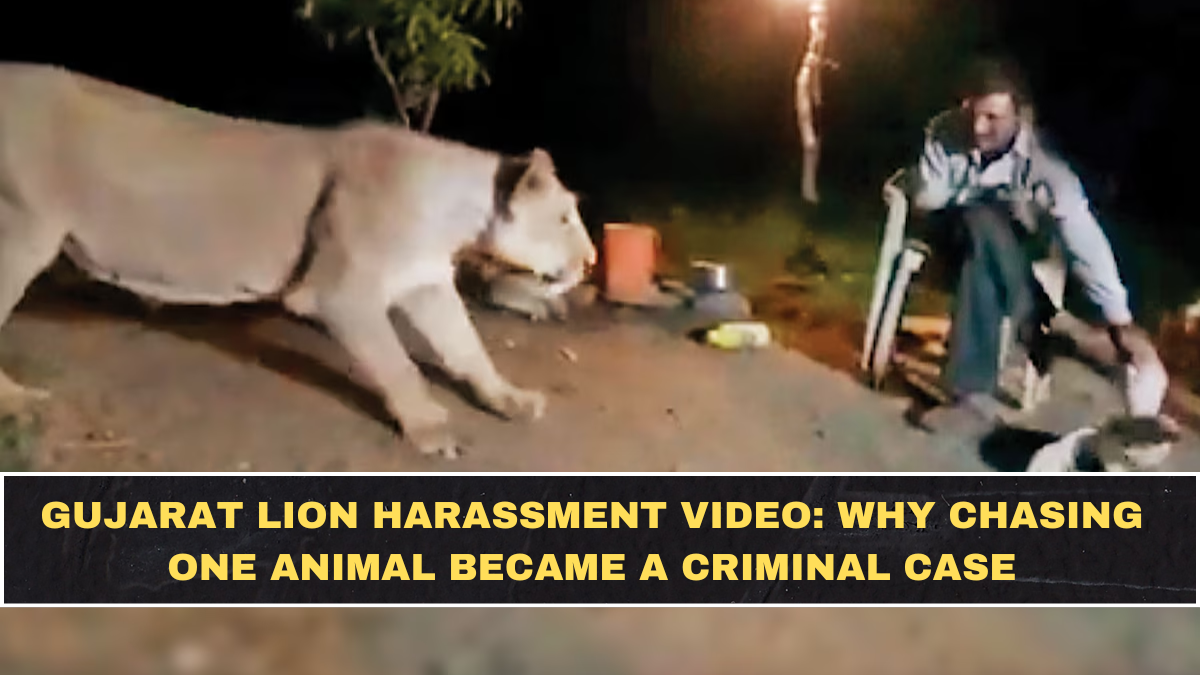
The Gujarat lion harassment video has triggered anger because it reportedly shows a subadult Asiatic lion being chased by a car at night in Amreli district. According to reports, people inside the vehicle were allegedly harassing the distressed animal while boasting about their actions. This is not harmless adventure or viral content; it is a serious wildlife disturbance.
The Forest Department has formed a Special Investigation Team to probe the incident and identify those involved. That response matters because Asiatic lions are not ordinary wild animals in India. They are among the country’s most protected species, and disturbing them for entertainment is not a joke, prank, or travel memory.
Why Is Amreli Important?
Amreli is important because it is one of Gujarat’s major lion landscapes outside the core protected zones. Reports say the district has over 300 lions living outside protected areas, which means human-lion encounters are more common there. That also means people must behave responsibly, especially on roads passing through lion movement zones.
Gujarat’s 2025 lion estimation recorded 891 Asiatic lions, up from 674 in 2020. The state government said lions now roam across around 35,000 sq. km in 11 districts of Saurashtra. This conservation success also creates a new challenge: more lions are living near villages, roads, farms and revenue areas.
| Key Issue | Why It Matters |
|---|---|
| Viral video | Shows alleged harassment of an Asiatic lion |
| Location | Amreli is a major lion movement region |
| SIT probe | Forest officials are investigating the incident |
| Legal status | Asiatic lions get high protection under Indian wildlife law |
| Bigger concern | Roads and vehicles are becoming a growing risk for lions |
Why Is Chasing A Lion A Crime?
Chasing a lion is serious because it can stress, injure or provoke the animal. A frightened lion may run into traffic, enter human settlements, attack in panic, or suffer exhaustion. People who treat this as entertainment are not brave; they are reckless and ignorant.
Asiatic lions are listed under Schedule I of the Wildlife Protection Act, giving them the highest degree of legal protection in India. The Ministry of Environment has also described the Asiatic lion as a critically important recovery species for conservation. That means harassment, injury or disturbance can attract serious legal consequences.
What Does This Say About Viral Culture?
This case exposes the ugly side of viral culture. Some people now treat wildlife as background material for reels, status videos and online attention. They forget that wild animals are not props, and forests or lion movement areas are not film sets.
The problem is not only the person driving the car. The problem is the entire mindset where people laugh, record, encourage and share such behaviour. If society rewards these videos with views and comments, more irresponsible people will try to copy them.
What Should Authorities Do Now?
The SIT probe should not become symbolic. Authorities need to identify the vehicle, driver, passengers, video recorders and anyone who helped circulate or hide evidence. If guilt is established, punishment should be strong enough to make others think twice before harassing wildlife.
Important action points include:
- Track the vehicle and people involved through video and local intelligence.
- Register strict offences under wildlife and related legal provisions if evidence supports it.
- Increase night patrolling in known lion movement areas.
- Install warning signs and speed controls on sensitive routes.
- Educate locals and tourists that filming harassment is also shameful behaviour.
Conclusion?
The Gujarat lion harassment video is serious because it shows how easily conservation success can be damaged by human stupidity. Gujarat has worked for decades to protect Asiatic lions, but one reckless vehicle can turn a protected animal into viral entertainment. That is not just immoral; it can become criminal.
The blunt truth is simple: if people cannot respect wildlife, they should not enter wildlife zones. Asiatic lions are a national conservation treasure, not roadside content. The SIT probe must lead to accountability, because soft action will only encourage the next idiot with a phone and a car.
FAQs?
What Happened In The Gujarat Lion Viral Video?
The viral video reportedly shows a subadult Asiatic lion being chased and harassed by people in a car at night in Amreli district. The clip sparked outrage after it spread on social media. Gujarat’s Forest Department has formed an SIT to investigate the incident.
Why Is This A Serious Wildlife Crime?
It is serious because Asiatic lions are highly protected under Indian wildlife law. Chasing or harassing them can cause stress, injury, conflict or dangerous movement toward roads and villages. Such acts are not adventure; they are wildlife disturbance.
Why Are Lions Often Seen In Amreli?
Amreli is part of the wider Saurashtra lion landscape, where many lions live outside protected forest zones. Gujarat’s lion population has expanded beyond Gir into multiple districts. This increases sightings, but it also increases the need for responsible human behaviour.
What Should People Do If They See A Lion On The Road?
People should slow down, keep distance, stay inside the vehicle and avoid honking, chasing or filming too closely. The correct response is to let the animal move calmly and inform forest officials if needed. Trying to scare or follow a lion is dangerous and illegal.