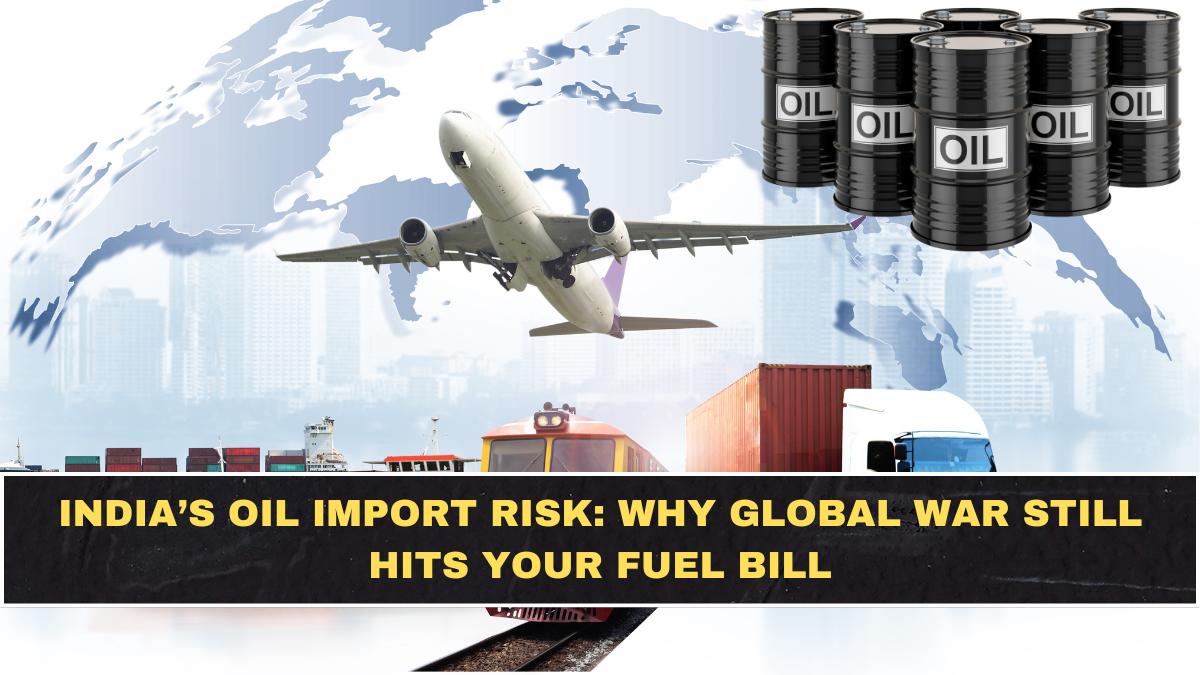
India’s oil import risk becomes painfully visible whenever conflict erupts near major energy routes. The Iran war has pushed crude prices sharply higher, and Reuters reported that Brent crude climbed to over $105 per barrel as worries grew over the fragile US-Iran ceasefire. For India, this is not distant geopolitics; it affects the rupee, import bill, inflation risk and eventually fuel pricing pressure.
The problem is simple: India uses far more crude oil than it produces. When global oil becomes expensive, India has to pay more dollars to buy the same fuel. That weakens the rupee, raises costs for refiners and creates pressure on petrol, diesel, LPG, transport and even food prices through logistics.
How Dependent Is India On Imported Oil?
| Risk Factor | Current Picture | Why It Matters |
|---|---|---|
| Crude import dependence | Around 89.44% in FY 2024-25 | India cannot fully control fuel costs |
| Daily consumption | Around 55 lakh barrels | Huge demand needs constant supply |
| Import sources | Around 40 countries | Diversification reduces supply shock |
| Hormuz exposure | Lower than earlier, but still relevant | Middle East disruption still matters |
| Currency impact | Rupee weakens when oil jumps | Imports become more expensive |
| Fuel-price risk | Retail prices face pressure | Households eventually feel the shock |
Government data in Energy Statistics India 2026 shows India’s crude oil import dependency was around 89.44% in FY 2024-25. The Petroleum Ministry also said India imports crude from around 40 countries and that about 70% of crude imports are now coming through routes outside the Strait of Hormuz, compared with about 55% earlier.
Why Is The Strait Of Hormuz Still A Problem?
The Strait of Hormuz matters because it is one of the world’s most sensitive oil chokepoints. If tanker traffic slows, insurance costs rise or supplies are disrupted, crude prices can jump even before physical shortages hit. Reuters reported that Iran-linked disruption nearly halted tanker traffic through Hormuz, forcing Asian refiners to look for alternatives such as Russian crude.
India has reduced direct dependence on that route through diversification, but it cannot escape global pricing. Even if India buys from Russia, Africa or the Americas, the price benchmark still reacts to Middle East risk. That means route diversification helps supply security, but it does not fully protect consumers from global crude inflation.
Why Does The Rupee Fall When Oil Rises?
Oil is priced globally in dollars, so India needs more dollars when crude becomes expensive. Higher dollar demand weakens the rupee, and a weaker rupee then makes imports even costlier. Reuters reported that the rupee hit a record low of 95.7375 per dollar amid oil-price pressure and investor outflows linked to the Iran conflict.
This is the ugly cycle India faces during energy shocks. Oil rises, the import bill grows, the rupee weakens, foreign investors get nervous, and inflation risks increase. That is why a war outside India can quickly become a household-budget issue inside India.
How Can This Reach Your Wallet?
Fuel prices may not always rise immediately because governments and oil-marketing companies can delay or absorb some pressure. But pressure does not disappear. It shows up through refinery margins, fiscal stress, weaker currency, transport costs, airline fares, logistics charges and eventually wider inflation. Reuters also reported that India’s fuel demand fell 4.6% year-on-year in April amid high global prices and weak margins.
Consumers should watch these areas:
- Petrol and diesel retail price revisions.
- LPG cylinder and aviation fuel costs.
- Transport, courier and delivery charges.
- Food prices linked to logistics costs.
- Rupee movement against the US dollar.
- Government signals on conservation or fuel taxes.
Is India Doing Enough To Reduce Risk?
India has done some sensible things, especially diversifying crude suppliers and reducing dependence on a single route. The government said India’s crude supply remains secure and that diversified procurement currently exceeds what would normally have arrived through the Strait of Hormuz. That reduces the chance of immediate physical shortage.
But let’s not overcelebrate. Diversification is not the same as energy independence. India still imports the overwhelming majority of its crude oil requirement. Until domestic clean energy, electric mobility, public transport, biofuels, strategic reserves and efficiency improve much faster, every major oil shock will keep hitting India’s economy.
What Should India Do Next?
India needs a serious long-term plan, not only crisis-time speeches about saving fuel. The country must reduce oil intensity across transport, logistics and industry while expanding domestic energy alternatives. Otherwise, every Middle East crisis, sanctions shock or shipping-route disruption will keep exposing the same weakness.
The priority actions are clear:
- Build stronger strategic petroleum reserves.
- Push electric buses, two-wheelers and public transport faster.
- Reduce diesel dependence in logistics and freight.
- Expand renewable power with storage and grid upgrades.
- Improve fuel efficiency standards across vehicles.
- Keep diversifying crude suppliers and payment arrangements.
Conclusion?
India’s oil import risk is not theoretical. The Iran war shock has shown again how quickly global conflict can pressure crude prices, weaken the rupee and raise fuel-cost fears at home. India has improved supplier diversification, but its crude import dependence remains too high for comfort.
The blunt truth is that India cannot control global wars, but it can control how vulnerable it remains to them. Until the economy uses less imported oil, every major energy crisis will travel from foreign battlefields to Indian petrol pumps, transport bills and household budgets.
FAQs?
Why Is India Vulnerable To Oil Price Shocks?
India is vulnerable because it imports most of its crude oil requirement. Government energy data shows crude oil import dependency was around 89.44% in FY 2024-25, which means global price spikes directly affect India’s import bill and currency pressure.
How Does The Iran War Affect India?
The Iran war affects India by pushing crude oil prices higher and increasing uncertainty around key shipping routes such as the Strait of Hormuz. Higher crude prices increase India’s dollar demand and put pressure on the rupee, fuel costs and inflation.
Will Petrol And Diesel Prices Rise In India?
Petrol and diesel prices may not rise immediately, but sustained high crude prices create pressure on oil companies and government finances. If the shock continues, consumers may eventually feel it through fuel prices, transport charges or wider inflation.
What Can India Do To Reduce Oil Import Risk?
India can reduce oil import risk by diversifying suppliers, building strategic reserves, expanding electric mobility, improving public transport, increasing renewable energy and cutting oil use in logistics. Supplier diversification helps, but reducing demand is the real long-term solution.
Click here to know more