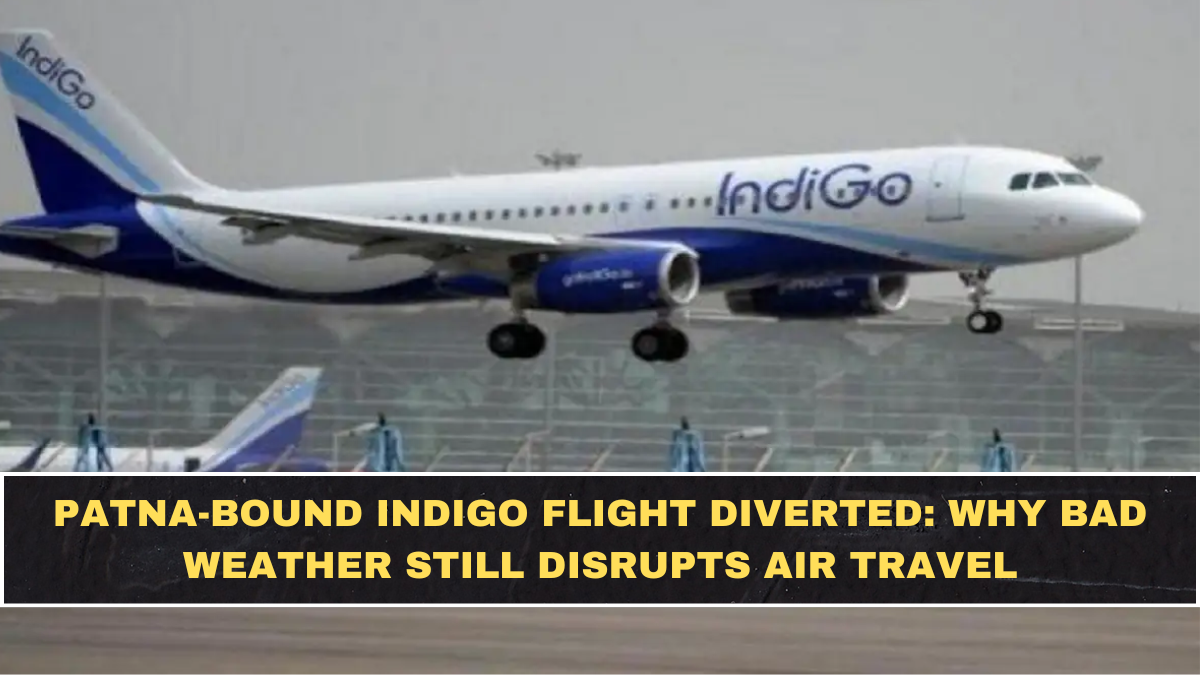
A Patna-bound IndiGo flight from Kolkata was diverted to Lucknow on Friday after weather conditions around Patna reportedly became unsuitable for landing. The aircraft landed safely at Chaudhary Charan Singh International Airport in Lucknow, and officials described the diversion as a safety move. This is exactly the kind of aviation incident that sounds dramatic online but is often a controlled operational decision.
The flight, reported as IndiGo 6E6917, was scheduled to arrive at Patna’s Jay Prakash Narayan International Airport around 5:00–5:15 pm. Instead, it was redirected to Lucknow and landed there at around 5:15 pm. The key point is simple: bad weather disrupted the journey, but the aircraft landed safely, which is what matters most.

What Happened To The IndiGo Flight?
| Flight Detail | Reported Information |
|---|---|
| Airline | IndiGo |
| Route | Kolkata to Patna |
| Flight Number | 6E6917 |
| Diversion Airport | Lucknow |
| Reason | Bad weather at Patna |
| Landing Status | Safe landing reported |
| Bigger Concern | Weather disruption and passenger delays |
The word “emergency landing” gets attention, but readers should not panic every time they hear it. In many aviation reports, such diversions happen because pilots and air traffic control decide that landing at the original airport is not safe enough at that moment. That is not failure; that is the system doing its job.
Patna’s weather has caused multiple aviation disruptions recently. A Delhi-Patna IndiGo flight, 6E6497, was also diverted to Lucknow earlier this week after severe weather and turbulence near Patna. That flight was co-piloted by MP and trained pilot Rajiv Pratap Rudy and landed safely in Lucknow.
Why Does Patna Weather Disrupt Flights So Often?
Patna airport can become challenging during sudden bad weather because aircraft need safe visibility, wind conditions and runway clearance to land. If weather deteriorates quickly, pilots may attempt an approach but still decide to divert if conditions do not meet safety requirements. That decision can frustrate passengers, but it is far better than forcing a risky landing.
Weather-related disruptions become more common during stormy periods, pre-monsoon activity, heavy rain, wind shifts and poor visibility. Passengers often see only the delay, but pilots are dealing with runway conditions, fuel planning, alternate airport options and instructions from air traffic control. Aviation safety is not based on passenger convenience; it is based on risk control.
Why Is Lucknow Becoming A Diversion Hub?
Lucknow’s Chaudhary Charan Singh International Airport often becomes a practical diversion option for flights affected by weather in nearby northern and eastern cities. Earlier this week, Lucknow airport reportedly handled a record 16 flight diversions in one day because of bad weather affecting multiple routes. That shows the scale of weather pressure on flight operations.
This also exposes how tightly connected aviation schedules are. One bad weather patch in Patna, Delhi, Varanasi or Lucknow can affect aircraft rotation, crew schedules, passenger connections and airport ground handling. A diversion is not just one flight landing somewhere else; it can disturb the airline’s entire operating chain for hours.
What Should Passengers Understand?
Passengers need to stop assuming every diversion means danger. Sometimes it means the pilot made the safer call before the situation became dangerous. Yes, delays are irritating, missed meetings are frustrating, and unclear announcements make people angry. But when weather is unstable, safety has to beat schedule every single time.
Passengers should remember:
- A diversion is usually a precaution, not automatic disaster.
- Bad weather can change within minutes near the destination.
- Pilots may not land if visibility, wind or runway conditions are unsafe.
- Alternate airports are part of normal flight planning.
- Passengers should follow crew instructions instead of spreading panic.
- Travel buffers are important during storm and monsoon periods.
The blunt truth is that many travellers want cheap tickets, perfect timing and zero disruption, even during bad weather. That expectation is unrealistic. Aviation can be efficient, but it cannot control storms, turbulence, lightning, wind shifts or sudden visibility drops.
Could This Affect Monsoon Travel?
Yes, weather disruptions could become more frequent as India moves deeper into stormy and monsoon conditions. Airports in eastern and northern India often face sudden operational challenges during heavy rain, thunderstorms and poor visibility. Passengers flying to or from Patna, Lucknow, Delhi, Kolkata, Varanasi and similar routes should prepare for possible delays.
The smart move is to keep extra time between connecting flights, avoid tight same-day commitments and track airline alerts before leaving for the airport. People also need to keep medicines, chargers, snacks and important documents easily accessible. Complaining after a diversion is easy; planning for weather disruption is smarter.
Conclusion: Was This A Scare Or A Safety Call?
The Patna-bound IndiGo flight diversion to Lucknow was clearly a weather-related safety decision, not something passengers should turn into panic content. The aircraft landed safely, and the route disruption happened because conditions near Patna were not suitable for landing at that time. That is exactly why alternate airport planning exists.
The bigger lesson is simple: bad weather still has the power to disrupt even modern air travel. Passengers may hate delays, but pilots must choose safety over schedule. As storm and monsoon activity rises, travellers should expect more such diversions and plan with a little more realism.
FAQs?
Why was the Patna-bound IndiGo flight diverted to Lucknow?
The IndiGo flight from Kolkata to Patna was diverted to Lucknow because weather conditions at Patna were not suitable for landing. Airport officials said the diversion was made as a safety precaution. The aircraft landed safely at Chaudhary Charan Singh International Airport in Lucknow.
Was it an emergency landing or a normal diversion?
Reports used the phrase emergency landing, but the available details suggest a weather-related diversion for safety. In aviation, diversions can happen when the destination airport is temporarily unsafe due to weather. The important point is that the aircraft landed safely and passengers were not reported harmed.
Which IndiGo flight was diverted from Patna?
Reports identified the Kolkata-Patna flight as IndiGo 6E6917. It was scheduled to arrive at Patna around 5:00–5:15 pm but was redirected to Lucknow because of adverse weather. The aircraft reportedly landed safely around 5:15 pm.
Why do flights get diverted during bad weather?
Flights get diverted when pilots and air traffic control judge that landing at the planned destination is not safe. Poor visibility, strong winds, turbulence, storms or runway conditions can all trigger a diversion. It may cause delays, but it reduces risk and protects passengers.