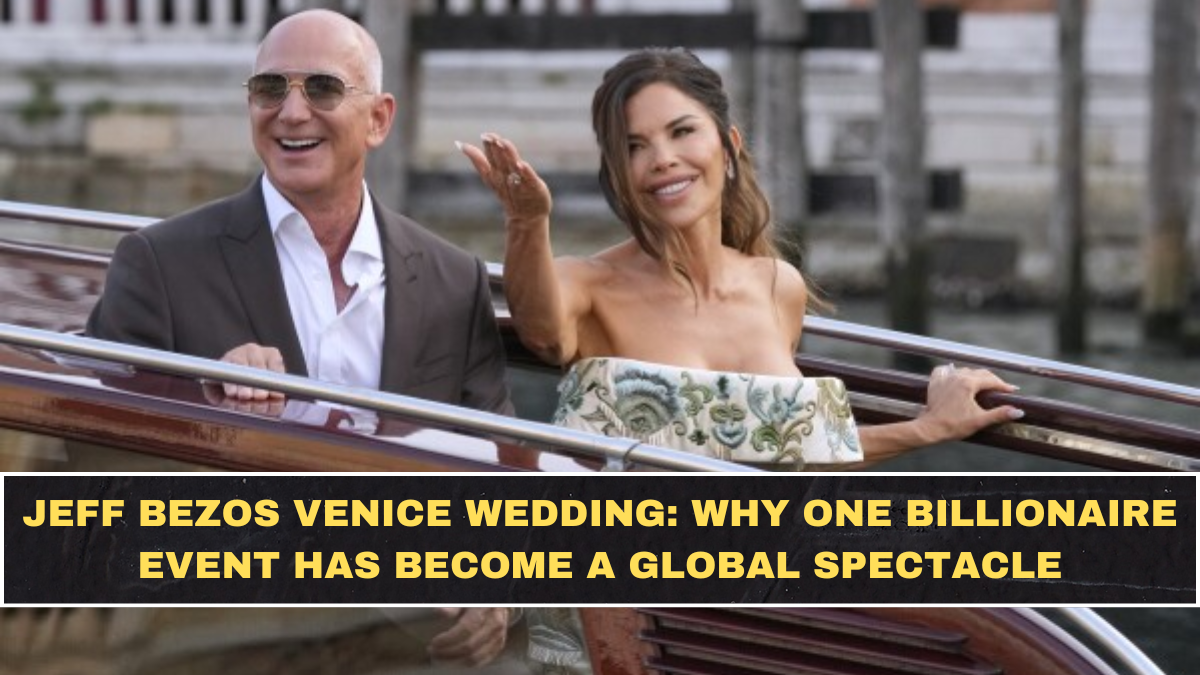
Jeff Bezos and Lauren Sanchez’s Venice wedding became a global spectacle because it was never just a private celebrity ceremony. The three-day celebration in June 2025 mixed billionaire wealth, historic Venice locations, Hollywood-style arrivals, luxury hospitality, security concerns and protests from locals. That combination made the event look less like a wedding and more like a worldwide debate about money, power and tourism.
The earlier buzz around the wedding treated it like an upcoming mega-event, but the important correction is clear: the wedding celebrations already happened between June 26 and June 28, 2025. Reports described around 200 to 250 guests, with costs estimated around $50 million, while Venice officials and tourism bodies argued that the event also brought major economic visibility to the city.
What Made This Wedding So Huge?
The scale was the first reason. Reuters reported that the wedding celebrations were expected to cost around €40 million to €48 million, or roughly $47 million to $56 million. The guest list reportedly included names from technology, film, finance and global celebrity circles, making the event one of the most talked-about luxury weddings of the decade.
The second reason was Venice itself. A billionaire wedding in a private resort would have been glamorous, but Venice made it cinematic. Water taxis, historic buildings, luxury hotels, canals and tight security turned every arrival into a media moment. That is exactly why global outlets kept tracking the event like a live entertainment and business story combined.
| Key Detail | Reported Information |
|---|---|
| Couple | Jeff Bezos and Lauren Sanchez |
| Location | Venice, Italy |
| Celebration dates | June 26–28, 2025 |
| Guest count | Around 200–250 guests |
| Estimated cost | Around $47 million–$56 million |
| Main controversy | Protests over luxury tourism and city disruption |
| Wider impact claim | Huge media visibility for Venice |
Why Did Venice Become The Real Story?
Venice became the real story because the city is already struggling with overtourism, rising costs and local frustration. A wedding of this size triggered anger among activists who argued that Venice was being treated like a playground for the ultra-rich. Protest groups criticised the commercialisation of the city and questioned whether residents were being pushed aside for elite events.
That criticism was not random jealousy. Venice has long been under pressure from mass tourism, cruise traffic, luxury events and declining local population. So when one of the world’s richest men hosted a massive wedding there, the event became a symbol. For supporters, it brought money and attention. For critics, it exposed how historic cities are increasingly rented out to wealth.
Who Attended The Wedding?
The guest list drew huge attention because several high-profile figures were spotted or reported around the celebrations. Reuters reported arrivals including Bill Gates, Orlando Bloom, Queen Rania of Jordan, Oprah Winfrey, Kris Jenner, Kim Kardashian and Khloe Kardashian. That level of celebrity concentration made the wedding a magnet for paparazzi, fashion pages and global entertainment media.
But the guest-list obsession also shows how modern fame works. People were not only interested in the couple; they wanted to see who arrived, what they wore, which hotel they used and which boat they stepped into. The wedding became content for luxury media, celebrity watchers, anti-billionaire activists and tourism commentators at the same time.
Why Were There Protests?
The protests happened because some locals and activists felt Venice was being turned into a stage for billionaires while residents deal with everyday problems. Reuters reported that security concerns and protest risks led one party location to be moved to a more isolated area. That detail shows the wedding was not just glamorous; it was logistically sensitive and politically charged.
The criticism focused on inequality, tourism pressure, climate concerns and the image of ultra-wealthy private events taking over public heritage spaces. The harsh truth is that luxury events in fragile cities always create this conflict. They bring money, but they also raise the question of who the city is really serving.
Why Did Supporters Defend It?
Supporters defended the wedding by arguing that it brought economic activity to Venice. Reuters reported that Italy’s tourism ministry estimated the overall economic impact at €957 million, including a huge media-visibility benefit. Local leaders also suggested that hotels, restaurants, water taxis and other businesses could benefit from the event.
That argument has weight, but it is not the full story. Economic impact numbers can sound impressive, but local residents still care about disruption, affordability and whether the benefits reach ordinary people. A city cannot live only on luxury visibility. It also needs housing, services and dignity for the people who actually live there.
What Made It A Global Spectacle?
The wedding became global because it combined everything the internet loves and hates at once. It had wealth, romance, celebrities, fashion, protests, Venice visuals, private security, economic debate and billionaire criticism. That made it impossible to treat as only a wedding story.
The most viral factors included:
- A billionaire couple with global name recognition
- Venice as a dramatic historic backdrop
- Around 200–250 high-profile guests
- Estimated cost near the $50 million range
- Local protests and anti-billionaire criticism
- Luxury fashion, hotels, boats and private events
- Debate over whether such events help or exploit cities
Conclusion: Why Did This Wedding Matter?
Jeff Bezos and Lauren Sanchez’s Venice wedding mattered because it became a mirror of modern wealth culture. On one side, it was a lavish personal celebration with global celebrity glamour. On the other side, it became a flashpoint for debates about overtourism, inequality, historic cities and how far private luxury should go in public heritage spaces.
The real reason this wedding stayed in headlines is not only that Bezos is rich. It is because the event forced people to ask an uncomfortable question: when billionaires celebrate in fragile cities, is it economic opportunity or elite takeover? The answer depends on who benefits, who is disrupted and whether Venice remains a living city or just a luxury backdrop.
FAQs?
When Did Jeff Bezos And Lauren Sanchez’s Venice Wedding Happen?
Jeff Bezos and Lauren Sanchez’s Venice wedding celebrations took place between June 26 and June 28, 2025. Reports described it as a three-day luxury event with high-profile guests, historic venues and tight security.
How Much Did Jeff Bezos’ Venice Wedding Cost?
Reuters reported that the wedding celebrations were expected to cost around €40 million to €48 million, or roughly $47 million to $56 million. The final private spending details were not fully public, so reported estimates should be treated as estimates.
Why Did People Protest The Bezos Wedding In Venice?
People protested because some activists and residents felt Venice was being used as a luxury stage for billionaires while locals face overtourism, high costs and city disruption. Protest risks were serious enough that one party location was reportedly moved.
Who Attended Jeff Bezos And Lauren Sanchez’s Wedding?
Reuters reported that guests arriving for the celebrations included Bill Gates, Orlando Bloom, Queen Rania of Jordan, Oprah Winfrey, Kris Jenner, Kim Kardashian and Khloe Kardashian. The guest list was one of the biggest reasons the wedding attracted worldwide attention.
Click here to know more