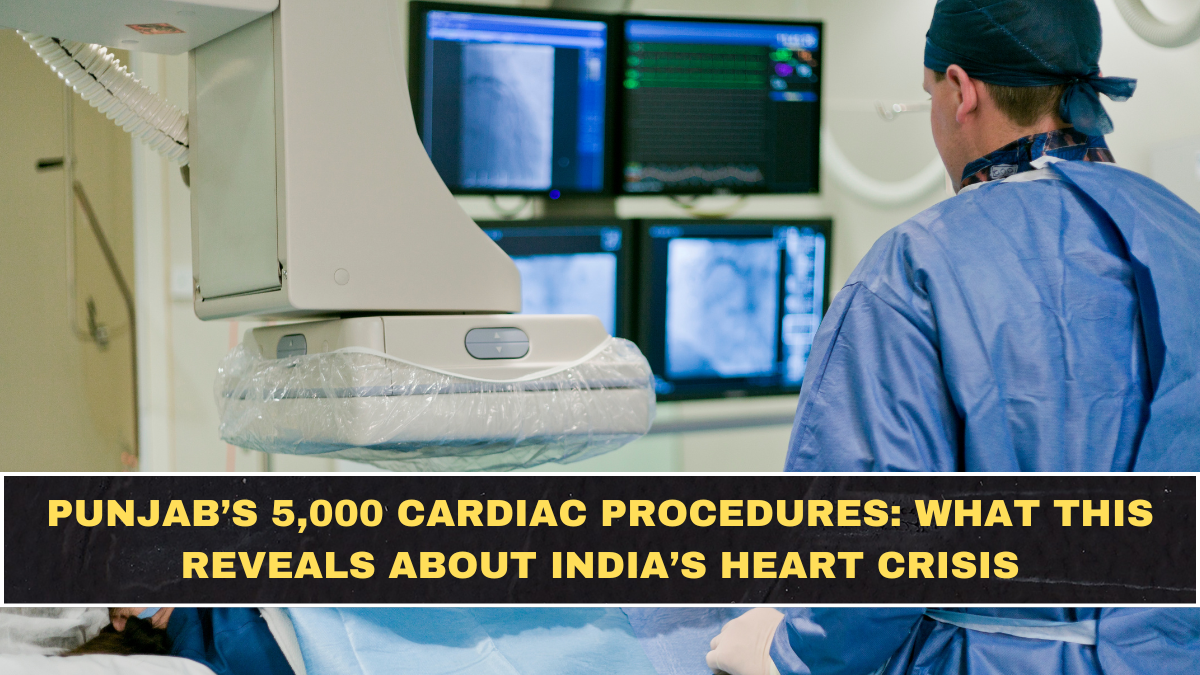
Punjab’s health scheme has revealed a number that should make families uncomfortable: more than 5,000 cardiac procedures have been carried out under the Mukh Mantri Sehat Yojana in just over three months. According to reports citing the State Health Agency, 5,054 cardiac procedures were recorded, with around 5,000 of them being PTCA or angioplasty procedures. That is not just a scheme-success number; it is a warning about how common serious heart disease has become.
The financial side is equally important. The total treatment cost under the scheme reportedly reached around ₹50 crore, mostly because of angioplasty-related procedures. This shows why cashless healthcare matters in cardiac emergencies, where delay can mean permanent damage or death. When families hesitate because of money, heart treatment becomes dangerously late.
What Do The Cardiac Numbers Show?
| Health Scheme Point | Reported Detail |
|---|---|
| Total cardiac procedures | 5,054 |
| Main procedure type | PTCA / angioplasty |
| PTCA procedures | Around 5,000 |
| Total treatment cost | Around ₹50 crore |
| Scheme benefit | Up to ₹10 lakh annual cashless care |
| Hospital access | Government and selected private hospitals |
The Mukh Mantri Sehat Yojana is designed to provide cashless healthcare support, and earlier reports said it covers Punjab residents with treatment up to ₹10 lakh per family per year. The scheme includes access to government and empanelled private hospitals, which can reduce the pressure on families during major medical events.
This is where the scheme becomes more than a political announcement. For heart patients, speed matters. If a patient needs angioplasty and the family starts arranging money, calling relatives, or shifting from one hospital to another, precious time is lost. Cashless approval and wider hospital access can directly affect survival chances.
Why Are Heart Procedures Rising So Fast?
The high number of cardiac procedures does not automatically mean Punjab suddenly became unhealthy in three months. It may also mean more patients are finally getting treated because cost barriers have reduced. That distinction matters because better access can expose hidden disease that was already present but untreated.
Possible reasons behind the high procedure load include:
- More people accessing cashless treatment.
- Delayed heart problems finally reaching hospitals.
- Lifestyle risks such as poor diet, stress and inactivity.
- Diabetes, hypertension and obesity increasing heart risk.
- Emergency cases being treated faster than before.
- Wider hospital network improving patient flow.
The blunt truth is that many Indian families ignore blood pressure, cholesterol, sugar levels and chest discomfort until the situation becomes serious. Heart disease does not usually arrive suddenly; it builds quietly while people keep postponing tests, lifestyle changes and treatment.
Why Is Angioplasty So Common?
Angioplasty, medically known as PTCA, is used to open narrowed or blocked arteries supplying blood to the heart. In many emergency heart-attack cases, timely angioplasty can save heart muscle and reduce complications. That is why the fact that nearly 5,000 procedures were PTCA is medically significant.
But people should not misunderstand this as a shortcut cure. Angioplasty can treat a blockage, but it does not erase the lifestyle and medical conditions that caused the disease. Patients still need medicines, follow-up, diet control, exercise, smoking cessation if applicable, and management of diabetes, cholesterol and blood pressure.
What Does This Say About Healthcare Access?
The scheme’s early cardiac numbers show that financial access can change treatment behaviour. When patients know that treatment is covered, they are more likely to reach proper hospitals instead of delaying care. Reports also said the scheme helped reduce delays caused by earlier referral systems and improved emergency protocols in cardiology units.
This matters because India’s healthcare burden is not only about disease. It is also about affordability, distance, awareness and fear of hospital bills. A family may know treatment is needed but still delay because the first question becomes, “How much will it cost?” Cashless care can remove that hesitation when time is critical.
What Should Punjab Families Learn Now?
Families should not wait for a heart attack to take heart health seriously. Punjab’s cardiac procedure numbers are a loud warning that prevention must start much earlier. Blood pressure checks, sugar tests, cholesterol tests and ECG advice from a doctor are not things to postpone until symptoms become dramatic.
Practical steps families should take:
- Check blood pressure regularly after adulthood.
- Test sugar and cholesterol as advised by a doctor.
- Do not ignore chest pain, breathlessness or unusual sweating.
- Reduce smoking, alcohol excess and high-salt food.
- Walk, exercise and manage weight consistently.
- Follow medicines after angioplasty instead of stopping early.
The uncomfortable truth is that many people spend freely on weddings, phones and cars but avoid basic health check-ups. That is foolish. Heart disease becomes expensive, painful and dangerous when people treat prevention like an optional luxury.
Conclusion: Is This A Healthcare Success Or A Warning?
Punjab’s 5,000-plus cardiac procedures under the Mukh Mantri Sehat Yojana show both sides of India’s healthcare reality. On one side, cashless coverage is helping patients access expensive and urgent heart treatment faster. On the other side, the sheer number of angioplasty cases shows how heavy the heart-disease burden has become.
The real lesson is simple: treatment access is necessary, but prevention is non-negotiable. Punjab families should use schemes when emergencies happen, but they should not wait for emergencies to start caring about heart health. A good health scheme can save lives, but better daily habits can prevent many crises from happening in the first place.
FAQs?
How many cardiac procedures were done under Punjab’s health scheme?
Reports citing the State Health Agency said 5,054 cardiac procedures were carried out under the Mukh Mantri Sehat Yojana in just over three months. Around 5,000 of these were PTCA or angioplasty procedures. The total treatment cost was reported at around ₹50 crore.
What is Mukh Mantri Sehat Yojana?
Mukh Mantri Sehat Yojana is Punjab’s cashless healthcare scheme that provides eligible residents access to treatment at government and empanelled private hospitals. Earlier reports said the scheme offers up to ₹10 lakh annual cashless care per family. It covers major treatments, including serious cardiac procedures.
Why are so many angioplasty procedures happening?
The high number may reflect both a serious heart-disease burden and improved access to treatment under the scheme. Many patients who may have delayed treatment earlier can now get cashless care. Lifestyle risks such as hypertension, diabetes, high cholesterol, smoking, stress and inactivity also contribute to heart disease.
Does angioplasty permanently cure heart disease?
No, angioplasty opens blocked arteries but does not permanently remove the risk of future heart disease. Patients still need medicines, follow-up visits, diet changes, exercise and control of blood pressure, sugar and cholesterol. Ignoring lifestyle after angioplasty can bring the problem back.