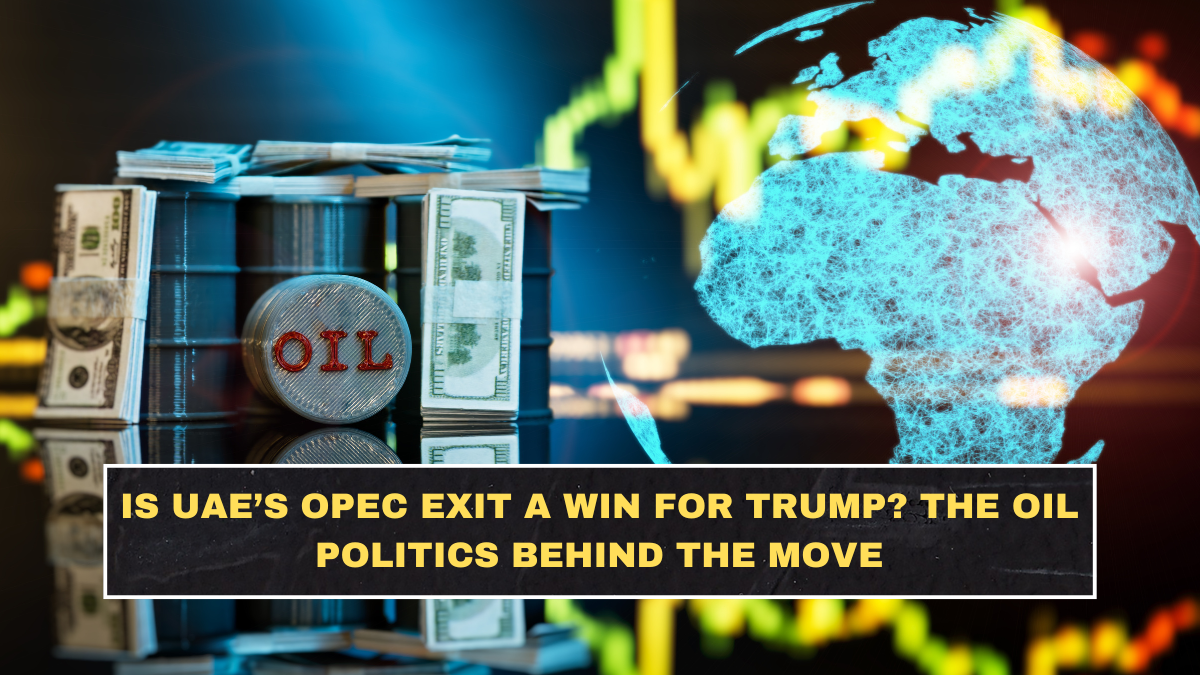
The UAE’s decision to leave OPEC is being called a possible win for Trump because it weakens an oil cartel he has repeatedly criticized for keeping oil prices high. Reuters reported that the UAE announced its exit from OPEC and OPEC+ effective May 1, 2026, dealing a major blow to the oil-exporting groups and their de facto leader, Saudi Arabia.
The political logic is simple. Trump has often attacked OPEC for influencing oil prices against consumer interests. If one of OPEC’s biggest Gulf producers walks away, the group’s ability to coordinate supply cuts becomes weaker. That gives Trump a strong talking point: the oil cartel he criticized is now losing strength from within.
What Exactly Has The UAE Done?
The UAE has announced that it will leave both OPEC and the wider OPEC+ alliance. That matters because OPEC alone includes major oil-exporting countries, while OPEC+ includes additional producers such as Russia. Together, these groups have tried to manage oil supply and influence global prices through production targets.
The UAE’s move is not symbolic only. AP reported that the country had been producing around 3.4 million barrels per day before current Gulf disruptions, while its production capacity can reach up to 5 million barrels per day. That gap explains why Abu Dhabi may have been frustrated by quota limits that restricted how much oil it could sell.
| Factor | Why It Helps Trump Politically? |
|---|---|
| OPEC loses a major producer | Trump can say the cartel is weakening |
| UAE gains production freedom | More supply may pressure prices later |
| Saudi influence is challenged | US gains leverage in Gulf oil politics |
| OPEC+ discipline weakens | Production cuts become harder to enforce |
| Consumers may benefit later | Lower oil prices are politically useful |
Why Has Trump Been Critical Of OPEC?
Trump’s criticism of OPEC is based on a simple political message: high oil prices hurt ordinary consumers and benefit producer states. The Guardian described the UAE’s exit as a win for Trump, noting that he has accused OPEC of “ripping off the rest of the world” by inflating oil prices.
That message works well politically because fuel prices are visible. Voters may not follow OPEC meetings, but they notice petrol, diesel, electricity and airline costs. If Trump can argue that OPEC is losing control and that more independent oil production could lower prices, he gets a powerful economic narrative during a period of global energy stress.
Does This Mean Oil Prices Will Fall Immediately?
No, and this is where overexcited headlines become misleading. HSBC expects limited near-term market impact from the UAE’s departure because the Strait of Hormuz disruption is still limiting Gulf oil shipments. In simple terms, the UAE may want to produce and sell more oil, but shipping constraints can still prevent that oil from reaching global buyers quickly.
That means Trump may get a political win before consumers get a price win. The market needs actual barrels to move, not just announcements. If the Hormuz crisis continues, oil prices may stay high even though OPEC has been weakened. This is why calling it an instant victory for fuel consumers is too simplistic.
Why Is The UAE’s Production Capacity So Important?
The UAE’s production capacity is important because it shows the country has room to grow outside OPEC limits. HSBC said the UAE could eventually raise output beyond its OPEC+ quota of 3.4 million barrels per day to more than 4.5 million barrels per day once Hormuz access is restored, though any increase is expected to be gradual.
That is the real long-term threat to OPEC. If the UAE starts increasing production independently, other members may question why they should keep accepting quotas. OPEC’s power depends on discipline. Once discipline weakens, the group can lose its ability to support prices during weak demand or rising supply from non-OPEC producers.
Why Does This Hurt Saudi Arabia?
This hurts Saudi Arabia because Riyadh is widely seen as OPEC’s de facto leader. When the UAE leaves, Saudi Arabia loses a major Gulf partner inside the cartel and faces a public challenge to its oil-market leadership. Reuters described the UAE’s exit as a heavy blow to OPEC and Saudi Arabia at a time when the Iran war has already rattled the global economy.
The Saudi-UAE relationship is complicated. They cooperate in many areas, but they also compete for regional influence, investment, logistics, finance and energy leadership. The UAE exit does not mean a total Gulf split, but it does expose different priorities. Saudi Arabia wants coordinated supply discipline. The UAE wants more freedom to use its expanded capacity.
Could This Start An Oil Price War?
Yes, that is one of the biggest long-term risks. Reuters analysis warned that the UAE’s departure could sharply reduce OPEC’s influence and open the door to a price war once Gulf producers rush to regain market share after the Iran war ends. A price war would mean producers competing through higher output, which can push prices down but also create market chaos.
For Trump, cheaper oil may look politically useful. But a disorderly price war can create winners and losers. Consumers may benefit from lower fuel prices, while oil producers, energy investors and government budgets in producer countries suffer. The US shale industry can also feel pressure if prices fall too far. So this is not a simple “good news for America” story.
Is This Really A Trump Victory Or A UAE Strategy?
It is more accurately a UAE strategy that Trump can frame as a victory. Abu Dhabi is not leaving OPEC to please Washington. It is leaving because it wants more control over its energy future, production policy and market positioning. AP reported that the UAE has long been frustrated with OPEC production quotas after investing heavily to expand output capacity.
That distinction matters. Trump may benefit politically because the move weakens OPEC, but the UAE is acting in its own national interest. Anyone presenting this as Trump personally forcing OPEC to crack is overselling it. The better reading is that Trump’s anti-OPEC message now has a real-world development he can use.
What Is The Bottom Line?
UAE’s OPEC exit is a political win for Trump because it weakens a cartel he has attacked for years and challenges Saudi-led production discipline. It gives Washington a useful narrative at a time when oil prices, inflation and Middle East instability are hurting consumers and markets.
But the win is not clean or immediate. Oil prices may not fall quickly because Hormuz disruption is still limiting exports. The bigger impact comes later, when the UAE may increase output and OPEC+ may struggle to enforce discipline. Trump gets the headline now. Consumers may or may not get relief later.
FAQs
Did The UAE Officially Leave OPEC?
The UAE announced that it would leave OPEC and OPEC+ effective May 1, 2026, according to Reuters and AP reports.
Why Is This Being Called A Win For Trump?
It is being called a win because Trump has criticized OPEC for inflating oil prices, and the UAE’s exit weakens the cartel’s power over global oil supply.
Will UAE Leaving OPEC Lower Oil Prices Immediately?
Not necessarily. HSBC expects limited near-term impact because the Strait of Hormuz disruption is still restricting Gulf oil shipments.
Why Did The UAE Want To Leave OPEC?
The UAE wanted more freedom over production policy after investing heavily to expand oil capacity, while OPEC quotas limited how much it could sell.
Could This Lead To An Oil Price War?
Yes. Reuters analysis warned that UAE’s exit could reduce OPEC’s influence and increase the risk of a future price war once Gulf exports normalize.