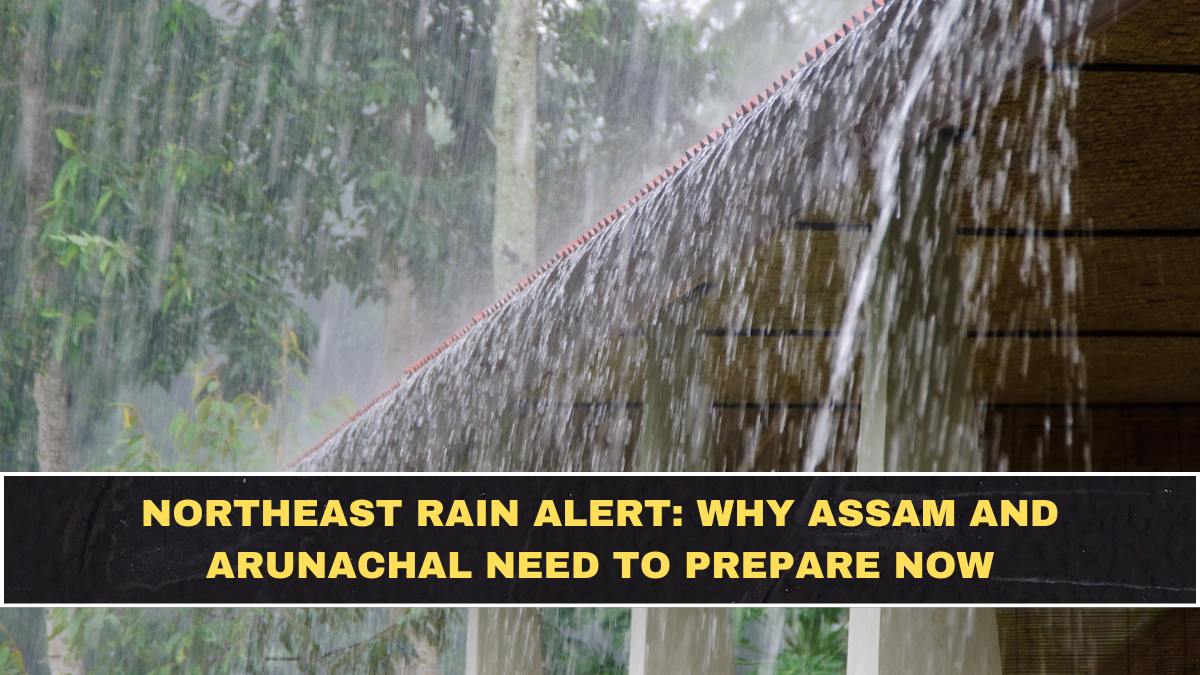
Northeast India is facing a fresh spell of rain, thunderstorms, lightning and gusty winds as IMD has issued warnings for several states between May 13 and May 19, 2026. The alert is important because the region is already vulnerable to landslides, flooding, road disruption and power cuts whenever rainfall intensifies quickly. This is not the kind of weather update people should casually scroll past, especially in hill districts and low-lying river areas.
IMD’s May 13 press release says scattered to fairly widespread light to moderate rainfall is likely over Northeast India, with thunderstorms, lightning and gusty or squally winds in several states. It also warns of isolated heavy rainfall over Arunachal Pradesh, Assam and Meghalaya, Nagaland, Manipur, Mizoram and Tripura on different days during the forecast period.
Which States Are Most At Risk?
The strongest warning is for Arunachal Pradesh, Assam and Meghalaya, where IMD has flagged isolated very heavy rainfall on specific days. Assam and Meghalaya were listed for isolated very heavy rainfall on May 13 and May 14, while Arunachal Pradesh was listed for isolated very heavy rainfall on May 14 and May 18. These states need closer monitoring because intense rain can quickly affect roads, rivers, bridges and rural settlements.
| State/Region | IMD Warning Period | Main Risk |
|---|---|---|
| Arunachal Pradesh | Heavy rain on May 13 and May 15–18; very heavy rain on May 14 and 18 | Landslides, road blockage, flash floods |
| Assam & Meghalaya | Heavy rain during May 15–19; very heavy rain on May 13–14 | Urban flooding, river rise, travel disruption |
| Nagaland, Manipur, Mizoram | Heavy rain during May 13–15 | Hill-road disruption, lightning risk |
| Tripura | Heavy rain during May 13–15 and May 18–19 | Waterlogging, local flooding |
| Northeast region overall | Thunderstorm and lightning alerts across multiple days | Outdoor safety risk |
Why Can This Rain Become Dangerous?
Rain in the Northeast is not just about getting wet. The region has hills, rivers, narrow roads, remote settlements and fragile slopes, which means a few hours of intense rainfall can create serious local disruption. Landslides can block highways, flash floods can cut off villages, and lightning can become deadly for people working outdoors or travelling in open areas.
The situation is more sensitive because IMD has also said conditions are becoming favourable for the advance of the southwest monsoon over parts of the south Bay of Bengal, Andaman Sea and Andaman & Nicobar Islands around May 16. That does not mean the monsoon has arrived in the Northeast immediately, but it does show that the seasonal rain transition is active and weather conditions are changing fast.
What Should People Do Immediately?
People in Assam, Meghalaya, Arunachal Pradesh and other Northeast states should not wait for flooding to begin before taking precautions. Local alerts should be checked daily because rainfall warnings can change quickly based on fresh observations. The biggest mistake is assuming that “isolated heavy rainfall” means low risk; if that isolated spell hits your town, road or village, the impact can still be serious.
Important precautions include:
- Avoid unnecessary travel during heavy rain and thunderstorm hours
- Stay away from riverbanks, landslide-prone slopes and flooded roads
- Keep phones charged and save local emergency numbers
- Farmers should avoid open fields during lightning activity
- Travellers should check road conditions before hill journeys
- Families in low-lying areas should prepare basic emergency supplies
Why Should Assam And Meghalaya Be Extra Alert?
Assam and Meghalaya need extra caution because IMD has flagged isolated very heavy rainfall over these states on May 13 and May 14, followed by isolated heavy rainfall during May 15 to May 19. That means the rain risk is not limited to one day. Repeated rainfall over several days can saturate soil, increase waterlogging and raise the chance of local flooding.
The blunt truth is that people often take weather alerts seriously only after roads are already flooded or landslides have started. That is poor preparation. If you live in a flood-prone area or travel through hill roads, the right time to act is before the rain peaks, not after the situation becomes chaotic.
What Is The Final Warning?
The Northeast heavy rainfall alert is a serious preparedness signal for Assam, Meghalaya, Arunachal Pradesh and neighbouring states. IMD has warned of thunderstorms, lightning, gusty winds and heavy to very heavy rainfall over different parts of the region during May 13–19, 2026. This kind of weather can disturb transport, power supply, farming activity and daily movement very quickly.
The practical message is simple: check local alerts, avoid risky travel and do not underestimate lightning or flooded roads. People who prepare early usually face less damage. People who ignore warnings often become dependent on rescue later, and that is avoidable.
What Are The FAQs?
Which Northeast States Have Heavy Rainfall Alert?
IMD has warned of heavy rainfall over Arunachal Pradesh, Assam and Meghalaya, Nagaland, Manipur, Mizoram and Tripura on different days between May 13 and May 19, 2026. Assam, Meghalaya and Arunachal Pradesh have also been flagged for isolated very heavy rainfall on specific dates.
When Is Very Heavy Rain Expected In Assam And Meghalaya?
IMD has warned of isolated very heavy rainfall over Assam and Meghalaya on May 13 and May 14, 2026. Heavy rainfall is also likely over these states during May 15 to May 19, so the risk period may continue beyond the first spell.
Is Arunachal Pradesh Also Under Rain Alert?
Yes, Arunachal Pradesh is under alert for isolated heavy rainfall on May 13 and during May 15 to May 18. IMD has also warned of isolated very heavy rainfall over Arunachal Pradesh on May 14 and May 18.
What Should People Avoid During Thunderstorms?
People should avoid open fields, riverbanks, hill slopes, flooded roads, isolated trees and metal structures during thunderstorms. Lightning and gusty winds can become dangerous quickly, especially for farmers, two-wheeler riders, travellers and people working outdoors.