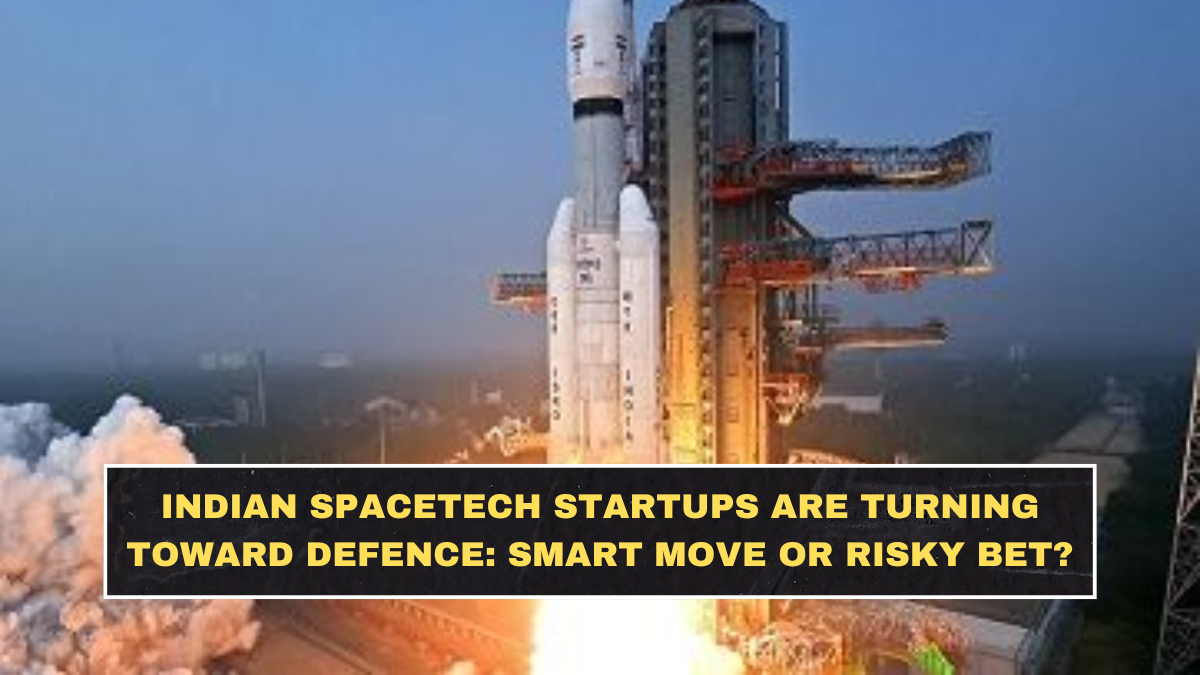
Indian spacetech startups are looking toward defence because commercial adoption of space technology is still slower than many founders expected. Private enterprises are interested in satellite data, earth observation, geospatial intelligence and communication tools, but large-scale paying demand is not moving fast enough for every startup. That creates pressure on founders who need revenue, not just investor excitement.
Economic Times reported that Indian spacetech startups are increasingly turning toward defence-related applications because rising geopolitical tensions and slow private-sector adoption are making government and defence contracts more attractive. The defence sector can offer larger, more stable and strategically important opportunities, but it also brings harder choices around security, partnerships and international alignment.
What Makes Defence Attractive For Spacetech Companies?
Defence is attractive because space technology has direct military and national security use. Satellites can support surveillance, communication, navigation, border monitoring, maritime awareness, disaster response and battlefield intelligence. For a startup building earth observation, radar, satellite communication, propulsion or analytics, defence can become a serious customer.
The bigger reason is funding visibility. Commercial customers may delay adoption, negotiate hard or treat space data as experimental. Defence buyers, on the other hand, may have long-term strategic needs. If a startup can meet security standards and prove reliability, it may get access to contracts that are bigger and stickier than normal enterprise deals.
| Spacetech Capability | Defence Use Case | Why It Matters |
|---|---|---|
| Earth observation | Border and terrain monitoring | Better situational awareness |
| SAR/radar imaging | Night and cloud-covered surveillance | Works when optical imaging fails |
| Satellite communication | Secure military connectivity | Useful in remote areas |
| Geospatial analytics | Movement and infrastructure tracking | Converts images into decisions |
| Small satellites | Faster deployment of space assets | Reduces dependence on large systems |
| In-space servicing | Satellite repair and upgrades | Supports long-term space resilience |
| Launch systems | Rapid satellite deployment | Important during crisis situations |
Why Is Commercial Growth Slower Than Expected?
Commercial growth is slower because many private companies still do not fully understand how to use space data in daily operations. Agriculture, insurance, mining, logistics, climate risk, telecom and infrastructure can all benefit from space technology, but adoption needs education, trust, integration and budget. That takes time.
Investors are also becoming more demanding. Inc42 reported earlier in 2026 that Indian spacetech is entering a phase where capital will flow less on promise and more on proof, with investors looking for clear commercial pathways, scalable models and near-term revenue visibility. That is the brutal shift founders now face: cool technology is not enough.
How Is The Indian Government Supporting Defence-Tech Startups?
The Indian government has been building channels to support defence innovation through programmes like iDEX and ADITI. The Defence India Startup Challenge under iDEX is designed to support startups, MSMEs and innovators in creating prototypes and commercialising solutions for national defence and security.
The ADITI scheme is also focused on deep-tech critical and strategic technologies, with an objective to accelerate around 30 such technologies by 2026. The Ministry of Defence describes these technologies as primarily serving defence applications with export potential. That is important because it shows the government does not want only prototypes; it wants strategic technologies that can scale and potentially sell beyond India too.
Is This Shift Only Happening In Space Technology?
No, the defence shift is visible across multiple deep-tech areas. Drones, AI, robotics, sensors, cybersecurity and autonomous systems are also moving closer to defence use cases. Times of India reported that Garuda Aerospace, originally known for drone manufacturing, has expanded into defence with multiple UAV platforms, strategic partnerships and a proposed defence-focused drone park.
This matters because spacetech does not operate alone. Modern defence systems combine satellites, drones, AI, communication networks and battlefield data. A satellite may detect movement, a drone may verify it, and AI may analyse it. Startups that understand this full stack may have stronger opportunities than companies selling isolated tools.
What Are The Risks Of Moving Into Defence?
The biggest risk is dependency. If a spacetech startup builds mainly for defence, it may become dependent on government procurement cycles, approvals, tenders and security clearances. These processes can be slow, complex and unpredictable. A young startup with limited cash can struggle if contract decisions take too long.
The second risk is strategic restriction. Defence work can limit which countries a startup can partner with, which investors it can accept money from and which customers it can serve. Economic Times noted that founders may face tough decisions about international partnerships because defence-linked work requires alignment with security and geopolitical priorities.
| Risk Area | What Can Go Wrong | Startup Impact |
|---|---|---|
| Procurement delays | Contracts take too long | Cash flow pressure |
| Security restrictions | Foreign partnerships become sensitive | Limits expansion |
| Compliance burden | More audits and approvals | Higher operating cost |
| Customer concentration | Too much dependence on defence | Revenue risk |
| Export controls | Cross-border sales become harder | Slower global growth |
| Ethical questions | Military use creates debate | Brand and investor concerns |
Why Are International Partnerships A Tough Choice?
International partnerships are tough because space and defence technologies are sensitive. A startup may want foreign capital, global customers or technical collaboration, but defence-linked products can raise questions about data access, technology transfer and national security. Choosing the wrong partner can close doors with government customers.
This is where founders need maturity. Taking money from any investor just because the cheque is large can become a trap. If a startup wants to work with Indian defence, it must think about ownership, data control, supply chains and strategic trust from day one. In defence technology, “move fast and break things” is not a strategy; it is a liability.
How Big Can India’s Space Opportunity Become?
India has repeatedly spoken about building a much larger private space economy, with industry conversations often pointing toward a $40–45 billion long-term opportunity. But reaching that scale will require more than launches and announcements. It needs paying customers, manufacturing capacity, testing infrastructure, insurance, procurement clarity and export access.
There are signs of ecosystem building. Times of India reported that the Indian Space Association and OrbitAID Aerospace have called for policy incentives, procurement commitments from sectors like defence and dedicated support for in-space servicing, assembly and manufacturing technologies. That shows the sector is now asking for demand-side support, not just startup encouragement.
Is Defence A Smart Move Or A Risky Bet?
It is both. Defence can be a smart move because it gives spacetech startups a serious customer base, strategic relevance and potential long-term contracts. It can help Indian companies build capabilities that matter for national security and reduce dependence on foreign systems.
But it is risky if startups use defence as an escape route from weak commercial demand without understanding the complexity. Defence customers are demanding, slow-moving and security-sensitive. A startup cannot simply rebrand its product as “defence-tech” and expect contracts. That is shallow thinking, and investors will see through it.
What Should Investors Watch In Spacetech Startups?
Investors should watch revenue quality, not just technology claims. A good spacetech startup should have clear use cases, paying customers, strong data protection, regulatory clarity and a credible path to scale. Defence interest is useful, but it should not be the only proof of business value.
They should also check whether the startup can serve both civilian and defence markets. Dual-use technology is often more attractive because it can generate revenue from multiple sectors. A satellite analytics company that serves agriculture, insurance and defence may be stronger than one waiting only for a government contract.
Conclusion?
Indian spacetech startups turning toward defence is a logical response to slower commercial adoption and rising strategic demand. Defence can offer bigger contracts, stronger national relevance and clearer mission-critical use cases. For India, this shift can help build domestic capability in satellites, imaging, communications and space-based intelligence.
But this is not an easy shortcut. Defence brings procurement delays, compliance pressure, partnership restrictions and ethical questions. The winners will be startups that treat defence as a serious strategic market, not as a buzzword. The losers will be those pretending that adding “military use case” to a pitch deck is enough.
FAQs
Why Are Indian Spacetech Startups Moving Toward Defence?
They are moving toward defence because commercial adoption is slower than expected, while defence use cases offer stronger funding potential, strategic importance and long-term demand. Defence can use satellites, earth observation, radar imaging and secure communications.
What Defence Uses Can Spacetech Support?
Spacetech can support border monitoring, satellite communication, geospatial intelligence, maritime tracking, disaster response, surveillance and rapid satellite deployment. These use cases are important for national security and military planning.
Is Defence Work Good For Startups?
Defence work can be good if a startup can handle compliance, security requirements and long procurement cycles. It offers serious revenue potential, but it is not easy money. Startups need patience, reliability and strategic discipline.
What Are The Main Risks For Spacetech Startups In Defence?
The main risks include slow government procurement, security restrictions, export controls, foreign partnership limitations, customer concentration and higher compliance costs. Defence can help startups grow, but it can also limit flexibility.
What Should Investors Check Before Funding Spacetech Startups?
Investors should check whether the startup has real customers, clear use cases, strong technology, regulatory readiness and a path to commercial revenue. Defence interest is useful, but it should not be the only business model.
Click here to know more