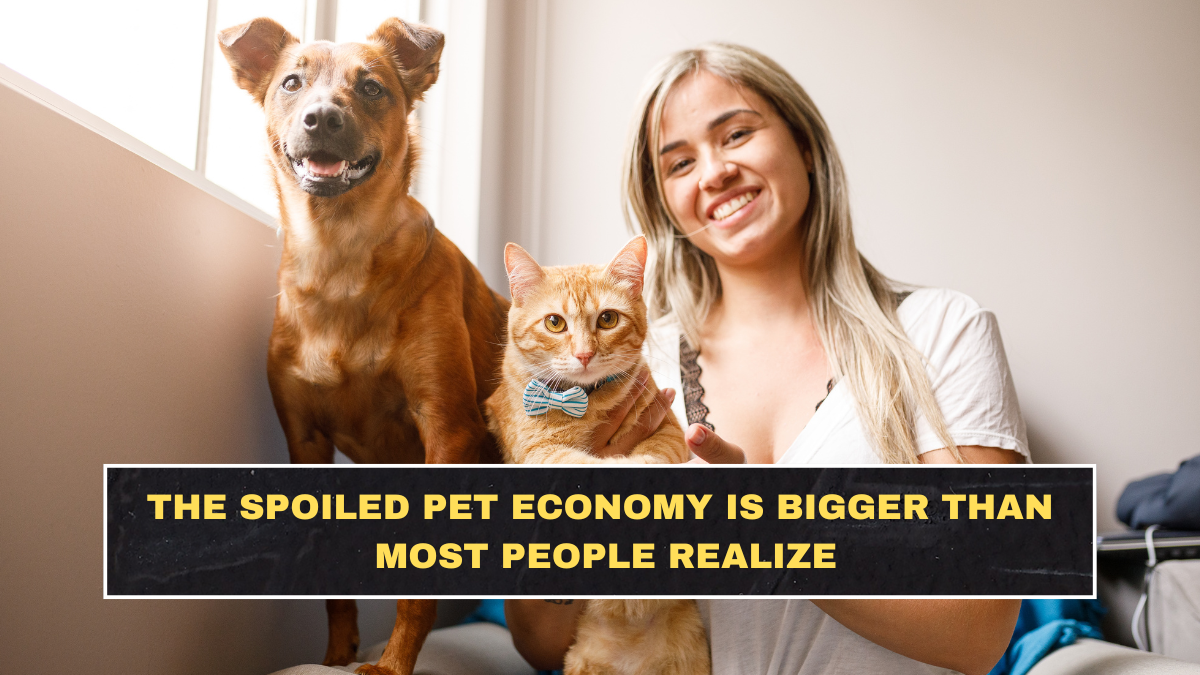
The spoiled pet economy is bigger than most people realize because pet spending is no longer mainly about food, flea treatment, and the occasional vet visit. It now includes lifestyle goods, gifts, premium nutrition, services, celebrations, and emotional purchases that look a lot more like family spending than animal maintenance. The American Pet Products Association says U.S. pet industry expenditures reached $158 billion in 2025 and were expected to keep climbing in 2026, while broader market forecasts show the global pet care market continuing to expand strongly this decade.
The key shift is behavioral, not just financial. Industry reporting says the “real story” behind 2026 pet spending is changing owner behavior, including affordable premium buying, proactive health spending, digital-first shopping, and stronger emotional attachment. In India, Economic Times coverage last week said Gen Z and millennials drive over 80% of pet care demand on Flipkart, while pet wellbeing and nutrition-focused products are seeing strong growth as pets are treated more like family members.
Why is the spoiled pet economy growing so fast?
Because people increasingly treat pets like dependents, not side characters in the household. That emotional shift changes what counts as a reasonable purchase. Once a pet is seen as family, spending on better food, birthday gifts, daycare, grooming, insurance, wellness items, and even curated subscriptions becomes easier to justify. APPA’s 2026 trend summary says the market is not just growing in size, but changing in how owners buy and what they value.
There is also a demographic push behind it. Recent India pet-economy reporting says younger consumers are shaping the market more aggressively, and Berlin Packaging’s 2026 pet-care trends says the major forces behind growth include affordable premium, proactive health, and stronger digital engagement. In plain terms, people are not just pampering pets randomly. They are building consumption habits around them.
What does the spoiled pet economy actually include?
It includes anything that turns pet ownership into lifestyle spending rather than basic care. That means premium food, customized treats, gifting, apparel, grooming upgrades, pet tech, daycare, birthday parties, wellness products, boutique accessories, and convenience services. Petfood Industry’s 2026 economics coverage says spending pressure inside the pet sector has become uneven, with veterinary services rising 7.8% year over year, pet services up 5.4%, and pet supplies up 1.5%, which shows how service-led and premium categories are absorbing more money.
The most telling detail is that the category is no longer limited to obvious needs. It now includes emotional spending and identity spending. Forbes’ January 2026 piece on the future of the pet economy says consumer spending is increasingly being shaped by a willingness to invest in wellness, convenience, and premium care as pets take on a more central emotional role in households.
Why are owners spending emotionally on pets instead of just practically?
Because pets absorb a lot of the emotional roles that people once reserved for extended family or traditional household structures. Smaller households, urban living, and daily stress make pets feel more central. That does not mean every purchase is rational. It means the purchases are emotionally coherent. APPA’s 2026 write-up says the story is not only rising totals but changing priorities, which strongly suggests that people are buying around attachment, reassurance, and perceived care quality, not merely around survival needs.
The numbers back that up indirectly too. TGM Research’s recent pet-industry analysis says nearly 48% of pet owners now set a budget for pet spending, up from 42% the year before, and that health-related expenses alone averaged $1,135 in 2025, up from $998 in 2024. That means pet spending is becoming planned household spending, not incidental cash leakage.
Which parts of the spoiled pet economy are growing fastest?
The strongest areas are usually the ones mixing care with emotion. Here is the practical breakdown:
| Category | Why people spend on it | What it signals | Main risk |
|---|---|---|---|
| Premium food and treats | Owners connect food with love and health | “Good pet parent” behavior | Expensive branding can outrun actual quality |
| Pet services | Saves time and reduces guilt | Convenience plus care | Recurring costs rise fast |
| Wellness and health products | Feels preventive and responsible | Long-term care mindset | Easy to overspend on vague claims |
| Gifting and celebration spending | Makes pets part of family rituals | Emotional inclusion | More about owner than pet sometimes |
| Curated lifestyle products | Matches owner identity and taste | Pet as extension of lifestyle | Decorative spending dressed as necessity |
That table matters because the spoiled pet economy is not random splurging. It is a pattern of emotionally justified premiumization, and brands understand that very well. The strongest products are not always the most necessary. They are the ones easiest to frame as care. This interpretation is supported by APPA’s shifting-behavior framing, Berlin Packaging’s “affordable premium” trend analysis, and current India market reporting on wellbeing-led demand.
Is this mainly a U.S. phenomenon, or is it global?
It is clearly broader than the U.S. Reuters reported today that China’s pet food market has grown to over $24 billion, with annual sales increasing sixfold from 2014 to 2024 as consumers shift toward fresher, more tailored products. In Australia, a recent report put the country’s pet food industry at roughly A$9.8 billion, driven by demand for raw and fresh diets as pets are increasingly humanized. India is also showing strong premiumization signals through younger buyers and nutrition-led categories.
So no, this is not just American excess. It is a wider consumer shift wherever urban pet ownership, rising incomes, and digital shopping make premium pet spending easier to normalize. The exact products vary by market, but the logic is the same: pets are becoming lifestyle spend recipients.
Where does the spoiled pet economy start to break down?
It breaks down where affordability collides with emotion. Owners may want premium everything, but rising costs make that harder to sustain. Petfood Industry’s 2026 economics piece says inflation inside pet categories remains uneven, with services and vet costs rising faster than food. Investopedia reported last month that soaring vet prices are pushing some owners to delay care, with veterinary visits declining 2–3% in 2025 while revenue growth came mainly from price increases.
That means the spoiled pet economy is real, but it is not limitless. People will spend emotionally on pets, but not without pressure. The market is becoming more selective, with owners trying to balance indulgence and practicality. Berlin Packaging’s 2026 trend summary gets this right by emphasizing affordable premium rather than endless luxury.
What does this trend say about modern consumer behavior?
It says consumers are increasingly willing to spend where emotional meaning is strongest, even when budgets are tighter elsewhere. Pets now sit inside the same spending logic as children’s products, home comfort, and personal wellness: people justify the expense because it feels relational. Forbes’ 2026 pet-economy piece and APPA’s 2026 industry summary both point toward a market shaped by emotional attachment plus selective premium buying rather than simple volume growth.
It also says brands have learned how to turn affection into recurring commerce. That is not cynical, it is just true. The pet category now sells not only food and care, but reassurance, identity, convenience, and the feeling of being a thoughtful pet parent. Whether that is wise spending depends on the product. Whether it is powerful spending is no longer in doubt.
Conclusion
The spoiled pet economy is bigger than most people realize because pet spending now includes far more than basic care. It reaches into premium food, services, wellness, gifting, and lifestyle purchases that reflect how emotionally central pets have become in modern households. The market data shows this is not a quirky niche. It is a structural shift. The only thing people still get wrong is pretending all this spending is purely practical. Much of it is emotional spending with a care-based excuse. That does not make it fake. It just makes it human.
FAQs
What is the spoiled pet economy?
It is the growing part of the pet market built around premium, emotional, and lifestyle spending rather than just basic animal care, including services, wellness, gifting, premium food, and convenience purchases. This is supported by APPA’s 2026 trend summary and broader pet-care market reporting.
How big is the pet economy now?
APPA says U.S. pet industry expenditures reached $158 billion in 2025, while broader market forecasts project continued strong growth in the global pet-care industry through the next decade.
Why are younger consumers driving so much pet spending?
Recent India market reporting says Gen Z and millennials drive over 80% of pet care demand on Flipkart, and industry trend reports point to stronger emotional attachment, wellness buying, and digital shopping habits among younger owners.
Is the spoiled pet economy sustainable?
Only partly. Pet spending is still growing, but rising veterinary and service costs are putting pressure on owners, which means the market is likely to stay strong but become more selective and value-conscious.