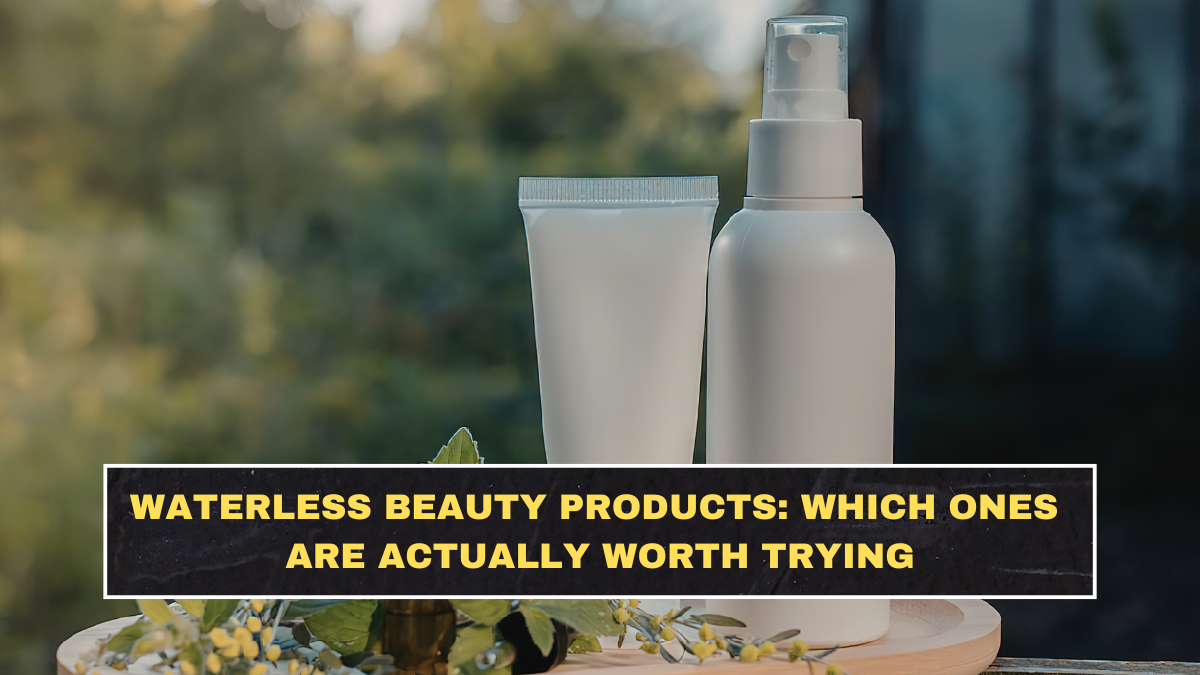
Waterless beauty keeps resurfacing because it promises three things people like hearing at once: less waste, easier travel, and more concentrated formulas. That combination is commercially strong, especially in a beauty market still trying to sound sustainable without making products feel less premium. Allure’s 2026 hair-care trend coverage places waterless hair care, including shampoo bars, inside the broader shift toward value and sustainability, while current industry reporting still frames water-free formats as a live innovation space rather than a dead fad.
The problem is that waterless beauty is not automatically better. Some products are genuinely useful. Others are just inconvenience sold as moral superiority. That is the part brands avoid saying clearly. Allure’s current reporting on shampoo bars makes the category’s weakness obvious: solid formats have real packaging and travel advantages, but many still struggle with performance, messy storage, or consumer frustration when formulas underdeliver.
Why does waterless beauty keep coming back?
Because the logic behind it is still strong. If a product removes water, it can often become lighter to ship, easier to pack, and sometimes more concentrated. That appeals to both sustainability-minded buyers and people who simply hate carrying bulky bottles. Allure’s 2026 trend reporting links waterless hair care to a value-and-sustainability mindset, which explains why the category keeps returning even after earlier hype cycles faded.
There is also a branding advantage. “Waterless” sounds smarter than “solid” or “concentrated,” even when the real user benefit is just portability. That is why brands keep reviving the idea in new forms, from shampoo bars to toothpaste tablets to anhydrous serums. Industry product coverage from GCI Magazine in 2025 highlighted waterless high-potency skin-care concepts specifically around concentration and performance, not only eco messaging.
What counts as a waterless beauty product?
Usually it means a product made without water as the main base, or one that uses much less water than standard liquid formats. That includes shampoo bars, conditioner bars, powdered cleansers, cleansing grains, solid deodorants, toothpaste tablets, solid balms, and some oil-based or anhydrous serums. Beauty Packaging coverage from earlier category launches explicitly described toothpaste tablets as waterless formulas, and recent concept reporting continues to show water-free serums positioned as high-potency products.
That matters because consumers often assume “waterless” only means bars. It does not. Some of the most functional waterless products are not solid at all. They are concentrated oils, balms, or powder-to-activate formats. So the category is broader than the usual shampoo-bar conversation.
Which waterless beauty products are actually worth trying first?
The best entry points are the formats where water removal solves a real problem instead of creating a new one. Here is the practical breakdown:
| Product type | Why it can be worth trying | Best use case | Main weakness |
|---|---|---|---|
| Shampoo bars | Less packaging, easy travel, can last longer | Frequent travelers, lower-waste routines | Performance varies a lot |
| Toothpaste tablets | Very portable, simple for travel | Carry-on travel, minimal packing | Texture can feel unfamiliar |
| Solid deodorants | Easy everyday use, already mainstream-adjacent | Daily hygiene, gym bags, travel | Some formulas drag or feel waxy |
| Powder cleansers | Concentrated and shelf-stable | Oily skin, travel, controlled use | Easy to overuse or mis-mix |
| Waterless serums or balms | Can feel potent and targeted | Dry skin, focused treatment use | Often expensive and easy to overpromise |
That table matters because waterless beauty works best when the format clearly improves storage, portability, or concentration. If it only makes the routine more annoying, the sustainability story is not enough.
Are shampoo bars the best example of waterless beauty?
They are the most visible example, but not always the best. Allure’s latest reporting says shampoo bars still have not reached mass-market success despite decades of availability, mainly because too many users still complain about dryness, frizz, melting bars, or awkward usage. That tells you something important: visibility does not equal maturity.
At the same time, Allure also notes that some brands have improved formulas and now emphasize performance and value instead of only sustainability. So shampoo bars are worth considering if someone travels often, wants lower packaging waste, and is willing to test for hair-type fit. They are not worth romanticizing as a universal replacement for bottled shampoo.
Which waterless formats make the most practical sense for travel?
Toothpaste tablets, solid deodorants, powder cleansers, and certain balms make the most practical sense because they reduce leak risk and usually fit better into small bags. That is why toothpaste tablets keep appearing in beauty packaging coverage as a straightforward waterless format: the consumer benefit is obvious without much explanation.
Travel is where waterless beauty often feels least like ideology and most like convenience. A tablet, stick, or solid that does not spill and does not count as a messy liquid problem is simply easier. That is a real advantage, not trend language.
Are waterless formulas actually more concentrated and effective?
Sometimes yes, but not automatically. GCI Magazine’s 2025 product-concept coverage described a waterless vitamin C serum as high-potency and targeted, which makes sense because some active ingredients can be delivered effectively in anhydrous systems.
But this is also where brands get slippery. “No water” does not automatically mean “more effective.” Some products are simply reformulated into a different base with better marketing. Concentration can be useful, but only if the formula remains stable, pleasant to use, and appropriate for the skin or hair need.
Where does waterless beauty still fall short?
It falls short when format gets prioritized over performance. Allure’s shampoo-bar reporting is the clearest example: consumers may like the sustainability idea, but many still quit after poor results or annoying storage problems. That same problem can affect powder cleansers that feel fussy, tablets that feel odd, or balms that are too greasy for regular use.
This is the blind spot in a lot of low-waste beauty discourse. If the product creates friction people will not tolerate, the routine fails. A product that looks good in a refill store and then sits unused in the bathroom is not a sustainability win. It is just wasted virtue.
Is this trend more about sustainability or more about premium positioning?
It is both. Waterless beauty clearly fits sustainability narratives around packaging, shipping weight, and resource use, but it also fits premium positioning because “concentrated” and “high-potency” sound luxurious. Current industry concept coverage around waterless skincare leans heavily into potency language, not only eco language.
That is why buyers need to judge the category more harshly than the branding does. Some waterless products are genuinely smarter formats. Others are just ordinary products turned into harder-to-use formats so brands can sound more innovative.
Who should actually bother with waterless beauty?
People who travel often, care about portability, or already like simplified low-leak formats are the best fit. People who are willing to adapt their routine slightly may also benefit from certain formats like powder cleansers or bars. On the other hand, someone who wants zero friction and already likes their current routine may gain very little from switching.
That is the part most category hype ignores. Waterless beauty is not a moral upgrade for everyone. It is a format decision. If the format solves a real problem for you, it can be worth it. If it does not, the category is just adding hassle.
Conclusion
Waterless beauty products are worth trying when the water-free format makes the product easier to travel with, store, or use efficiently. The strongest examples are toothpaste tablets, some solid deodorants, selected powder cleansers, and certain concentrated balms or serums. The weaker examples are the ones that ask consumers to sacrifice too much performance for the sake of eco language. The category is real, but it is not automatically smart. The best waterless product is not the one making the biggest sustainability speech. It is the one that still works well enough that you actually use it.
FAQs
What are waterless beauty products?
They are beauty or personal-care products made without water as the main base, or with much less water than standard liquid formats. Examples include shampoo bars, toothpaste tablets, powder cleansers, and some anhydrous serums or balms.
Are waterless beauty products better for travel?
Often yes. Many solid, powder, or tablet-based formats are easier to pack, less likely to leak, and more convenient for carry-on use.
Are waterless formulas always more effective?
No. Some may be more concentrated or better suited to certain actives, but “waterless” alone does not guarantee stronger performance.
Why do some waterless beauty products fail with users?
They often fail when the product format creates too much friction, poor performance, or annoying storage issues. Current Allure reporting on shampoo bars shows exactly that problem.