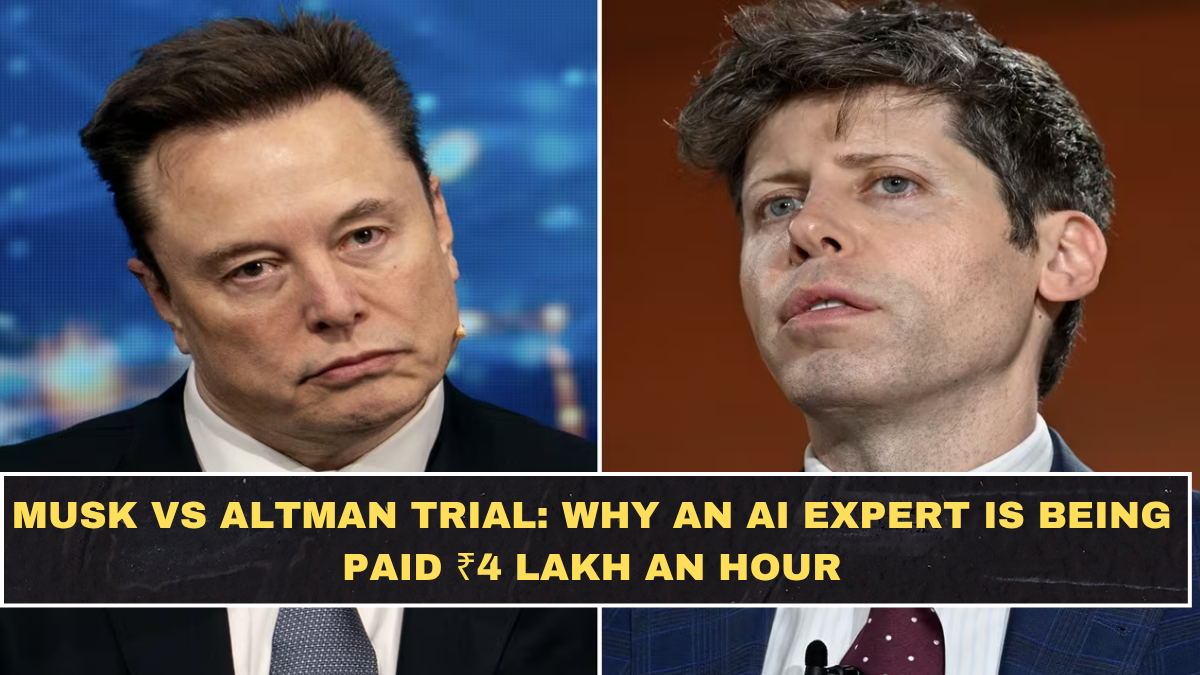
Elon Musk’s courtroom fight with Sam Altman and OpenAI has become one of the most watched tech trials because it is not only about money. The case focuses on whether OpenAI moved away from its original nonprofit mission and became too focused on commercial gain. Musk argues that OpenAI’s leaders betrayed the founding promise, while OpenAI says Musk is trying to damage a rival after launching his own AI company, xAI.
The trial is taking place in federal court in Oakland before Judge Yvonne Gonzalez Rogers. Business Insider reported that the proceedings are even being livestreamed through the Northern District of California federal court’s YouTube page, which has made the case unusually visible to the public. That visibility matters because OpenAI is no longer just a startup story; it is now central to global debates about AI safety, profit, power and control.
Why Is Stuart Russell So Costly?
Stuart Russell, a well-known AI researcher and professor, has become a key figure because he is testifying as Musk’s AI expert witness. India Today reported that Russell is being paid $5,000 per hour, roughly ₹4.1 lakh, for 40 hours of preparation, and $1,500 per hour after that. The report also said his total payment from the trial may reach about $235,000, around ₹1.95 crore.
That figure looks shocking, but expert witnesses in high-stakes tech trials are not hired like normal consultants. They are paid for reputation, technical authority, preparation time and the ability to explain complex issues to a jury. In this case, Russell’s value comes from his long-standing work on AI risk and his ability to frame OpenAI’s mission shift as more than a corporate dispute.
What Are The Key Numbers?
| Trial Detail | Reported Information | Why It Matters |
|---|---|---|
| Expert fee | $5,000 per hour | Shows how high-stakes the case is |
| Preparation time | 40 hours at top rate | Makes testimony expensive before court appearance |
| Later rate | $1,500 per hour | Still far above normal professional billing |
| Total possible payment | Around $235,000 | Turns expert testimony into a headline |
| Musk donation claim | Around $38 million | Forms part of Musk’s original mission argument |
| Brockman stake | Nearly $30 billion | Raises questions about nonprofit-to-profit rewards |
The numbers explain why this trial is getting mainstream attention. Musk’s side is using AI-safety testimony to argue that OpenAI’s direction matters beyond investors, while OpenAI’s side is defending its structure and growth. AP reported that OpenAI president Greg Brockman disclosed in court that his stake could be worth nearly $30 billion, which made the financial side of the case even more explosive.
What Did Russell Warn About?
Russell’s testimony matters because he has long warned about the risks of advanced AI systems and the danger of an AI arms race. TechCrunch reported that he was Musk’s only AI expert witness and that his concerns focused on whether OpenAI’s structure still supports safety-first development. That makes his role important because the trial is not only judging contracts and promises; it is also testing how seriously courts treat AI-risk arguments.
However, the court has limits. Reports noted that Judge Rogers restricted some broader “AI doom” discussion, meaning the case cannot become a full philosophical debate about the end of humanity. That is important because Musk may want to frame the dispute as an AI-safety emergency, but the court still has to focus on legally relevant issues.
Why Is OpenAI Fighting Back?
OpenAI’s defence is that it did not betray the mission in the way Musk claims. The company argues that its capped-profit structure and commercial partnerships were needed to raise the huge capital required for advanced AI development. OpenAI also suggests Musk’s lawsuit is influenced by rivalry, especially because he now runs xAI, a direct competitor in the AI race.
The financial details are making the defence harder to simplify. Wired reported that Brockman defended his large OpenAI stake by pointing to years of “blood, sweat, and tears,” while also saying OpenAI’s nonprofit foundation holds a much larger stake. That line may help OpenAI show mission continuity, but critics will still ask whether nonprofit ideals can survive when insiders become billionaires.
Why Should Readers Care?
- AI safety is on trial: The case brings abstract AI-risk arguments into a real courtroom.
- Nonprofit trust is being tested: Donors and founders may rethink how mission-driven startups are structured.
- Big money is exposed: Billion-dollar stakes make the “public good” claim harder to judge casually.
- Competition is personal: Musk, Altman and OpenAI are fighting for control over the AI narrative.
- The result may influence AI governance: Even if narrow legally, the case can shape public debate.
This case matters because AI companies are becoming too powerful to be judged only by product launches. Their structures, incentives and leadership decisions now affect education, jobs, national security and public trust. The Musk-Altman trial is messy, but it forces a serious question: who should control technology that could reshape society?
What Is The Final Conclusion?
The Musk vs Altman trial is not just a billionaire feud dressed up as a legal case. It is a fight over OpenAI’s original promise, its commercial future and whether AI safety can remain credible inside a company now tied to massive wealth. Stuart Russell’s ₹4 lakh-per-hour testimony became viral because it puts a price tag on expert authority in one of the most important AI disputes of the decade.
The blunt truth is that both sides have uncomfortable questions to answer. Musk must prove this is about mission and not rivalry. OpenAI must prove that profit, power and insider wealth have not swallowed its public-benefit purpose. That is why this trial is not just tech news; it is a warning about where the AI industry is heading.
Frequently Asked Questions
Why is Stuart Russell being paid ₹4 lakh an hour?
Stuart Russell is being paid such a high fee because he is testifying as an expert witness in a major AI trial involving Elon Musk, Sam Altman and OpenAI. India Today reported that his rate is $5,000 per hour for preparation, which is around ₹4.1 lakh. His expertise in AI risk makes his testimony valuable for Musk’s argument.
What is the Musk vs Altman trial about?
The trial focuses on Musk’s claim that OpenAI moved away from its original nonprofit mission and became too focused on profit. Musk says OpenAI’s leaders betrayed the founding purpose, while OpenAI argues that its commercial structure was needed to fund advanced AI development. The case also includes questions around donations, governance and personal financial gain.
Why is Greg Brockman’s OpenAI stake important?
Greg Brockman’s stake is important because AP reported that he disclosed in court that it could be worth nearly $30 billion. That figure strengthens Musk’s argument that OpenAI’s transformation created huge insider wealth. OpenAI’s side argues that the nonprofit foundation still holds a larger stake and that the mission remains intact.
Can this trial change the AI industry?
The trial may not rewrite the entire AI industry by itself, but it can strongly influence public debate around AI governance, nonprofit structures and safety promises. If the court takes mission-related claims seriously, future AI companies may face more pressure to define their structures clearly. Even without a dramatic ruling, the case is already shaping how people see OpenAI and AI power.