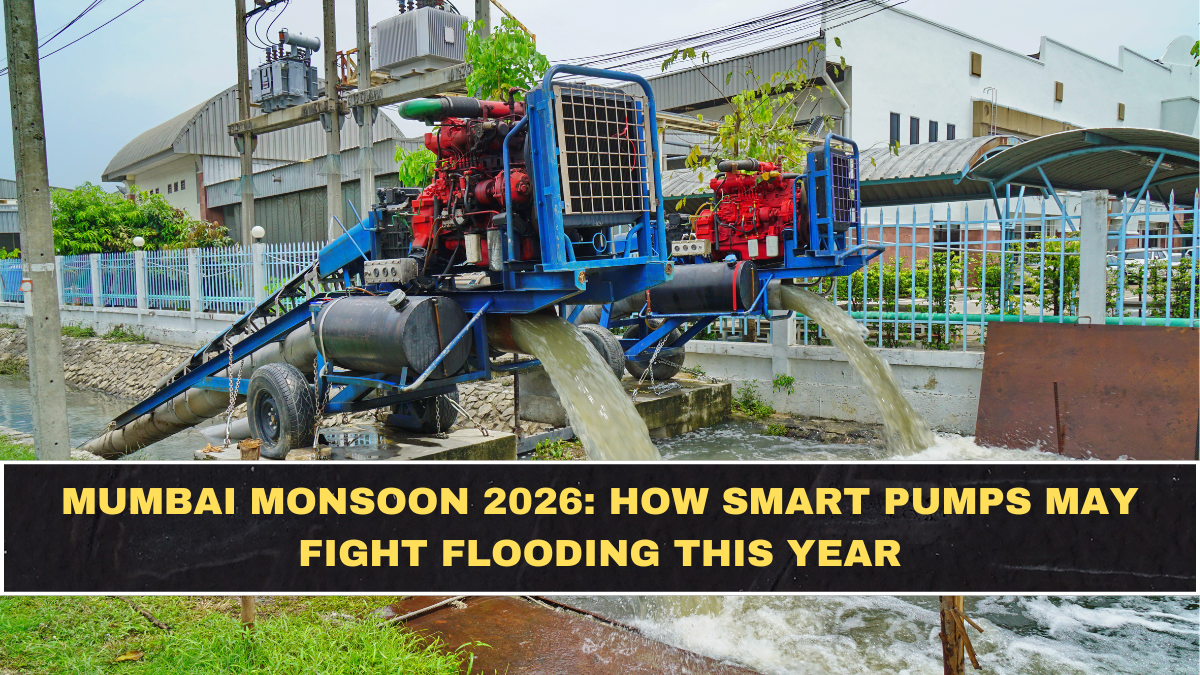
Mumbai is preparing early for monsoon 2026 because flooding is not a surprise problem for the city anymore. Every year, low-lying roads, railway underpasses, traffic-heavy junctions and coastal zones face waterlogging when heavy rain combines with high tide and drainage pressure. This year, the Brihanmumbai Municipal Corporation has moved faster with dewatering pumps, flood-spot mapping and real-time monitoring to reduce chaos before the peak rains arrive.
The biggest change is the use of IoT-enabled dewatering pumps. Hindustan Times reported that BMC will install 547 portable dewatering pumps and all of them will be fitted with IoT-based devices so they can be controlled through smartphones and monitored in real time from a control room. The pumps are expected to be ready from May 5 because of last year’s early monsoon onset and the possibility of pre-monsoon showers.
How Many Smart Pumps Will BMC Deploy This Year?
BMC is planning to deploy 547 dewatering pumps across Mumbai for the 2026 monsoon season. Times of India reported that the pumps are being hired under a two-year contract costing ₹142 crore, with 146 pumps in the city area, 223 in the western suburbs and 178 in the eastern suburbs. This is higher than the 504 pumps deployed during the previous monsoon season.
| Monsoon Preparedness Item | 2026 Data |
|---|---|
| Total portable dewatering pumps | 547 |
| Pumps in island city | 146 |
| Pumps in western suburbs | 223 |
| Pumps in eastern suburbs | 178 |
| Previous monsoon pump count | 504 |
| Contract value | ₹142 crore |
| Operational period reported | May 25 to October 15, 2026 |
| Additional departmental pump sets | 26 |
This table shows that BMC is not depending only on normal drains to handle rainwater. Dewatering pumps are critical in places where water does not drain naturally because the area is low-lying or the drainage outlet gets blocked during heavy rain and high tide. The real test, however, will not be the number of pumps on paper; it will be whether they work during intense rainfall hours.
What Makes These Pumps “Smart” This Year?
The “smart” part comes from IoT-based monitoring. Instead of waiting for complaints that a pump has stopped working, BMC officials will be able to track pump performance in real time. Free Press Journal reported that the pumps will be fitted with IoT devices, controlled through smartphones and monitored from a control room, helping officials know whether pumps are functioning or need attention.
This is useful because one non-functional pump at a key waterlogging spot can quickly create traffic jams, railway access problems and commuter delays. Real-time monitoring does not magically stop flooding, but it reduces the excuse of “we did not know the pump failed.” That is the point where technology can actually help if BMC uses it seriously.
Which Flood-Prone Spots Are Being Tracked?
Mumbai has identified hundreds of flood-prone locations for the 2026 monsoon. Indian Express reported that BMC’s flooding spots list has grown to 496, with key South Mumbai areas such as Oval Maidan, Churchgate, Metro Cinema, Mantralaya, Kemps Corner and Hutatma Chowk added after heavy waterlogging last year. These are not remote corners; many are high-footfall and high-traffic locations.
Free Press Journal reported that out of 496 flood-prone spots, 403 have already been addressed, while 13 more can be resolved before the monsoon. That still leaves unresolved or difficult locations where pump deployment, drain cleaning and emergency response will matter more than official claims.
Why Does Mumbai Flood So Often During Monsoon?
Mumbai floods because its geography and infrastructure work against it during intense rain. Parts of the city are low-lying, several areas lie close to sea level, and drainage flow can slow down during high tide. When heavy rainfall arrives in short bursts, water cannot escape quickly, especially if drains are choked, road works are incomplete or pumping systems fail.
This is why pumps are only one part of the solution. BMC also needs desilting, clear stormwater drains, safe road surfaces, tree-risk reduction and proper coordination with railways, traffic police and disaster response teams. A smart pump helps after water accumulates, but clean drains and working outfalls reduce how badly water accumulates in the first place.
What Other Monsoon Work Is BMC Doing?
BMC’s monsoon preparation also includes pothole repairs, road work management, unsafe building identification, tree trimming and desilting. Hindustan Times reported that BMC has allocated ₹45 crore for pothole repairs this year, down from ₹97 crore in 2025, and said road works that are less than 70% complete are unlikely to be finished before monsoon and will be covered with mastic.
Times of India reported that BMC issued notices for trimming 7,978 trees on private premises and identified 59,720 trees for pruning citywide, with 26,572 already trimmed. This matters because heavy rain and strong wind can bring down weak trees, damage vehicles, block roads and create power or safety risks.
Why Does Monsoon 2026 Matter For Mumbai’s Water Supply Too?
Monsoon 2026 is not only about flooding; it is also important for water supply. Times of India reported that Mumbai’s seven supply lakes had 4.1 lakh million litres of water stock as of April 28, 2026, equal to 28.35% of capacity. That was better than the same date in 2025 and 2024, but the state still warned civic bodies about possible below-normal monsoon rainfall linked to El Niño and Indian Ocean Dipole conditions.
This creates a strange situation for Mumbai. Too much rain in a short time can flood roads, but weak seasonal rainfall can hurt lake storage. So the city needs both flood control and water conservation. Anyone pretending monsoon planning is only about waterlogging is missing half the problem.
What Is The Conclusion?
Mumbai Monsoon 2026 preparation looks stronger on paper because BMC is using 547 dewatering pumps, IoT-based monitoring, flood-spot mapping and early pump readiness. The plan directly targets the city’s recurring waterlogging problem, especially in low-lying and high-footfall areas. The addition of smart monitoring can reduce pump failure delays if the control room responds fast enough.
But Mumbai should not fool itself. Smart pumps are not a permanent cure for flooding. They are an emergency tool inside a larger system that still depends on desilting, drain capacity, road-work discipline, high-tide planning and fast public alerts. The real test will come during the first intense rain spell, not during a preparedness meeting.
FAQs
How Many Dewatering Pumps Will BMC Deploy For Mumbai Monsoon 2026?
BMC will deploy 547 portable dewatering pumps for Mumbai Monsoon 2026. Times of India reported that this is higher than the 504 pumps used in the previous monsoon season and is part of a ₹142 crore two-year contract.
What Is Special About BMC’s Smart Pumps This Year?
The pumps will have IoT-based devices for real-time monitoring. Hindustan Times reported that the pumps can be controlled through smartphones and monitored from a control room, helping officials track whether they are working during rainfall.
How Many Flood-Prone Spots Has BMC Identified In Mumbai?
BMC has identified 496 flood-prone spots for the 2026 monsoon. Indian Express reported that the list includes South Mumbai locations such as Oval Maidan, Churchgate, Metro Cinema, Mantralaya and Hutatma Chowk after waterlogging last year.