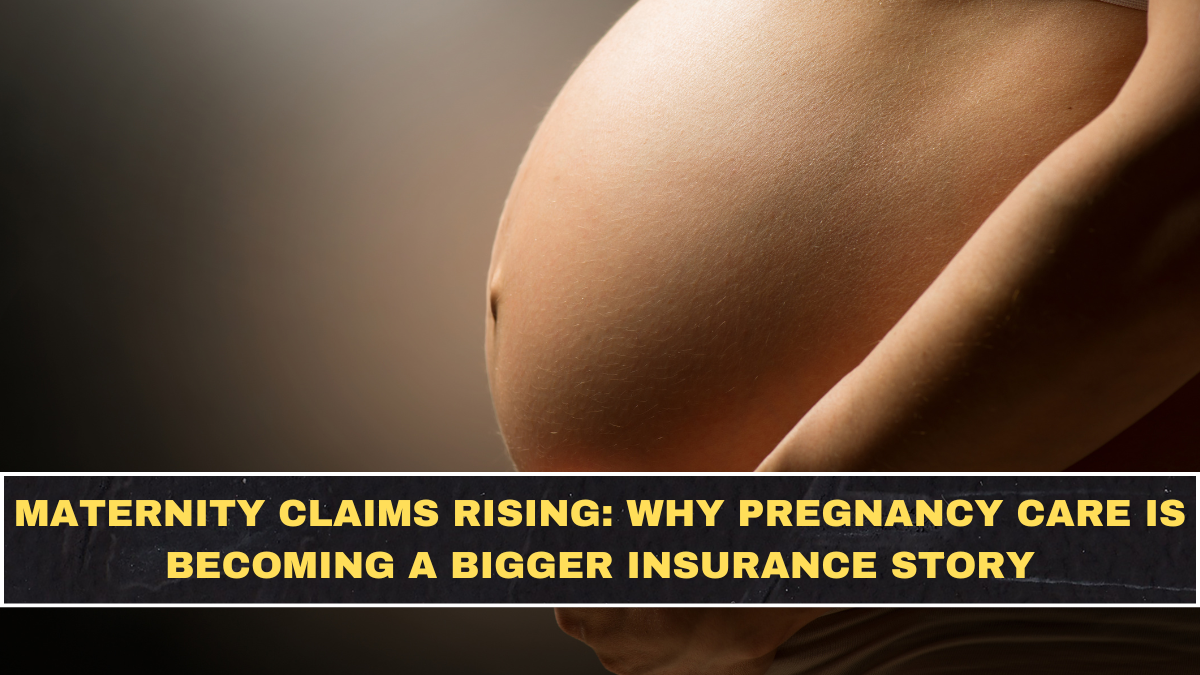
Maternity insurance claims are rising in India, and this is not just an insurance-company headache. According to a Care Health Insurance report cited by ETBFSI, women’s health insurance claims rose 37% between FY25 and FY26, while maternity claim outgo increased 25% over the last two years. That means more women are using formal healthcare, but the cost of pregnancy care is also becoming harder to ignore.
This shift matters because pregnancy is often treated emotionally, not financially. Families plan baby names, photoshoots, rooms and celebrations, but many still underestimate hospital bills, scans, medicines, C-section risk, newborn care and insurance waiting periods. That is poor planning, and it can turn a joyful phase into a financial shock.
What Do The Numbers Show?
| Maternity Insurance Trend | Reported Detail |
|---|---|
| Women’s health claims growth | 37% from FY25 to FY26 |
| Maternity claim outgo rise | 25% over two years |
| Tier 2 and Tier 3 contribution | Nearly 60% of maternity claims |
| C-section share in births | More than 27% in 2024–25 |
| Women above 35 | 12% of claims, 18% of claim amount |
| Faster discharge trend | 82% discharged within five days in FY26 |
The sharpest signal is coming from smaller cities. Tier 2 and Tier 3 cities accounted for nearly 60% of maternity claims reported by the insurer in FY26, which shows that formal pregnancy care is no longer just a metro-city story. More families outside big cities are using insured hospital care, and that is a major healthcare shift.
The other important point is cost intensity. Women above 35 accounted for 12% of maternity claim volumes but 18% of the total claim amount, suggesting that later-age pregnancies can carry higher treatment costs. This does not mean late pregnancy is automatically unsafe, but it does mean medical monitoring and financial planning become more important.
Why Are Pregnancy Costs Rising?
Pregnancy care is becoming costlier because hospital-based maternity care now involves more scans, specialist consultations, medicines, private-room charges, procedures, newborn monitoring and emergency preparedness. Even when hospital stays become shorter, the total bill may still rise because treatment intensity and hospital pricing are increasing.
Main cost drivers include:
- Higher private hospital delivery charges.
- More C-section and procedure-linked expenses.
- Later-age pregnancies needing closer monitoring.
- Newborn care, NICU and emergency support costs.
- Better access to formal hospital delivery in smaller cities.
- Inflation in healthcare services and hospital packages.
The blunt truth is that many families still think delivery cost means only the final hospital bill. That is naive. Pregnancy spending starts months earlier through tests, scans, supplements, doctor visits and possible complications. If insurance does not cover these properly, the family pays from its own pocket.
Why Are C-Sections Important In This Story?
C-section deliveries matter because they usually cost more than normal deliveries and often need more medical resources. ETBFSI’s report cited government data saying C-sections accounted for more than 27% of births in 2024–25. That share directly affects insurance payouts because surgical deliveries are more expensive and may involve longer recovery or extra care.
This does not mean every C-section is unnecessary. Many are medically required and can save lives. But families should ask clear questions, understand the doctor’s reasoning and choose hospitals carefully. Blindly accepting every cost without explanation is not smart healthcare behaviour.
Why Does Insurance Planning Matter Early?
Maternity insurance is not something to buy after pregnancy starts and expect instant coverage. Many individual health insurance plans have waiting periods for maternity benefits, and claims during that period may not be accepted. ManipalCigna explains that a maternity waiting period is the time after buying a policy during which pregnancy-related claims are not admissible.
This is where couples make a basic but expensive mistake. They start thinking about maternity cover only after planning a baby or after pregnancy is confirmed. By then, it may already be too late for many policies. If a couple wants insurance support, they need to check maternity benefits, limits and waiting periods much earlier.
What Should Families Check Before Delivery?
Families must stop trusting only verbal promises from agents, HR teams or hospital desks. Insurance details must be checked in writing because maternity cover often has sub-limits, exclusions, waiting periods and newborn-care conditions. A policy may say “maternity covered,” but the usable amount may still be far below the real hospital bill.
Check these before choosing care:
- Maternity waiting period and eligibility date.
- Normal delivery and C-section sub-limits.
- Pre-natal and post-natal expense coverage.
- Newborn cover and NICU conditions.
- Room-rent limit and hospital network.
- Claim process, documents and cashless approval rules.
Also compare the hospital package with policy limits before admission. If the hospital estimate is ₹1.5 lakh and your maternity sub-limit is ₹50,000, then insurance will not magically cover the full bill. That gap needs planning, not last-minute panic.
Conclusion: What Do Rising Maternity Claims Really Mean?
Rising maternity claims show that more Indian women are using formal healthcare, especially in Tier 2 and Tier 3 cities. That is a positive shift because institutional care can improve safety for mothers and newborns. But the rise in claim outgo also proves that pregnancy care is becoming a serious financial-planning issue, not just a medical event.
The honest lesson is simple: couples need to plan maternity cover before pregnancy, not after. They must understand policy limits, waiting periods, C-section costs and newborn-care expenses clearly. A baby brings joy, but poor financial planning around childbirth is not emotional; it is avoidable carelessness.
FAQs?
Why are maternity claims rising in India?
Maternity claims are rising because more women are using formal hospital-based care and pregnancy-related treatment costs are increasing. Care Health Insurance’s report said women’s health claims rose 37% between FY25 and FY26, while maternity claim outgo rose 25% over two years. Tier 2 and Tier 3 cities are also contributing heavily to claim volumes.
Are C-sections increasing maternity insurance costs?
Yes, C-sections can increase maternity claim costs because surgical deliveries usually cost more than normal deliveries. The report cited government data showing C-sections accounted for more than 27% of births in 2024–25. Higher procedure intensity is one reason maternity insurance payouts are becoming larger.
When should couples buy maternity insurance?
Couples should check maternity insurance well before planning pregnancy because many policies have waiting periods. If the waiting period is not completed, maternity claims may not be accepted. Buying cover after pregnancy begins is usually too late for many individual health insurance plans.
What should families check in maternity insurance?
Families should check waiting period, delivery sub-limit, C-section cover, newborn cover, NICU conditions, room-rent limits, hospital network and cashless claim rules. They should also compare the hospital’s estimated package with the policy’s actual maternity limit. A policy with a low sub-limit may not cover the full delivery cost.