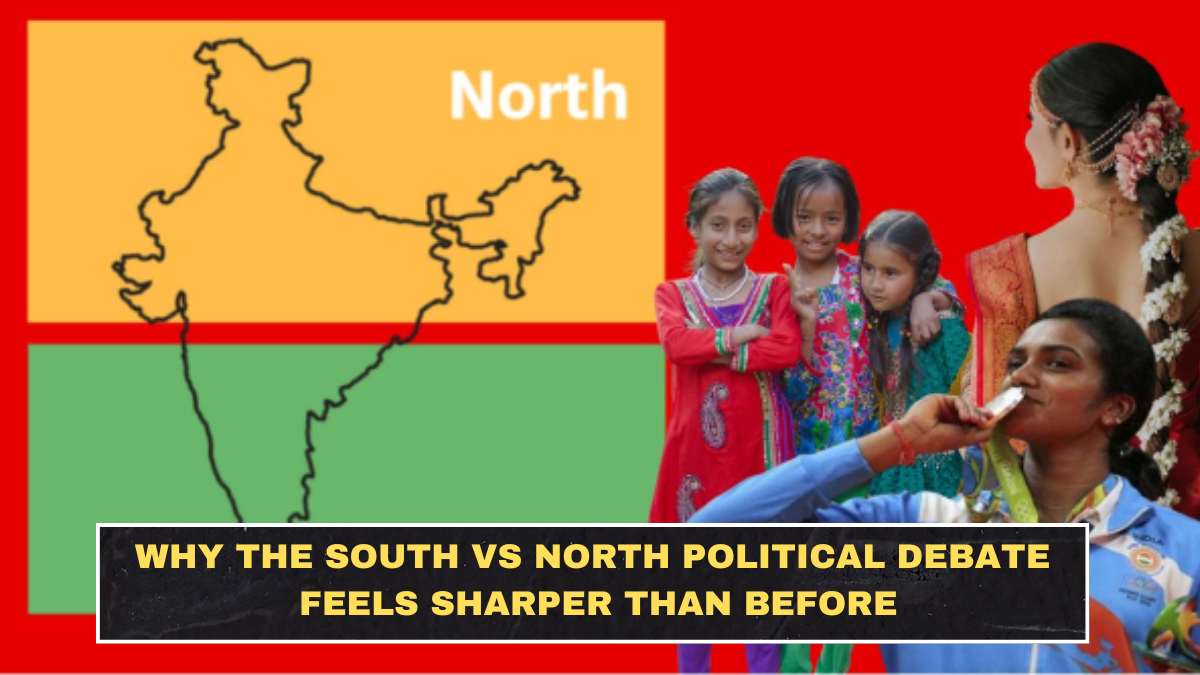
The South vs North political debate feels sharper now because several older tensions have started colliding at the same time. What used to be discussed separately as language, representation, taxation, federalism, and state autonomy is now being seen as one larger power struggle. The delimitation debate has pushed that shift into the open, especially because southern states fear that population-based seat redistribution could weaken their relative voice in Parliament.
This is not just about emotion or political theatre. The concern is structural. If representation is recalculated mainly through population, states that reduced fertility and slowed population growth could end up with less relative influence than faster-growing states. That is why southern leaders are framing this as an issue of fairness, not just arithmetic.
What Is Driving the Tension
A few issues are making the divide louder:
- delimitation and Lok Sabha seat redistribution
- fiscal devolution and tax-sharing complaints
- language policy disputes
- Centre-state power struggles
- fears of political over-centralisation
The reason this now feels more serious is that these issues are reinforcing each other. A state that already feels short-changed on finances or cultural recognition is more likely to treat delimitation as a threat rather than a neutral constitutional exercise. That cumulative distrust is what makes the debate politically dangerous.
Why Delimitation Sits at the Center
Delimitation is the biggest trigger because it turns abstract federal tension into a concrete question: who gets how much power in the Lok Sabha? Indian Express reported in March 2025 that almost all Opposition parties in the current debate argued that population should not be the sole basis for reapportioning Lok Sabha seats, because that would penalise states that controlled population growth better.
That fear is why the issue exploded in the South. At the March 2025 Joint Action Committee meeting on “Fair Delimitation,” leaders from multiple states warned that seat reallocation based mainly on population could “disempower” southern and other progressive states. Once leaders start using language like disempowerment, the debate is no longer technical. It becomes a direct political confrontation.
The Federalism Problem Behind It
The deeper issue is federal trust. India is constitutionally federal but politically often seen as highly centralised. A recent devolution report carried by PIB argued that India shows a trend toward centralisation of revenue collection, which adds context to why state-level suspicion is growing. If states already believe power and money are too concentrated at the Centre, then representation fights become even sharper.
That is why this debate is bigger than North versus South as geography. It is really about how India balances democratic population logic with regional equity, pluralism, and federal stability. Even commentary arguing in favour of delimitation now admits that the process has to balance electoral integrity with regional fairness.
The Political Reality in Simple Terms
| Issue | Why it matters now | Political effect |
|---|---|---|
| Delimitation | May change seat balance after post-2026 census process | South fears reduced relative voice |
| Fiscal devolution | States already argue over tax share and fairness | Deepens resentment toward Centre |
| Language and culture | Policy disputes are read as dominance, not neutrality | Makes identity politics sharper |
| Centralisation | More decisions seen as flowing from Delhi | Increases federal tension |
Is This Really a North vs South Divide?
Not completely, and that is where lazy commentary fails. This is not a clean battle of one region against another. There are political parties in the North that also care about federal balance, and there are different interests within the South as well. But the divide feels sharper because the demographic and political consequences of delimitation map visibly onto regional lines. That gives the debate a North–South shape even when the underlying issue is really about representation and federal design.
There is also a counterargument that deserves honesty: some analysts say delimitation should not be treated as an anti-South conspiracy and that representation eventually has to respond to population realities. That view exists, and ignoring it would be dishonest. The real conflict is that both democratic equality and regional fairness have valid claims, and India has not yet found a politically trusted formula to reconcile them.
Why the Debate Will Stay Loud
This debate will remain loud because the post-2026 census window makes the issue immediate rather than theoretical. Politicians are not arguing early by accident. They are trying to shape the rules before the process becomes harder to change. That is why the language around federalism, representation, and state rights is becoming more aggressive now.
Conclusion
The South vs North political debate feels sharper than before because it now combines representation, fiscal fairness, language anxiety, and federal distrust into one larger political struggle. Delimitation is the immediate trigger, but the deeper issue is whether India can protect both democratic representation and regional balance at the same time.
The blunt truth is this: the divide is getting louder because too many states believe the system may be redesigned without their trust. If that trust gap is not handled carefully, this debate will not stay a television talking point. It will become a deeper federal crisis.
FAQs
Why is the North vs South political debate growing in India?
Because delimitation, fiscal devolution, language policy, and Centre-state tensions are all being read together now instead of as separate issues.
Why are southern states worried about delimitation?
They fear that if Lok Sabha seats are redistributed mainly by population, their relative influence could decline despite better population control and social development outcomes.
Is this debate only about politics?
No. It is also about federal structure, regional equity, and how national power is shared between states.
Will this issue stay important after 2026?
Yes. As India moves closer to the post-2026 census-linked phase, representation and federal balance will stay politically sensitive.