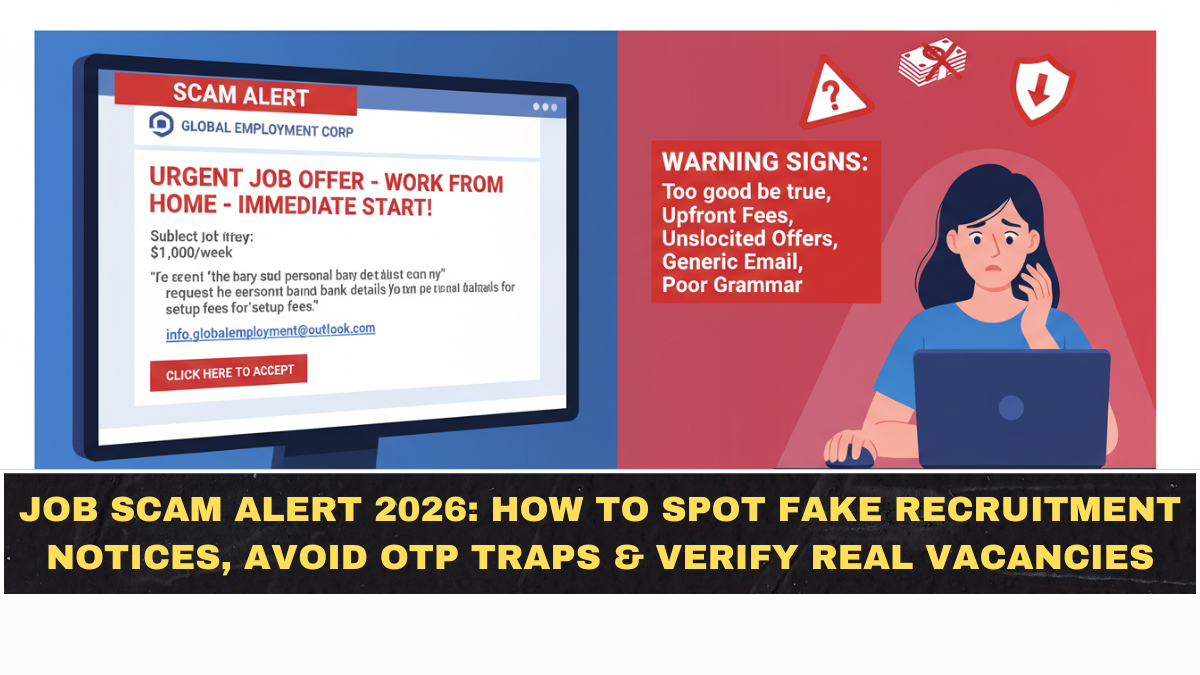
Job scams in India have evolved rapidly by 2026, becoming more polished, targeted, and psychologically convincing than ever before. Fraudsters are no longer relying on obvious red flags like poor language or unrealistic salaries. Instead, they copy official formats, use familiar company names, and approach candidates at vulnerable moments. That is why How to spot fake job notifications in 2026 and avoid scams has become essential reading for students, freshers, and experienced professionals alike.
What makes How to spot fake job notifications in 2026 and avoid scams especially important is the shift in how recruitment happens. With most hiring now digital-first, scammers exploit email, messaging apps, and even fake portals to appear legitimate. Many victims only realize the fraud after sharing sensitive information or making small “processing fee” payments that quickly escalate.
Why Job Scams Are Increasing in 2026
The job market in 2026 is highly competitive, and scammers understand this pressure well. They target people who are actively applying, recently unemployed, or urgently seeking income. Fake offers are timed carefully to arrive just when candidates are emotionally invested.
In the context of How to spot fake job notifications in 2026 and avoid scams, the increase is also driven by automation. Scammers use bulk messaging tools and scraped databases to reach thousands of candidates at once, increasing their chances of success without much effort.
Common Formats Used in Fake Job Notifications
Fake job notifications often follow predictable patterns. They promise quick selection, minimal interviews, or guaranteed placement after a simple verification step. The tone is urgent, pushing candidates to act immediately.
For those learning How to spot fake job notifications in 2026 and avoid scams, it is important to notice that many scams now imitate real HR communication. Logos, job descriptions, and even offer letters are copied from genuine companies, making surface-level checks unreliable.
The OTP and Verification Trap Explained
One of the most dangerous trends is the misuse of OTPs. Scammers claim they are verifying identity, activating an account, or confirming interview slots. In reality, these OTPs are often linked to banking, SIM activation, or account takeover attempts.
Understanding How to spot fake job notifications in 2026 and avoid scams requires a simple rule: no legitimate recruiter will ever ask for an OTP. Sharing it hands control of your account to the scammer within seconds.
Payment Demands and Fee-Based Scams
Another major warning sign is any demand for money during recruitment. This may be described as a registration fee, background check charge, training cost, or refundable deposit.
When applying How to spot fake job notifications in 2026 and avoid scams, candidates should remember that genuine employers deduct nothing before joining. Any payment request, regardless of how small or “official” it sounds, is a clear indicator of fraud.
Fake Job Portals and Clone Websites
In 2026, scammers increasingly use fake portals that look professional and functional. These sites collect resumes, ID details, and login credentials under the guise of application processing.
Within How to spot fake job notifications in 2026 and avoid scams, recognizing cloned platforms is critical. Minor differences in layout, spelling, or workflow often exist, but they are easy to miss when candidates are rushing to apply.
How Real Recruitment Processes Actually Work
Legitimate recruitment processes follow predictable steps. Applications are reviewed, interviews are conducted, and offers are made after verification—not before it.
To apply How to spot fake job notifications in 2026 and avoid scams effectively, candidates should compare offers against standard hiring timelines. Instant selection or job confirmation without evaluation is not realistic in professional hiring environments.
Who Is Most at Risk of Job Scams
Fresh graduates, contract workers, and people changing industries are particularly vulnerable. Scammers also target candidates applying for remote or overseas roles, where verification feels more complex.
This makes How to spot fake job notifications in 2026 and avoid scams especially important for those applying across multiple platforms. High application volume increases exposure to fraudulent messages.
What To Do If You Suspect a Fake Job Offer
The safest response is to pause and verify rather than react emotionally. Checking official communication channels, slowing down the process, and refusing to share sensitive data often stops the scam immediately.
People who follow How to spot fake job notifications in 2026 and avoid scams learn that scammers rely on urgency. Removing that urgency breaks their leverage completely.
Conclusion: Staying Safe While Job Hunting in 2026
Job searching in 2026 requires more caution than ever, but fear should not replace confidence. Awareness and patience are the strongest protections against fraud.
By understanding How to spot fake job notifications in 2026 and avoid scams, candidates can protect their finances, identity, and mental peace. The goal is not to distrust every opportunity, but to verify before believing—and never rush decisions that involve personal information.
FAQs
Are job scams really that common in 2026?
Yes, digital hiring has made job scams more frequent and harder to detect.
Is asking for OTP always a scam?
Yes, no legitimate recruiter will ever ask for an OTP.
Do real employers ever charge registration fees?
No, genuine employers do not take money at any stage of hiring.
Can fake offers look completely professional?
Yes, many scams now closely imitate real companies and documents.
What is the safest way to verify a job offer?
Slow down, check official channels, and never share sensitive details immediately.