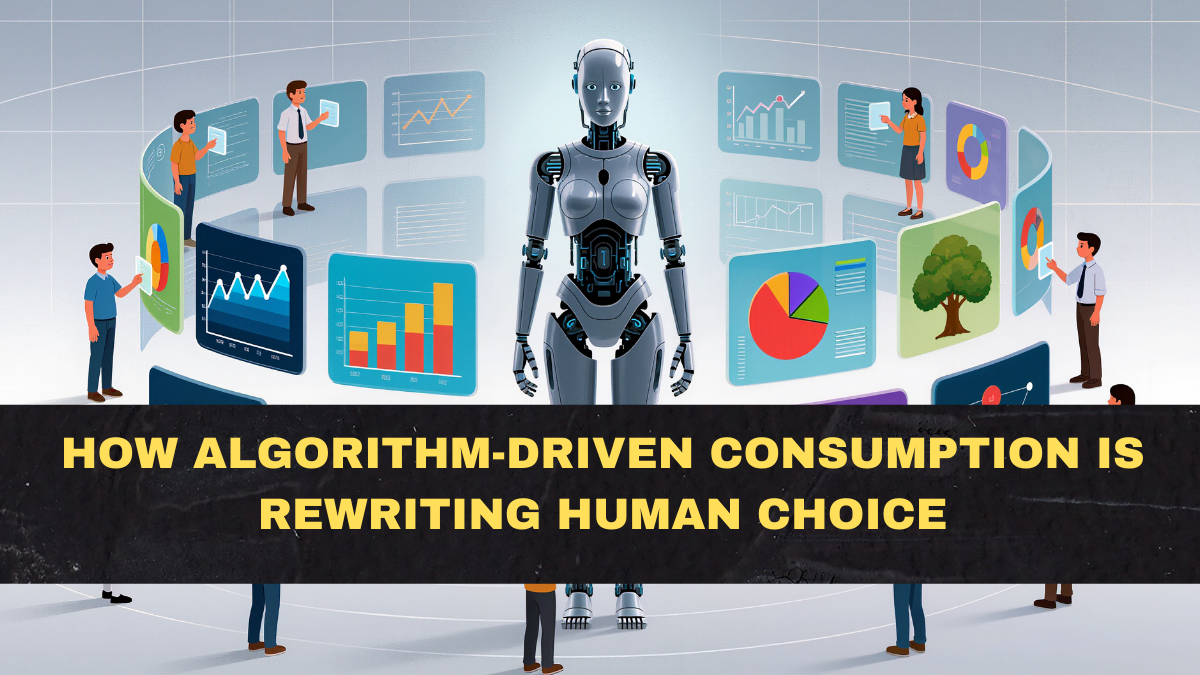
For most of modern history, consumption followed intention. People decided what to watch, read, or buy based on needs, curiosity, or social influence. In 2026, that sequence is reversing. Algorithm driven consumption now shapes desire before awareness. Choices feel personal, but they are increasingly guided by systems that decide what appears first, what repeats, and what disappears.
This shift isn’t subtle anymore. Recommendation engines power nearly every digital experience, quietly steering attention and shaping behavior. As a result, consumer psychology is being rewritten—not through persuasion, but through exposure.
What Algorithm Driven Consumption Really Is
Algorithm driven consumption occurs when automated systems influence choices by controlling visibility rather than forcing decisions.
It works by:
• Ranking content and products
• Repeating certain options over time
• Suppressing alternatives quietly
• Optimizing for engagement metrics
• Learning from past behavior
Choice still exists—but within invisible boundaries.
How Recommendation Engines Shape Preferences
Recommendation engines don’t just respond to taste—they create it.
They shape preferences by:
• Showing similar content repeatedly
• Reinforcing existing interests
• Reducing exposure to novelty
• Prioritizing engagement over diversity
What feels like preference is often pattern reinforcement.
Why Repetition Is More Powerful Than Persuasion
Humans trust what feels familiar.
Algorithms exploit this by:
• Reintroducing similar items frequently
• Creating a sense of inevitability
• Normalizing certain options
• Making alternatives feel risky or irrelevant
Familiarity becomes desire without conscious intent.
The Illusion of Infinite Choice
Digital platforms appear endless—but options are filtered.
This illusion exists because:
• Only a small subset is ever shown
• Algorithms pre-select “relevant” items
• Discovery is guided, not random
• Visibility equals viability
What you don’t see effectively doesn’t exist.
How Consumer Psychology Is Being Rewired
Repeated exposure alters perception.
Consumer psychology shifts when:
• Algorithms reward impulse over reflection
• Emotional triggers are optimized
• Short-term engagement overrides long-term satisfaction
• Dopamine loops replace deliberate choice
Decision-making becomes reactive.
Why Personalization Reduces Autonomy
Personalization sounds empowering—but it narrows horizons.
It reduces autonomy by:
• Locking users into behavioral profiles
• Predicting future actions from past ones
• Limiting surprise and contradiction
• Encouraging habitual consumption
You become consistent—because the system expects it.
Algorithm Driven Consumption Beyond Shopping
This isn’t just about buying products.
It affects:
• News and information exposure
• Entertainment and culture
• Political beliefs
• Lifestyle norms
Consumption shapes worldview, not just wallets.
Who Benefits Most From Algorithmic Control
Control benefits platforms, not users.
Platforms gain because:
• Engagement becomes predictable
• Monetization is optimized
• Behavior becomes easier to influence
• Competition for attention is managed
Efficiency replaces exploration.
The Long-Term Cost of Reduced Choice
Short-term convenience hides long-term consequences.
Costs include:
• Reduced critical thinking
• Cultural homogenization
• Loss of serendipity
• Emotional fatigue from constant optimization
Choice without awareness isn’t freedom.
Why Opting Out Is So Hard
Escaping algorithmic influence isn’t simple.
Barriers include:
• Default settings favor automation
• Manual discovery is time-consuming
• Alternatives lack visibility
• Habits are deeply ingrained
Convenience locks users in.
How Some Users Are Resisting
Resistance is emerging—slowly.
Common strategies include:
• Manual search over feeds
• Following diverse sources intentionally
• Limiting algorithm-driven platforms
• Seeking offline discovery
Resistance requires effort by design.
What This Means for the Future of Choice
Choice is being redesigned as a system outcome.
By late 2026:
• Algorithms shape cultural norms
• Personal taste becomes less independent
• Discovery becomes managed
• Awareness becomes the only defense
Freedom shifts from selection to understanding.
Conclusion
Algorithm driven consumption is rewriting how people choose—by shaping what they see before they decide. Through powerful recommendation engines and subtle influence on consumer psychology, algorithms are turning preference into prediction. In 2026, the most important choice isn’t what you buy or watch—it’s whether you recognize who guided you there.
You’re still choosing. Just not from everything.