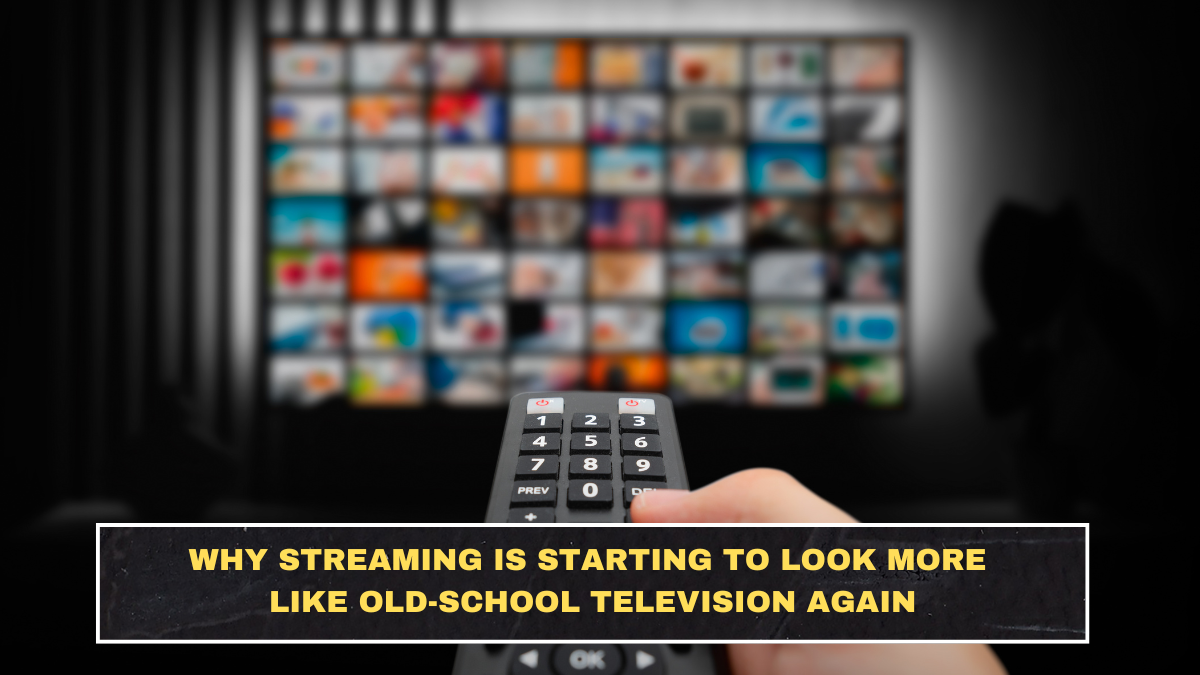
Streaming was supposed to free viewers from the rigid logic of old television. Instead, it is slowly rebuilding it. The shift is now obvious: platforms that built themselves around on-demand viewing are moving harder into live sports, one-off event programming, ad sales, and appointment viewing. Reuters reported in February that the Super Bowl and Olympics were becoming central to Peacock’s strategy, while Netflix has expanded into live events and sports-adjacent programming as part of its effort to attract advertisers and hold attention in real time.
Why streaming is starting to resemble TV again
Old-school television had one brutal advantage over on-demand libraries: people showed up at the same time. That made it powerful for advertisers, sports leagues, and cultural relevance. Streaming platforms are now chasing that same advantage because endless content libraries alone are not enough. Reuters reported that NBC’s Peacock was charging about $3 million for a 30-second Super Bowl ad in 2026, showing how valuable simultaneous audiences still are. Reuters also reported that Netflix forecast ad revenue would double in 2026 to about $3 billion, another sign that ad-supported scale matters more now than the old “subscription-only” streaming dream suggested.
Live sports are pulling the industry back toward the TV model
Sports are the clearest reason for this convergence. Reuters reported that Big Tech platforms are increasingly buying exclusive rights to major sporting events, which has alarmed U.S. broadcast groups and even triggered an FCC review over whether the move could reduce access to games that traditionally aired on free television. That concern only exists because sports still behave like classic mass television: they bring large audiences together live, not later.
Netflix is a good example of the shift. Reuters reported earlier that Netflix was exploring live sports rights, then later reported the platform would carry every 2026 World Baseball Classic game in Japan. Reuters also reported MLB signed a three-year media package that includes Netflix streaming one special event game per year from 2026 to 2028. That is not a side experiment anymore. It is a real move toward live-event relevance.
What this shift looks like in practice
| Trend | Confirmed detail | Why it matters |
|---|---|---|
| Live-event ads | Peacock charged about $3 million for a 30-second Super Bowl ad in 2026 | Streaming now monetizes like major TV events. |
| Ad growth focus | Netflix said 2026 ad revenue would reach about $3 billion | Platforms want advertiser scale, not just subscriptions. |
| Exclusive sports rights | Broadcast groups warned the FCC that Big Tech exclusives could threaten free-TV access to sports | Live rights are becoming strategic weapons in platform competition. |
| Netflix sports expansion | Netflix will stream the 2026 World Baseball Classic in Japan and one MLB special event game annually under a 2026–2028 deal | Netflix is moving deeper into live sports, even if selectively. |
| Broadcaster response | RTL’s push for Sky Deutschland was partly about strengthening against Netflix, Disney, and Amazon with sports rights included | Traditional media groups see sports rights as survival assets in the streaming era. |
Why this matters for viewers
This is not automatically good news for audiences. The industry sells it as innovation, but the user experience is getting more fragmented and more expensive. Reuters reported that broadcasters are warning regulators that key events could slip behind subscription walls if exclusive streaming deals keep expanding. So yes, platforms are making streaming feel more like television again, but they are also rebuilding one of television’s worst habits: making the biggest events harder to access unless you pay for the right bundle.
A few practical changes are already clear:
- live events matter more than binge libraries for platform positioning
- advertising is becoming central again
- sports rights are turning into competitive moat assets
- viewers may need more subscriptions, not fewer, to follow major events
Why this is happening now
Because streaming companies have learned a hard lesson: people cancel. Reuters noted that even successful event-driven subscriber bumps can fade quickly, with many new sign-ups disappearing after the event window closes. Live sports and event TV help because they create urgency, reduce churn in the short term, and give advertisers a reason to spend heavily. That makes streaming look less like a pure technology story and more like a revised version of the old television business.
Conclusion
Streaming is starting to look more like old-school television again because the business logic is dragging it there. Live sports, major event programming, real-time ads, and exclusive rights are too valuable to ignore. Platforms still talk like tech companies, but increasingly they behave like broadcasters chasing appointment viewing at scale. That may be smart business, but let’s not pretend it is some clean consumer revolution. In many ways, the industry is rebuilding TV with better apps and more paywalls.
FAQs
Why are streaming platforms buying live sports rights?
Because live sports deliver large simultaneous audiences, strong ad demand, and higher strategic value than many on-demand titles.
Is Netflix seriously moving into sports?
Yes, though selectively. Reuters reported Netflix will stream the 2026 World Baseball Classic in Japan and one MLB special event game each year under a 2026–2028 deal.
Why does this make streaming look like television again?
Because it brings back appointment viewing, ad-heavy live events, and exclusive must-watch programming tied to a specific time.
Is this good for viewers?
Not entirely. It can improve live-event options, but it can also push more major sports behind paid platforms and make access more fragmented.
Why are advertisers so interested in this trend?
Because live events still gather big audiences at once, which makes those ad slots unusually valuable.