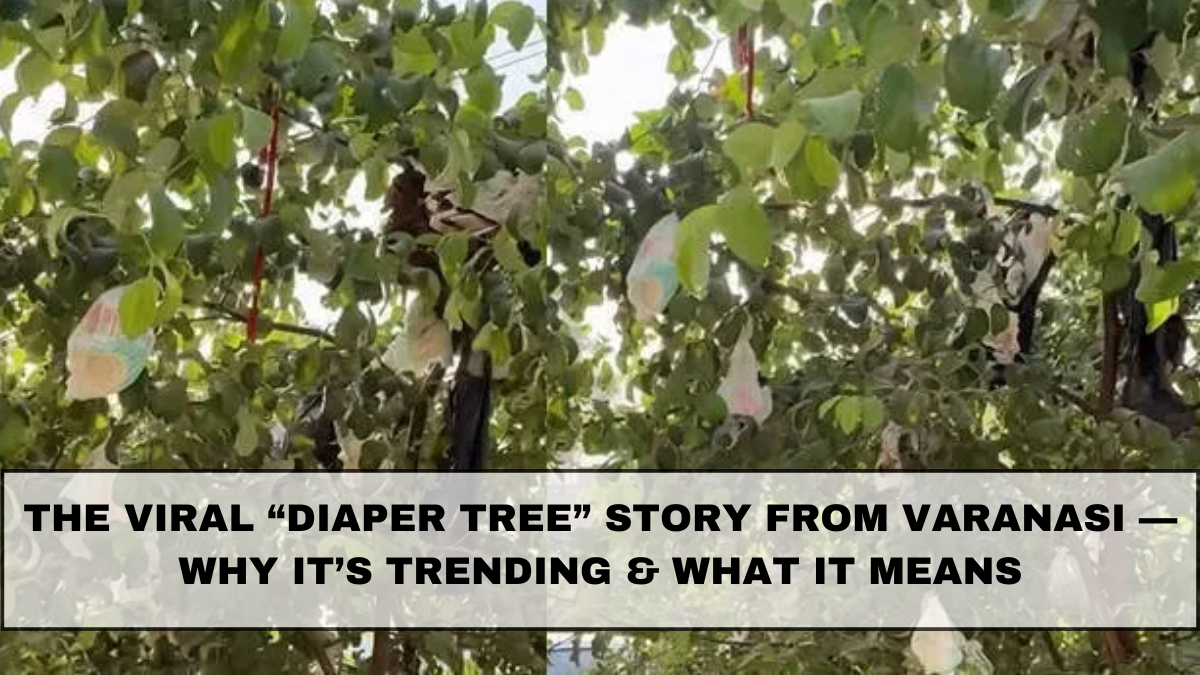
A peculiar viral “diaper tree” social media story has taken India by storm this week. The video, originating from Varanasi news reports, shows what appears to be a tree completely covered in discarded diapers. The bizarre scene has sparked widespread discussion online, highlighting public hygiene concerns, social media virality, and civic infrastructure challenges. Across platforms like Twitter, Instagram, and YouTube, users are debating the causes, implications, and solutions for such unusual urban issues.
This phenomenon reflects how viral videos can quickly shape public discourse, influencing both awareness and civic action.
What Happened in Varanasi?
The viral video shows a tree near a busy residential area, densely littered with used diapers. Locals have reported that this is not an isolated incident, citing overflowing trash bins and irregular waste management services in the area. The clip gained traction as users expressed shock, amusement, and frustration, making it a trending topic on Indian social media feeds.
Authorities in Varanasi have acknowledged the issue, emphasizing that proper disposal systems and public awareness campaigns are being reinforced.
Why the Video Went Viral
Several factors contributed to the viral “diaper tree” social media story:
• Visual shock value – The unusual sight naturally grabs attention
• Shareability – Social media users quickly shared the video with humorous or critical captions
• Civic concern – The story sparked debates about public hygiene and waste management
• Local context – Urban sanitation issues in Varanasi added relevance to the video
This combination of humor, curiosity, and social critique explains why the video spread rapidly across platforms.
Public Hygiene Concerns Highlighted
The video sheds light on critical public hygiene challenges in Indian cities:
• Improper disposal of diapers and sanitary waste
• Overflowing public bins and lack of collection frequency
• Limited awareness among residents about proper waste segregation
• Health risks associated with bacterial contamination and mosquito breeding
Civic authorities often struggle to manage such waste efficiently, making incidents like the “diaper tree” both unusual and symptomatic of broader issues.
How Social Media Shapes Civic Awareness
The viral diaper tree video illustrates the power of social media in raising awareness:
• Viral content can highlight issues that traditional media may miss
• Citizens engage in online discussions, pressuring authorities to act
• Social media campaigns encourage proper disposal and community responsibility
• Humor and shock value make awareness campaigns more shareable
This reflects a growing trend where public engagement on social media can directly influence local governance and civic behavior.
Reactions Across India
Indians reacted to the viral video in multiple ways:
• Humorous takes – Memes and jokes highlighting the absurdity
• Criticism of civic bodies – Calls for better sanitation services and accountability
• Public advice – Tips on proper disposal of diapers and household waste
• Environmental concern – Highlighting the ecological impact of plastic and non-biodegradable waste
These reactions underline how viral content can be both entertaining and socially meaningful.
Steps to Address the Issue
The “diaper tree” incident points to solutions that can improve urban hygiene:
• Enhanced waste collection – More frequent pickups and proper disposal mechanisms
• Public awareness campaigns – Educating citizens on proper disposal and recycling
• Community participation – Residents organizing local clean-up drives
• Infrastructure investment – Installing designated bins for sanitary waste
• Policy enforcement – Implementing fines and monitoring compliance
Combining technology, policy, and citizen responsibility is key to preventing similar incidents in the future.
Lessons from the Viral Trend
The viral “diaper tree” social media story teaches multiple lessons:
• Social media can amplify local issues to national attention
• Visual content has the power to spark dialogue on civic responsibility
• Public hygiene is not just a government responsibility; community action matters
• Viral trends often reveal underlying infrastructural gaps and cultural practices
Indians increasingly rely on social media not just for entertainment, but as a platform to discuss urban issues and hygiene challenges.
Conclusion
The viral “diaper tree” social media story from Varanasi highlights both the humorous and serious sides of civic life in India. While the sight of a tree covered in diapers may amuse many, it also underscores critical issues in public hygiene, waste management, and citizen responsibility. Social media played a crucial role in bringing this incident to national attention, prompting both discussion and action. As India continues to urbanize, combining awareness, technology, and policy will be vital to prevent similar viral hygiene crises in the future.
FAQs
What is the “diaper tree” video about?
It shows a tree in Varanasi covered with discarded diapers, sparking widespread social media attention.
Why did the video go viral in India?
The unusual sight, humor, and civic concern made it highly shareable across platforms.
What does this incident reveal about public hygiene?
It highlights gaps in waste disposal, sanitary infrastructure, and citizen awareness.
How are authorities responding?
Local authorities have acknowledged the problem and are increasing waste collection and awareness efforts.
Can social media help improve civic behavior?
Yes, viral content can engage citizens, pressure authorities, and promote proper disposal practices.
Click here to know more.