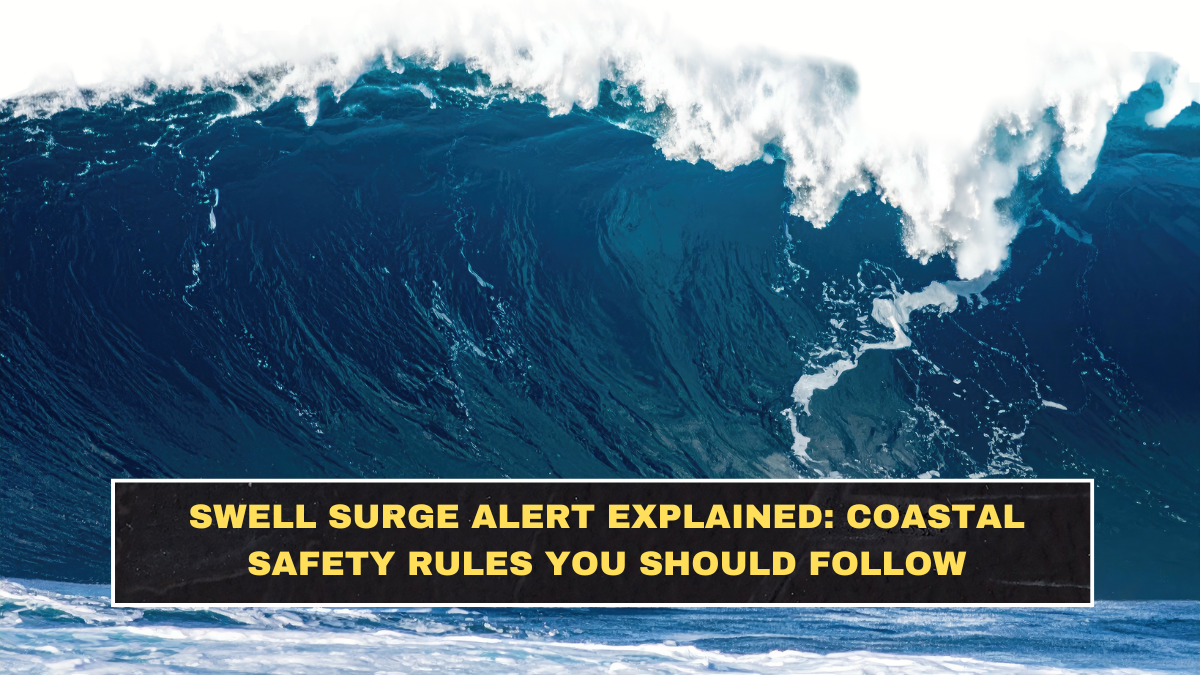
A swell surge alert is issued when long-period ocean waves, generated far from the coastline, travel toward shore and create sudden high wave activity. In India, such alerts are issued by INCOIS (Indian National Centre for Ocean Information Services) to warn coastal regions like Lakshadweep, Tamil Nadu, Kerala, and Andhra Pradesh.
These surges are not always linked to local storms, which makes them more dangerous because they can occur even when weather appears normal.
What Is a Swell Surge (Scientific Explanation)
| Parameter | Details |
|---|---|
| Wave Origin | Distant ocean disturbances |
| Wave Type | Long-period waves |
| Local Weather | May appear calm |
| Impact | Sudden high waves near coast |
| Issuing Authority | INCOIS |
Swell surges are different from storm waves because they are generated far away and travel long distances.
Areas Commonly Affected in India
| Region | Risk Level |
|---|---|
| Lakshadweep Islands | High |
| Tamil Nadu Coast | Moderate to High |
| Kerala Coast | Moderate |
| Andhra Pradesh Coast | Moderate |
The impact depends on coastline shape and wave direction.
How Swell Surge Impacts Coastal Areas
| Impact | Description |
|---|---|
| High waves | Sudden rise in sea level |
| Strong currents | Increased drowning risk |
| Coastal flooding | Water entering low-lying areas |
| Boat instability | Risk for fishermen |
These conditions can develop even without visible warning signs.
Wave Height and Risk Interpretation
| Wave Height | Risk Level |
|---|---|
| 0.5–1.5 m | Low |
| 1.5–2.5 m | Moderate |
| 2.5–4 m | High |
| Above 4 m | Severe |
Higher wave heights significantly increase danger for coastal activities.
Safety Rules for Beachgoers
| Rule | Purpose |
|---|---|
| Avoid entering sea | Prevent drowning |
| Follow local warnings | Stay informed |
| Stay away from rocks | Avoid wave impact |
| Do not ignore calm-looking sea | Hidden danger |
Many accidents occur because people underestimate calm-looking conditions.
Safety Guidelines for Fishermen
| Action | Reason |
|---|---|
| Avoid deep-sea trips | High wave risk |
| Secure boats | Prevent damage |
| Monitor alerts regularly | Stay updated |
| Use safety gear | Reduce risk |
Fishing activity is particularly vulnerable during swell surge events.
Why Swell Surge Is Dangerous
| Factor | Impact |
|---|---|
| No visible storm | False sense of safety |
| Sudden wave increase | Unexpected impact |
| Strong undercurrents | Difficult to escape |
| Repetitive wave sets | Continuous danger |
The unpredictability makes it more hazardous than regular rough seas.
What People Commonly Get Wrong
Here’s the uncomfortable truth:
People judge sea safety by what they see.
Swell surge is dangerous precisely because it doesn’t look dangerous.
-
Calm sky ≠ safe sea
-
No rain ≠ no risk
-
Small waves can suddenly turn large
This misunderstanding causes most incidents.
What To Do During an Alert
| Step | Action |
|---|---|
| Step 1 | Avoid beaches and sea entry |
| Step 2 | Follow local authority instructions |
| Step 3 | Stay updated via official alerts |
| Step 4 | Inform others nearby |
Awareness and compliance are key to safety.
Conclusion
A swell surge alert indicates potentially dangerous ocean conditions caused by distant wave systems. Even in calm weather, coastal areas can experience sudden high waves and strong currents. Following safety guidelines and taking alerts seriously is essential to prevent accidents.
FAQs
What is a swell surge alert?
It is a warning about high waves caused by distant ocean disturbances.
Who issues swell surge alerts in India?
INCOIS issues these alerts.
Is it safe to go to the beach during a swell surge?
No, entering the sea is risky during such alerts.
Can swell surge happen without bad weather?
Yes, it often occurs even when local weather is calm.
Who is most at risk?
Fishermen and beach visitors are most vulnerable.
Click here to know more.