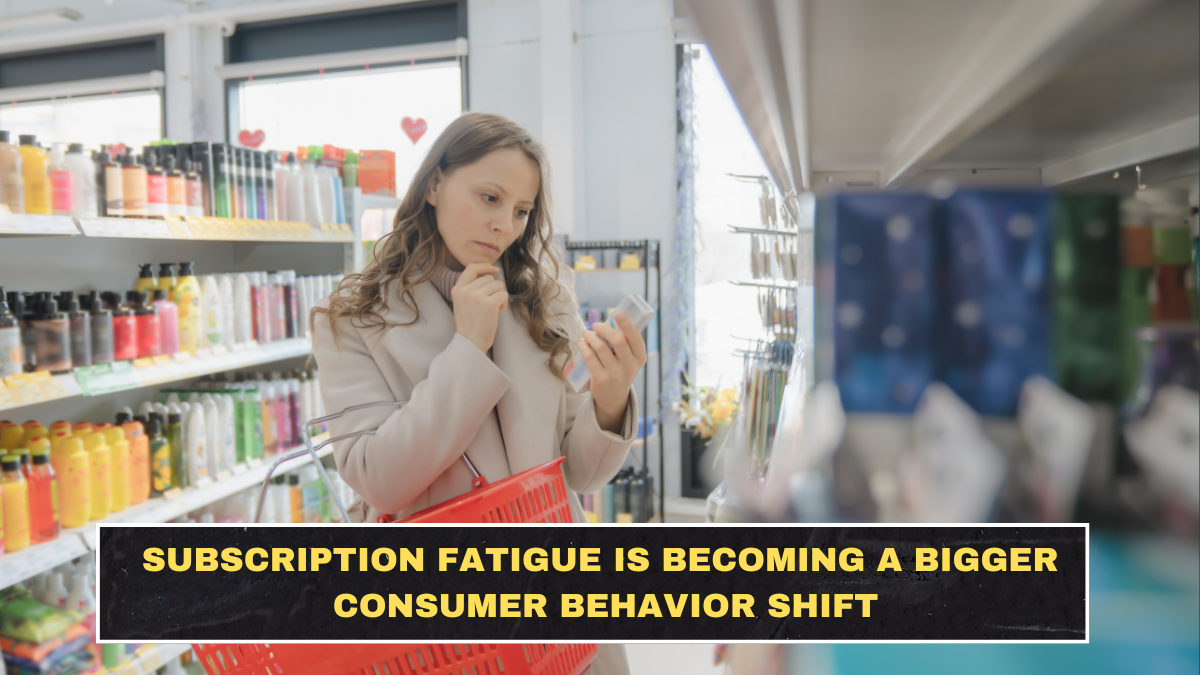
Subscription fatigue is becoming a bigger consumer behavior shift because people are no longer treating recurring payments like background noise. Rising prices, too many overlapping services, and tighter household budgets are forcing consumers to review what they actually use and what they are just forgetting to cancel. Deloitte’s 2025 Digital Media Trends report says many consumers are frustrated by managing multiple subscriptions and by rising subscription prices, while its 2025 media predictions said subscription stacking had likely reached its limit and would start declining.
The lazy explanation is “people hate subscriptions now.” That is not quite true. The real shift is harsher value-testing. Consumers are not rejecting every subscription. They are becoming less tolerant of weak ones. PYMNTS noted in 2025 that U.S. adults were spending an average of $91 a month on subscriptions in a cited CNET study, and said consumers were becoming more selective as services multiplied.
Why subscription fatigue is growing
The biggest reason is cost pressure. When groceries, housing, and everyday bills stay expensive, subscriptions move from “small monthly convenience” to “easy place to cut.” Deloitte Ireland’s 2025 digital consumer data found that 27% cancelled a video streaming service in the last 12 months, up from 24% the year before, and said cost was the main reason. It also noted that 57% of those who cancelled a paid subscription did so for cost-related reasons.
The second reason is clutter. People now juggle streaming apps, music services, cloud storage, fitness apps, productivity tools, and membership bundles. At some point, the mental load starts feeling bigger than the benefit. Deloitte’s 2025 U.S. report said consumers were not spending more overall on subscriptions and were feeling fatigue from having to manage too many services to get what they wanted.
What the shift looks like
| Signal | What recent data shows | What it means |
|---|---|---|
| Subscription stacking hitting limits | Deloitte predicts standalone streaming stacking will start declining | Consumers are consolidating services |
| More cancellations for cost reasons | 27% cancelled a video streaming service in the last year in Deloitte Ireland’s survey | Price pressure is driving churn |
| Flat or capped entertainment spend | Deloitte says people are not spending more on subscriptions overall | New subscriptions must fight for the same wallet share |
| Greater selectivity | PYMNTS says consumers are reassessing subscription portfolios | Weak-value services are easier to drop |
Why consumers are cancelling more carefully now
People are getting better at asking a basic question: Do I still use this enough to justify paying again next month? That sounds obvious, but a lot of subscription businesses were built on the opposite behavior: inertia. Once consumers start auditing auto-payments, churn rises fast.
The main cancellation triggers are simple:
- price hikes without clear added value
- overlapping services doing the same job
- “set and forget” payments for underused apps
- budget pressure from other living costs
- frustration with managing too many accounts
This is why ad-supported tiers, bundles, and “cancel anytime” messaging are getting more attention. Deloitte’s 2025 media predictions said aggregation and bundles may rise again partly because the fragmented standalone model is wearing consumers out.
What businesses get wrong
The biggest mistake is assuming the subscription model itself guarantees loyalty. It does not. Recurring billing is not recurring trust. If the service stops feeling useful, relevant, or fairly priced, the customer starts treating it like a leak, not a convenience.
Another mistake is confusing resistance with total collapse. Even reports that push back on the idea of full “subscription fatigue” still admit consumers are becoming stricter about value. That means the market is not disappearing. It is getting less forgiving.
What this trend means in 2026
This matters in 2026 because recurring payments now touch almost every part of digital spending. The old growth model of adding more paid layers is running into consumer limits. Households are becoming more selective, more price-aware, and more willing to rotate services instead of keeping everything active all year. That is a behavior change, not just a passing complaint.
Conclusion
Subscription fatigue is becoming a bigger consumer behavior shift because recurring payments are finally being judged like every other expense. Consumers are not blindly canceling everything, but they are cutting faster, reviewing harder, and expecting clearer value. Any business still relying on forgetfulness more than usefulness is building on weak ground.
FAQs
1. What is subscription fatigue?
It is the point where consumers feel overloaded or frustrated by too many recurring payments, especially when the services no longer feel worth the cost.
2. Are people really cancelling more subscriptions?
Yes. Deloitte Ireland found that 27% cancelled a video streaming service in the last 12 months, with cost as the main reason.
3. Does subscription fatigue mean the model is dying?
No. It means consumers are becoming more selective. Strong services can still survive, but weak-value subscriptions are more vulnerable.
4. What is the biggest reason behind this trend?
Cost pressure is the clearest driver, followed by service overlap and frustration with managing too many paid accounts.