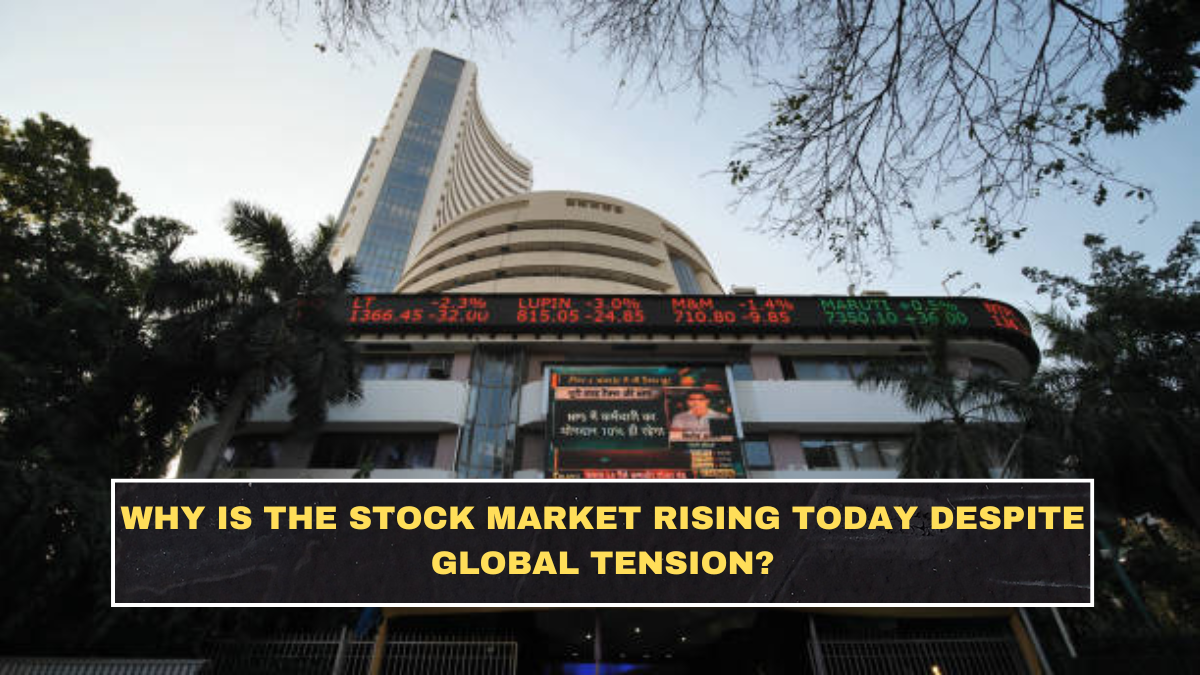
Stock markets sometimes behave in ways that seem contradictory to global news. Even during periods of geopolitical tensions or economic uncertainty, markets can rise if investors see strong domestic fundamentals, positive institutional flows, or sectoral momentum.
In India, the stock market is mainly represented by two benchmark indices — BSE Sensex and NSE Nifty 50. When these indices rise despite global tensions, it usually signals that investors believe domestic economic strength, corporate earnings, or liquidity support can offset global risks.
Market rallies often occur when large institutional investors continue buying, when domestic consumption remains strong, or when sectors such as banking and IT perform well.
Key Reasons Why the Stock Market Is Rising Today
Several factors can explain why the market moves upward even during uncertain global conditions.
| Factor | Explanation | Market Impact |
|---|---|---|
| Domestic Economic Strength | Strong GDP growth and consumption trends | Supports long-term investor confidence |
| Institutional Buying | Foreign Institutional Investors (FII) and Domestic Institutional Investors (DII) purchasing stocks | Drives upward market momentum |
| Corporate Earnings | Positive earnings results from major companies | Encourages buying activity |
| Sectoral Rally | Banking, IT, or energy stocks rising together | Pulls indices higher |
| Liquidity in the System | High availability of investment capital | Boosts stock demand |
When these factors align, markets often move higher even if global headlines appear negative.
Role of Institutional Investors in Market Rally
Institutional investors play a major role in determining short-term market direction. Their buying or selling activity can significantly influence benchmark indices.
| Investor Type | Role in Market |
|---|---|
| Foreign Institutional Investors (FII) | Global funds investing in Indian equities |
| Domestic Institutional Investors (DII) | Mutual funds, insurance companies, and pension funds |
| Retail Investors | Individual traders participating through brokerage platforms |
When FII inflows increase, markets tend to rally because global investors allocate more capital to Indian equities. At the same time, consistent buying from domestic mutual funds helps stabilize markets during volatility.
Sector Performance Driving the Rally
Often the market rise is led by specific sectors that carry high weight in the index.
| Sector | Why It Matters |
|---|---|
| Banking & Financials | Largest weight in major indices |
| Information Technology | Linked with global technology demand |
| Oil & Gas | Influenced by global energy prices |
| Automobile | Reflects domestic consumption trends |
| FMCG | Defensive sector during volatility |
For example, a strong rally in banking stocks alone can lift the broader market because many of these companies have significant representation in both Sensex and Nifty indices.
Global Cues That Still Influence the Market
Even when markets rise during geopolitical tensions, global developments still influence investor behavior.
| Global Indicator | Market Interpretation |
|---|---|
| Oil Prices | Rising oil may pressure inflation expectations |
| US Interest Rates | Higher rates can affect foreign investments |
| Global Stock Indices | Positive global markets boost sentiment |
| Geopolitical News | Creates volatility but not always immediate selling |
Markets may initially react negatively to geopolitical tensions but later stabilize if investors believe the economic impact will remain limited.
What Investors Watch Next
Professional investors closely monitor certain indicators to determine whether the rally will continue.
| Indicator | What It Signals |
|---|---|
| Trading Volume | Higher volume confirms stronger trend |
| FII/DII Data | Indicates institutional sentiment |
| Corporate Earnings Reports | Helps assess future growth |
| Economic Data | Inflation, GDP, and policy changes influence markets |
If these signals remain positive, markets may continue rising even amid global uncertainty.
Conclusion
Stock markets do not always move directly in response to global tensions. The Indian stock market can rise when domestic economic fundamentals, institutional buying, and sectoral strength outweigh global concerns.
Investors typically focus on liquidity, earnings growth, and sector performance to assess the sustainability of the rally. Understanding these factors helps explain why markets sometimes move upward even when global news appears negative.
FAQs
Why does the stock market rise even during global tensions?
Markets rise when investors believe domestic economic conditions, corporate earnings, and liquidity are strong enough to offset global risks.
Which sectors usually drive market rallies in India?
Banking, information technology, and energy sectors often lead market rallies because they carry significant weight in benchmark indices.
Do foreign investors influence Indian stock markets?
Yes, Foreign Institutional Investors play a major role. Large inflows from global funds can push markets higher.
Can geopolitical tensions affect stock markets?
Yes, geopolitical events can create short-term volatility. However, markets may recover quickly if investors believe the long-term economic impact is limited.
What indicators should investors track during a market rally?
Investors often monitor institutional flows, trading volumes, corporate earnings, and economic data to evaluate whether the rally will continue.
Click here to know more.