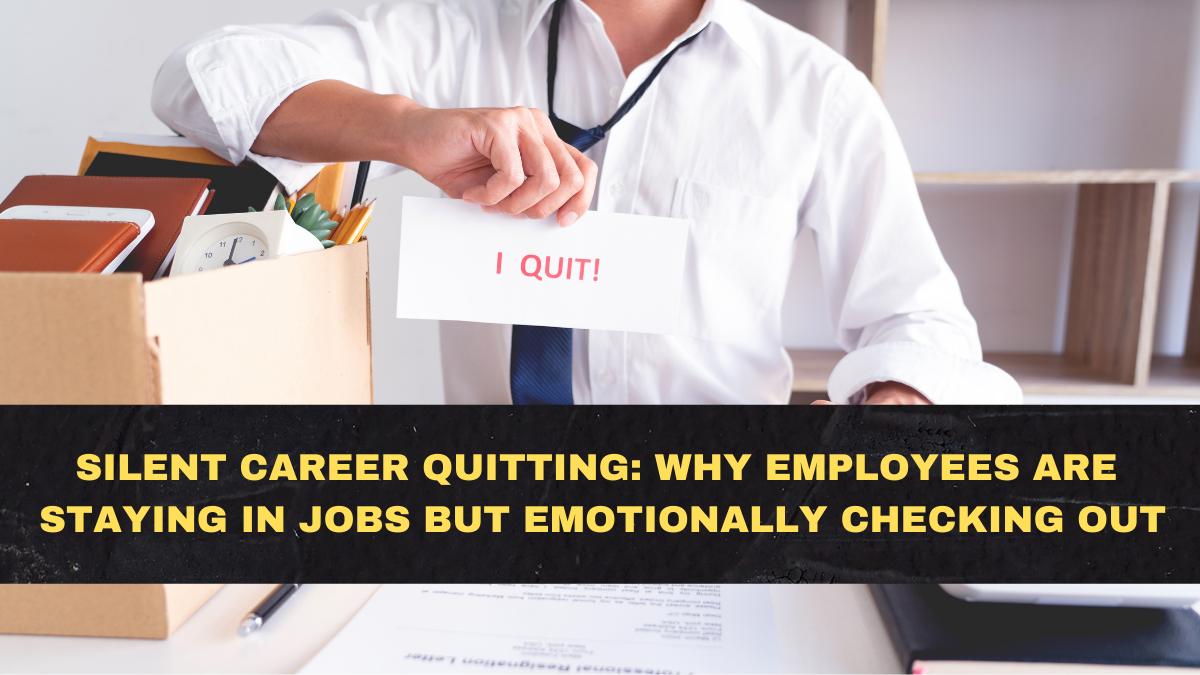
The rise of silent career quitting in 2026 exposes an uncomfortable truth: many employees haven’t left their jobs, but they’ve already left emotionally. This isn’t loud resignation or dramatic exits. It’s a slow internal withdrawal where people do what’s required, protect their energy, and stop caring about growth, recognition, or long-term contribution.
If organizations think this is harmless, they’re fooling themselves. Silent quitting doesn’t show up on headcount reports—but it bleeds performance quietly.

Why Silent Career Quitting Is Different From Traditional Quitting
This isn’t about employees walking away. It’s about staying while disengaging.
What makes silent career quitting distinct:
• Employees meet minimum expectations
• No visible conflict or complaints
• Reduced emotional investment
• Withdrawal from initiative and ownership
The job continues. The commitment doesn’t.
How Quiet Quitting Evolved Into Something Deeper
Quiet quitting started as boundary-setting. In 2026, it has hardened into detachment.
The quiet quitting evolution looks like:
• From saying “no” to extra work
• To avoiding responsibility altogether
• To disengaging from purpose and growth
What began as self-protection has become resignation without resignation.
Why Work Disengagement Is Spreading Now
Disengagement isn’t laziness—it’s learned behavior.
Key drivers of work disengagement include:
• Burnout without recovery
• Lack of recognition or progress
• Constant change without clarity
• Feeling replaceable or unheard
When effort stops mattering, effort stops happening.
Why Employees Don’t Just Leave
If disengagement is so high, why aren’t people quitting?
Common reasons:
• Financial uncertainty
• Fear of instability
• Lack of better alternatives
• Emotional exhaustion that limits job searching
Staying becomes the path of least resistance.
How Silent Quitting Shows Up at Work
Managers often miss the signs because output doesn’t collapse immediately.
Warning indicators include:
• Reduced participation in discussions
• No interest in advancement
• Avoidance of ownership
• Flat emotional tone toward work
By the time performance drops, disengagement is already entrenched.
Why High Performers Are Often the First to Disengage
Ironically, strong performers burn out faster.
Reasons include:
• Repeated over-reliance without reward
• High effort met with low impact
• Responsibility without authority
• Lack of psychological safety
When effort feels exploited, withdrawal follows.
The Organizational Cost of Silent Career Quitting
This form of disengagement is expensive and invisible.
Costs include:
• Lower innovation
• Reduced collaboration
• Cultural stagnation
• Future turnover spikes
Silent quitting is delayed attrition.
Why Engagement Surveys Often Miss the Problem
Standard surveys measure sentiment—not energy.
Why surveys fail:
• Employees stop being honest
• Disengaged workers go neutral, not negative
• Fear of consequences
• Low belief in change
Silence gets misread as satisfaction.
What Managers Are Doing Wrong
Most silent quitting is unintentional—caused by leadership blind spots.
Common mistakes:
• Confusing compliance with engagement
• Ignoring workload signals
• Failing to connect work to purpose
• Avoiding difficult conversations
Leadership absence accelerates silent career quitting.
How Organizations Can Reverse Disengagement
Disengagement can be reversed—but not with slogans.
Effective responses include:
• Meaningful workload recalibration
• Real growth pathways
• Manager training in psychological safety
• Clear acknowledgment of effort and impact
People re-engage when work feels worth it again.
What This Trend Says About Work in 2026
Work isn’t failing people. Work design is.
The rise of silent career quitting reflects:
• Misaligned incentives
• Burnout cultures
• Transactional leadership
• Lack of human-centered systems
Fixing it requires systemic change.
Conclusion
Silent career quitting is the most dangerous form of disengagement because it hides in plain sight. In 2026, organizations that ignore work disengagement will experience declining performance long before they see resignations.
People don’t withdraw because they don’t care. They withdraw because caring stopped making sense.
FAQs
What is silent career quitting?
It’s when employees stay in their jobs but emotionally disengage from growth, ownership, and purpose.
How is it different from quiet quitting?
Quiet quitting set boundaries. Silent career quitting involves emotional withdrawal and detachment.
Why don’t disengaged employees just leave?
Financial risk, exhaustion, and uncertainty keep people staying despite disengagement.
Can silent quitting be reversed?
Yes, with systemic changes to workload, recognition, and leadership behavior.
Why is this dangerous for companies?
Because disengagement reduces innovation, culture, and long-term performance before turnover becomes visible.