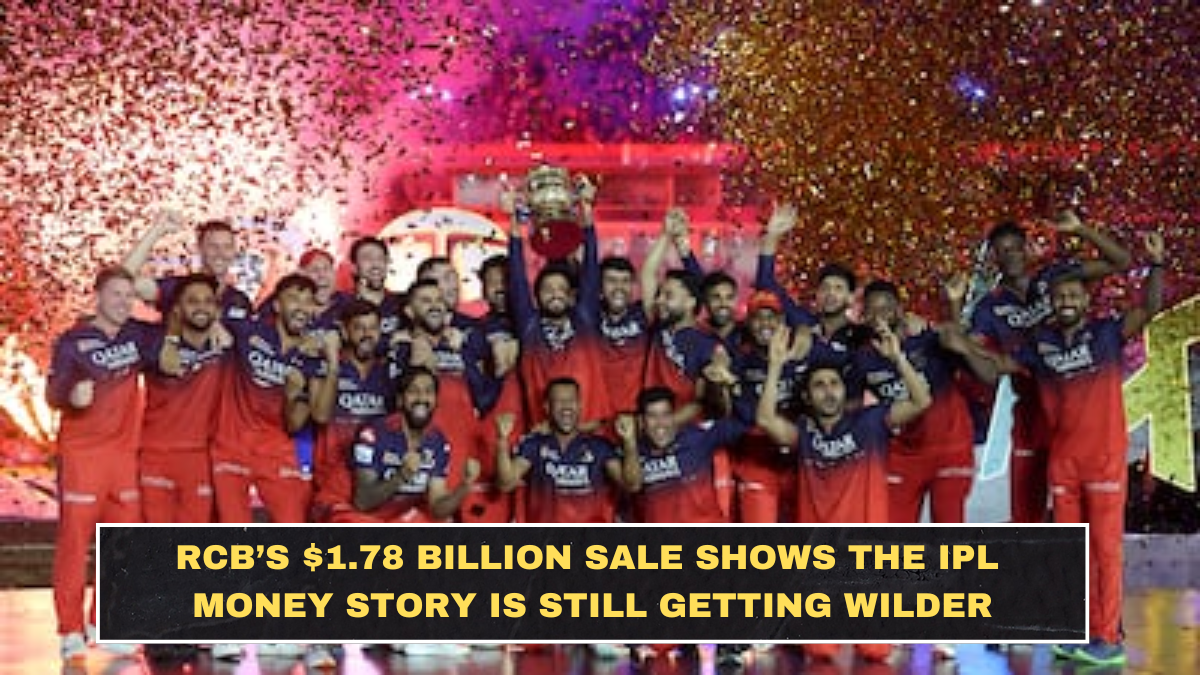
Royal Challengers Bengaluru have been sold for $1.78 billion, and that number is not just big by cricket standards. It is a signal that IPL franchise prices are still running hotter than many people thought. Reuters reported that a consortium comprising the Aditya Birla Group, Times of India Group, Bolt Ventures, and Blackstone agreed to acquire RCB from United Spirits, with the deal covering both the men’s IPL team and the women’s WPL team, subject to approvals.
That matters because RCB were not sold as some distressed asset or vanity project. United Spirits said the team had become non-core to its business, and the bidding war reportedly drew interest from multiple heavyweight buyers. In plain terms, this was a serious auction for a premium sports property, not a forced sale.
What exactly was sold
A lot of people get these stories wrong by pretending it was just the men’s IPL side. It was not. The reported transaction includes 100% ownership of the RCB franchise across both the IPL men’s team and the WPL women’s team. The Aditya Birla Group said the deal valued Royal Challengers Bengaluru at INR 166.6 billion, or about US$1.78 billion, and that completion still depends on approval from the BCCI, IPL Governing Council, and other regulators.
That is important because the valuation is attached to a broader cricket asset, not a single roster for one season. Buyers are paying for brand, media rights exposure, fan base, sponsorship potential, and long-term league economics. That is where the real money logic sits.
Why RCB commanded such a huge price
The simplest answer is that the IPL’s business engine is still brutal. Reuters reported that the league’s broadcast rights more than doubled to over $6 billion in 2022, while team economics remain supported by the BCCI’s revenue-sharing model. Reuters also said RCB’s revenue reached $56 million in 2024–25, up 73% over three years. That is exactly the kind of growth profile investors chase.
There is also the obvious brand angle. RCB are one of the original eight IPL franchises, have one of the league’s biggest fan bases, and just won their first men’s IPL title in 2025, which strengthens the asset right when it came to market. AP also noted that the team continues to carry massive recognition through stars like Virat Kohli. You do not have to like the hype to understand the pricing logic.
What the sale says about IPL valuations
This deal says IPL franchise values are no longer just “high for cricket.” They are competing for attention as serious global sports assets. Reuters called the RCB transaction a result of rising investor interest in the IPL, while other reporting around the market has already framed it as one of the biggest franchise deals in cricket history. That tells you investors are treating the IPL less like a domestic tournament and more like a premium entertainment-and-media business.
Here is the simple breakdown:
| Deal point | Verified detail | Why it matters |
|---|---|---|
| Sale value | $1.78 billion | Sets a new benchmark for IPL franchise pricing |
| Seller | United Spirits / Diageo unit | This was a strategic divestment, not a collapse sale |
| Buyers | Aditya Birla, TOI Group, Bolt Ventures, Blackstone | Mix of industry, media, sports capital, and private equity |
| Assets included | Men’s IPL + women’s WPL teams | Expands the revenue and brand base behind the valuation |
| Recent revenue | $56 million in 2024–25 | Shows why buyers were willing to pay up |
The bigger sports-money lesson
The real lesson is not “cricket is popular.” Everyone already knew that. The real lesson is that investors now believe premium IPL franchises can keep compounding value through media, sponsorship, and fan monetization. That is why the buyer group is so telling: it includes a major industrial group, a media house, a sports investor, and a global private-equity name. People who deploy serious capital are clearly betting this asset class still has room to grow.
That does not mean every IPL asset is automatically worth absurd money forever. It means top-tier franchises with scale, identity, and media pull can command numbers that would have looked ridiculous a few years ago. RCB’s sale is proof that the IPL money story is not cooling down yet. It is getting more aggressive.
Conclusion
RCB’s $1.78 billion sale shows the IPL money story is still getting wilder because buyers are no longer paying just for cricket matches. They are paying for a media-backed sports brand with year-round commercial value. The deal includes both the men’s and women’s teams, came after a competitive bidding process, and reflects how aggressively capital still wants exposure to premium IPL assets. The blunt truth is simple: if this is where RCB cleared, the ceiling for elite IPL franchise values may still be higher than people want to admit.
FAQs
Who bought RCB?
A consortium of the Aditya Birla Group, Times of India Group, Bolt Ventures, and Blackstone agreed to buy Royal Challengers Bengaluru.
How much was RCB sold for?
The reported valuation was $1.78 billion, or about INR 166.6 billion.
Did the sale include only the men’s IPL team?
No. The reported deal includes both the men’s IPL franchise and the women’s WPL franchise.
Why is the RCB sale such a big deal?
Because it shows investors still see top IPL franchises as premium sports-media assets with strong revenue growth, large fan bases, and long-term commercial upside.