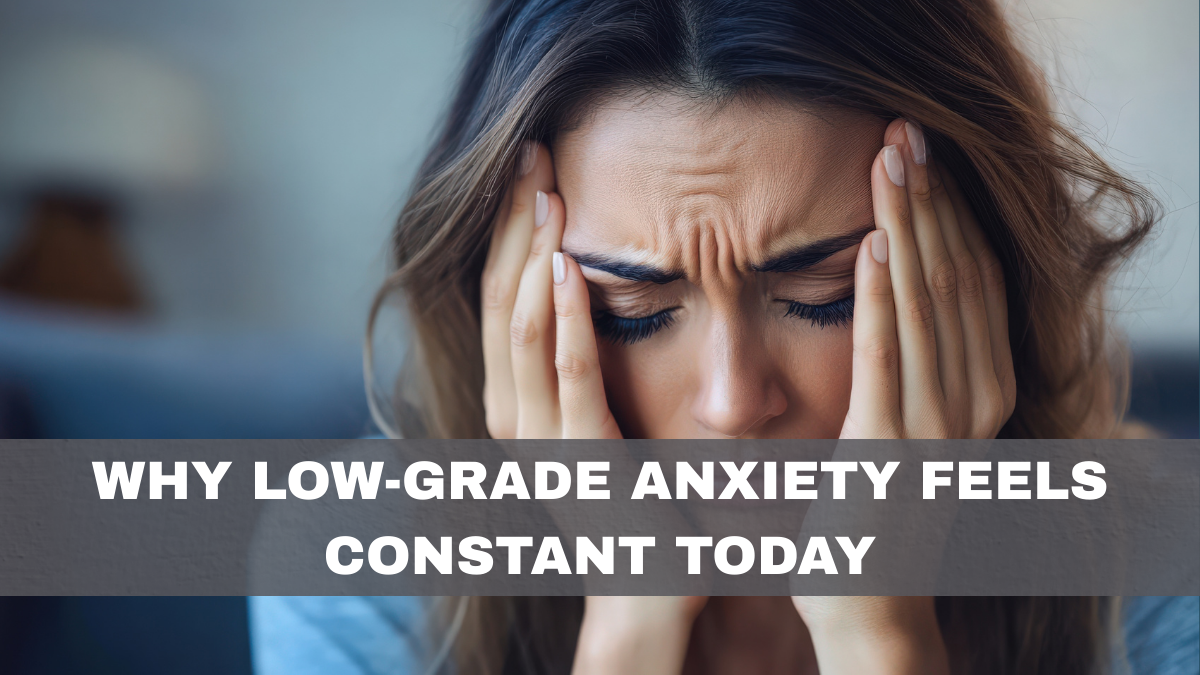
Anxiety is no longer just panic attacks or overwhelming fear. For many people, it shows up as a constant background hum—unease without a clear cause, tension without crisis, worry without urgency. This is modern anxiety, and its defining feature is persistence. It doesn’t spike dramatically. It lingers quietly.
Low grade anxiety has become so common that many people mistake it for normal life. They function, work, socialize, and sleep—yet something always feels slightly off. Understanding why this form of anxiety is spreading requires looking at how modern environments keep the nervous system subtly activated at all times.

What Modern Anxiety Looks Like
Modern anxiety isn’t always obvious.
It often appears as:
• Restlessness
• Overthinking
• Difficulty relaxing
• Constant alertness
• Mild physical tension
Because it’s manageable, it’s often ignored.
How Low Grade Anxiety Differs From Acute Anxiety
Acute anxiety is intense but temporary. Low grade anxiety is mild but continuous.
Key differences:
• No clear trigger
• Long duration
• Background presence
This makes modern anxiety harder to identify—and harder to escape.
The Role of Constant Uncertainty
Uncertainty keeps the brain alert.
Modern life includes:
• Economic instability
• Rapid change
• Information overload
• Unpredictable outcomes
The nervous system stays in “monitoring mode.”
Why the Nervous System Never Fully Shuts Off
Recovery requires safety signals.
But modern environments rarely provide:
• True downtime
• Silence
• Predictability
Without these, low grade anxiety becomes baseline.
The Impact of Information Overload
Constant updates create low-level threat exposure.
Even neutral information:
• Keeps attention scanning
• Prevents mental rest
• Increases vigilance
The brain wasn’t designed for nonstop input.
Why Anxiety Feels “Normal” Now
When anxiety is shared, it becomes normalized.
People assume:
• Everyone feels this way
• It’s just adulthood
• Nothing is wrong
Modern anxiety hides in plain sight.
The Link Between Control and Anxiety
Modern systems demand control but offer little certainty.
This creates:
• Hyper-responsibility
• Fear of mistakes
• Constant mental checking
Low grade anxiety thrives on perceived responsibility without control.
How Digital Life Maintains Anxiety
Notifications interrupt calm.
They:
• Break focus
• Create urgency
• Prevent nervous system settling
Digital environments rarely allow full relaxation.
Why Rest Doesn’t Fully Relieve Anxiety
Rest without safety doesn’t reset the nervous system.
People rest physically while remaining:
• Mentally alert
• Emotionally vigilant
Anxiety persists beneath relaxation.
The Body’s Role in Modern Anxiety
Anxiety isn’t just mental—it’s physiological.
It shows up as:
• Tight muscles
• Shallow breathing
• Fatigue
• Digestive discomfort
The body reflects constant readiness.
Why People Struggle to Name This Anxiety
Low grade anxiety lacks drama.
It’s hard to name because:
• There’s no crisis
• Life appears “fine”
• Functioning continues
But persistent doesn’t mean harmless.
How Low Grade Anxiety Accumulates
Small stressors stack quietly.
Over time:
• Tolerance shrinks
• Irritability increases
• Emotional resilience drops
Modern anxiety wears people down gradually.
What Actually Reduces Persistent Anxiety
Relief comes from safety, not distraction.
Helpful shifts include:
• Predictable routines
• Reduced input
• Nervous system regulation
• Genuine rest
Anxiety decreases when the body feels safe—not busy.
Why Awareness Matters
Naming modern anxiety changes the relationship to it.
Awareness:
• Reduces self-blame
• Encourages adjustment
• Prevents escalation
What’s unnamed feels permanent.
Conclusion
Modern anxiety doesn’t shout—it whispers. Low grade anxiety persists because modern environments keep the nervous system quietly activated. Constant uncertainty, digital input, and responsibility without control make tension feel normal.
But normal doesn’t mean healthy. When anxiety becomes background noise, it deserves attention—not dismissal. Reducing modern anxiety begins with restoring safety, not adding more coping strategies.
FAQs
What is modern anxiety?
It’s a persistent, low-level anxiety that remains present without intense spikes.
How is low grade anxiety different from panic attacks?
It’s less intense but lasts much longer and feels constant.
Why does anxiety feel normal today?
Because shared stress and constant stimulation normalize tension.
Can low grade anxiety be reduced?
Yes, by restoring safety, reducing overload, and regulating the nervous system.
Is modern anxiety a mental health disorder?
Not always—it’s often an environmental stress response.