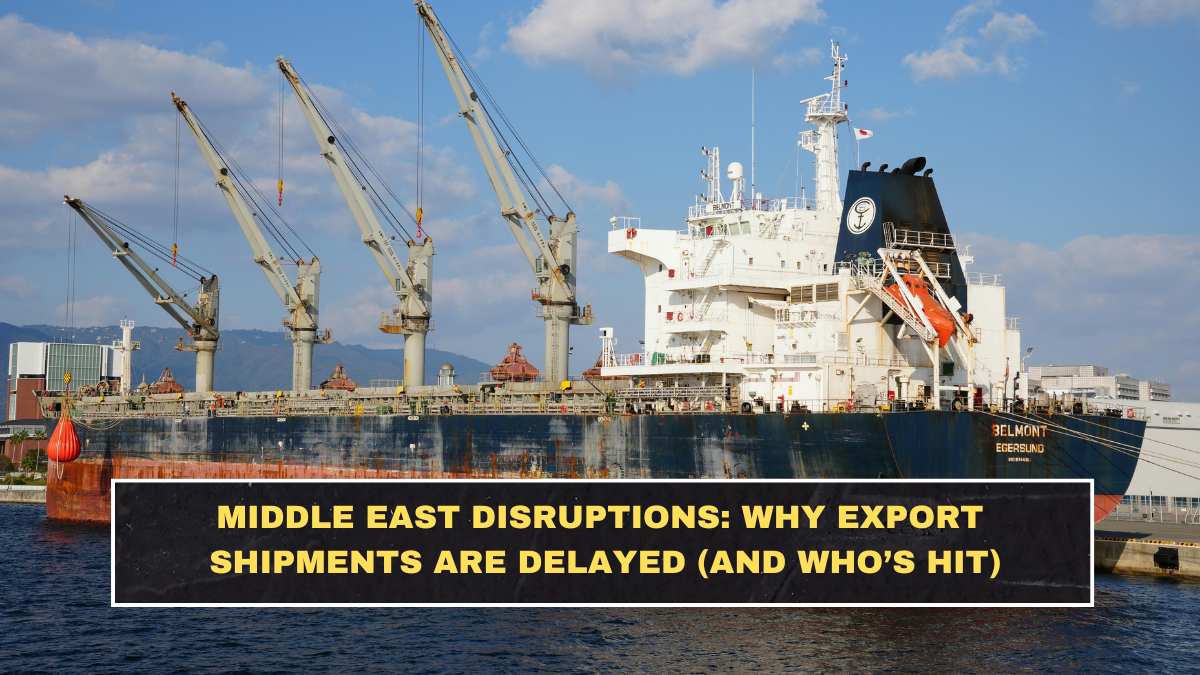
Recent disruptions in parts of the Middle East logistics and aviation corridors have raised concerns among exporters in several countries, including India. The region plays an important role in global trade routes, acting as a major transit hub for both air cargo and maritime shipping.
When disruptions affect shipping lanes or airspace, export shipments can face delays, rerouting, and higher transportation costs. Businesses that rely on quick international delivery schedules often experience operational challenges when logistics networks slow down.
For Indian exporters, the Middle East serves as both a direct market and a transit gateway for goods moving to Europe, Africa, and other regions.
Importance of the Middle East in Global Trade Routes
The Middle East connects major international shipping and aviation routes linking Asia, Europe, and Africa.
| Trade Route Factor | Importance |
|---|---|
| Geographic location | Strategic position between continents |
| Shipping hubs | Major ports handling global cargo |
| Air cargo networks | Key transit points for international freight |
| Energy trade | Critical region for oil and gas transport |
Because of this strategic location, disruptions in the region can affect global supply chains.
Industries Most Affected by Export Delays
Several export sectors rely heavily on efficient logistics networks for international deliveries.
| Industry | Impact of Delays |
|---|---|
| Gems and jewellery | Time-sensitive shipments |
| Pharmaceuticals | Strict delivery schedules |
| Electronics | Global supply chain integration |
| Textile exports | Seasonal international demand |
Delays can affect delivery commitments and increase operational costs for exporters.
Causes of Logistics Disruptions
Multiple factors can lead to delays in shipping and air cargo routes.
| Cause | Explanation |
|---|---|
| Airspace restrictions | Flights rerouted around affected regions |
| Port congestion | Increased shipping traffic |
| Security advisories | Temporary route adjustments |
| Insurance risk changes | Increased cost for cargo transport |
These conditions may slow down logistics operations across international trade networks.
Impact on Shipping and Freight Costs
Logistics disruptions can increase transportation expenses for exporters and importers.
| Cost Factor | Effect |
|---|---|
| Longer shipping routes | Higher fuel consumption |
| Air cargo rerouting | Increased freight charges |
| Insurance premiums | Higher risk coverage costs |
| Delivery delays | Penalties or contract adjustments |
These costs can influence product pricing and business profitability.
Export Logistics Chain
Export shipments typically move through several stages before reaching international markets.
| Stage | Process |
|---|---|
| Manufacturing | Production of goods |
| Packaging and documentation | Export compliance procedures |
| Transport to port or airport | Domestic logistics |
| International shipping | Air or sea transport |
| Destination delivery | Import clearance and distribution |
Disruptions at any stage of this chain can affect delivery timelines.
How Exporters Manage Delays
Businesses often adopt strategies to reduce the impact of logistics disruptions.
| Strategy | Benefit |
|---|---|
| Diversifying shipping routes | Reduce dependency on single corridor |
| Inventory planning | Maintain buffer stock |
| Alternative logistics partners | Increase operational flexibility |
| Supply chain monitoring | Early response to disruptions |
These approaches help companies maintain stability during uncertain conditions.
Global Trade Sensitivity to Logistics Networks
Modern international trade relies heavily on efficient logistics systems.
| Trade Element | Importance |
|---|---|
| Shipping routes | Enable global commerce |
| Air cargo networks | Fast delivery for high-value goods |
| Port infrastructure | Handling large cargo volumes |
| Customs processes | Regulating international trade |
When disruptions occur in these systems, ripple effects can spread across global markets.
Conclusion
Disruptions affecting Middle East logistics corridors can influence global trade routes and create challenges for exporters. Because the region serves as a major transit hub, delays in shipping or air cargo networks may affect delivery schedules, transportation costs, and supply chains.
For businesses engaged in international trade, monitoring logistics conditions and maintaining flexible shipping strategies can help reduce the impact of such disruptions.
FAQs
Why are export shipments delayed due to Middle East disruptions?
Changes in airspace access, shipping routes, or security advisories can cause delays in international logistics.
Which industries are most affected by shipping delays?
Sectors such as gems and jewellery, pharmaceuticals, electronics, and textiles often depend on timely export deliveries.
How do logistics disruptions increase costs?
Longer routes, higher fuel consumption, and increased insurance premiums can raise shipping expenses.
Can exporters avoid such delays?
While disruptions cannot always be avoided, companies can diversify routes and logistics partners to reduce risks.
Why is the Middle East important for global trade?
The region connects major international shipping and air cargo routes linking Asia, Europe, and Africa.