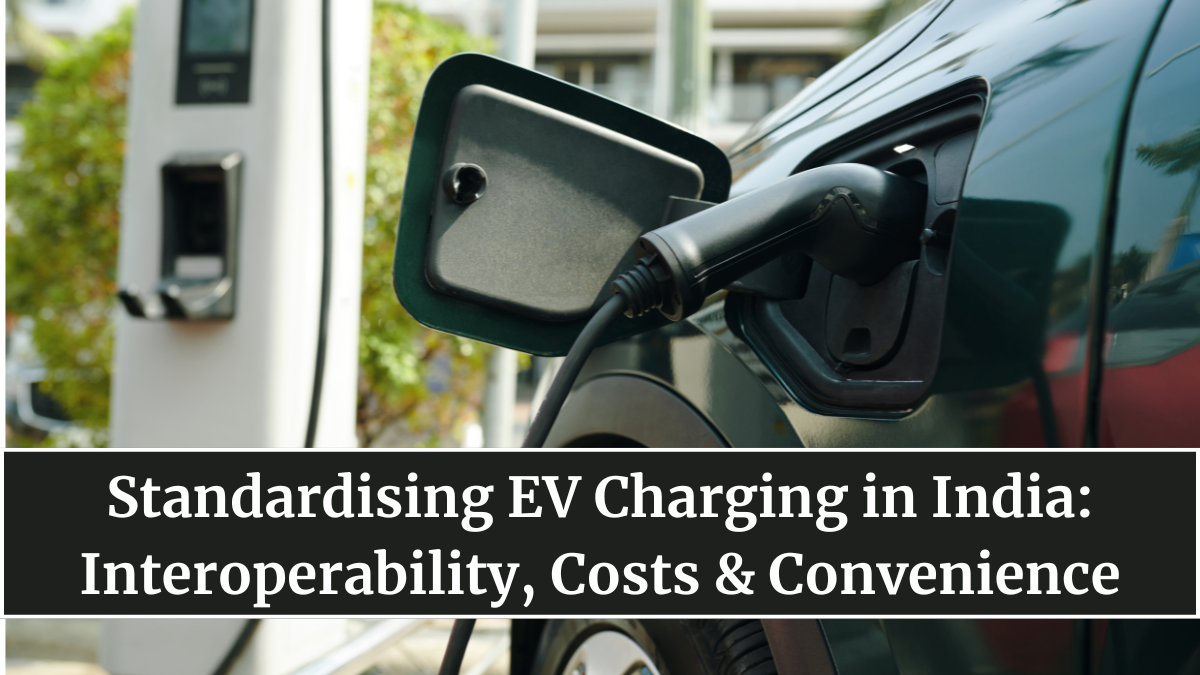
India’s electric mobility revolution is gaining speed — but one of its biggest challenges remains charging interoperability. With every EV brand using its own plug type, connector, and payment system, drivers often struggle to find compatible charging stations. The government, automakers, and charging network providers are now working together to create standardised EV charging standards in India, ensuring convenience, cost efficiency, and mass adoption.
Why Interoperability Matters for India’s EV Future
In simple terms, interoperability means that any electric vehicle can charge at any public charging station, regardless of the manufacturer. Today, however, India’s EV ecosystem is fragmented:
-
Different plug types (CHAdeMO, CCS2, Type 2, GB/T)
-
Multiple charging platforms with separate apps and payment systems
-
Lack of real-time visibility for charger availability
This creates confusion, limits driver confidence, and slows down EV adoption. By introducing uniform standards and shared infrastructure, India aims to build a seamless national charging network where convenience matches affordability.
The Current State of EV Charging Standards in India
The Bureau of Indian Standards (BIS) and the Department of Heavy Industries (DHI) have already laid the foundation for common charging frameworks:
| Standard | Description | Use Case |
|---|---|---|
| Bharat AC-001 | 15A, single-phase AC charger (3.3 kW) | Low-power charging for e-2W & e-3W |
| Bharat DC-001 | 15–20 kW DC charging, GB/T connector | Early electric cars and fleet vehicles |
| CCS2 (Combined Charging System) | 50–350 kW DC charging standard | Global EVs like Hyundai, Tata, and MG |
| CHAdeMO | Japanese fast-charging standard | Nissan and some imported EVs |
| Type 2 (IEC 62196) | AC charging for premium and home chargers | Common in Europe and Indian home setups |
While the government continues to push CCS2 and Type 2 as national standards for four-wheelers, the Bharat series remains popular for two- and three-wheelers.
Government Push for a Unified Standard
To accelerate adoption, India is taking decisive steps toward interoperability:
-
MoP Charging Guidelines 2023: Mandates universal payment systems, open data access, and standard connectors for all new stations.
-
BIS Standard IS 17017 Series: Aligns Indian standards with international norms for AC/DC chargers.
-
Energy Efficiency Services Ltd (EESL): Developing 1,000+ public chargers across 50 cities following unified standards.
-
National Mission on Transformative Mobility: Promoting standardization to avoid technology lock-in and reduce costs.
By aligning with global benchmarks, India ensures that new EVs and chargers remain compatible for the long term — supporting both domestic users and export markets.
Private Sector and Startups Leading Innovation
Private players and startups are also driving the move toward interoperable and affordable EV charging:
| Company | Initiative | Focus Area |
|---|---|---|
| Tata Power EZ Charge | Pan-India interoperable charging network | Over 60,000 home & public chargers |
| ChargeZone | Cloud-based real-time charger access | Smart network management |
| Fortum India | Multi-brand fast-charging systems | Collaboration with MG and Hyundai |
| Exicom | Universal chargers for 2W/3W/4W | Bharat + CCS2 combo units |
| Static Energy | Open API for charger integration | Promotes data-driven interoperability |
These innovations reduce the need for multiple charging apps or cards, allowing users to locate and pay for charging through a single digital platform.
Benefits of Standardising Charging Systems
The move toward common charging standards offers significant benefits:
-
Convenience: Any EV can use any charger across the country.
-
Cost efficiency: Standard connectors reduce production and installation costs.
-
Scalability: Easier integration for fleets, public transport, and logistics EVs.
-
Energy management: Smart charging grids can distribute power more efficiently.
-
Global competitiveness: Aligns Indian EVs with international export standards.
This shared ecosystem builds confidence among consumers, investors, and energy companies alike.
The Roadblocks Still Ahead
Despite the progress, challenges remain before India achieves full interoperability:
-
Legacy infrastructure: Early charging stations lack backward compatibility.
-
Diverse vehicle segments: Two-wheelers, buses, and cars have varying voltage requirements.
-
Lack of communication protocols: Not all chargers share data on availability and performance.
-
Cost of retrofitting: Upgrading older EVs and stations can be expensive for operators.
However, as the market grows and economies of scale improve, these costs are expected to drop sharply, encouraging faster upgrades and standard adoption.
The Future: A Fully Integrated EV Charging Network
By 2030, India’s goal is to establish a nationwide interoperable charging grid, connecting highways, cities, and rural zones. Every new public charger will support multiple plug types, digital payments, and real-time network data.
The government’s “One Nation, One Charging Standard” vision will ensure that charging an EV becomes as simple as refueling a petrol vehicle — fast, reliable, and accessible anywhere.
The success of this standardization effort will determine not just how India charges its vehicles, but how it leads the world in affordable and inclusive electric mobility.
FAQs
What does EV charging interoperability mean?
It means any EV can charge at any public charging station, regardless of manufacturer or connector type.
Which EV charging standards are used in India?
India primarily uses Bharat AC/DC, CCS2, and Type 2 standards for different vehicle categories.
Why is standardization important for EV growth?
It simplifies charging, reduces costs, and ensures long-term compatibility between vehicles and infrastructure.
Who regulates EV charging standards in India?
The Bureau of Indian Standards (BIS) and Ministry of Power (MoP) define and enforce charging norms.
What’s the future of EV charging in India?
By 2030, India aims for a fully interoperable, nationwide charging network, integrating urban, highway, and rural areas.
Click here to know more.