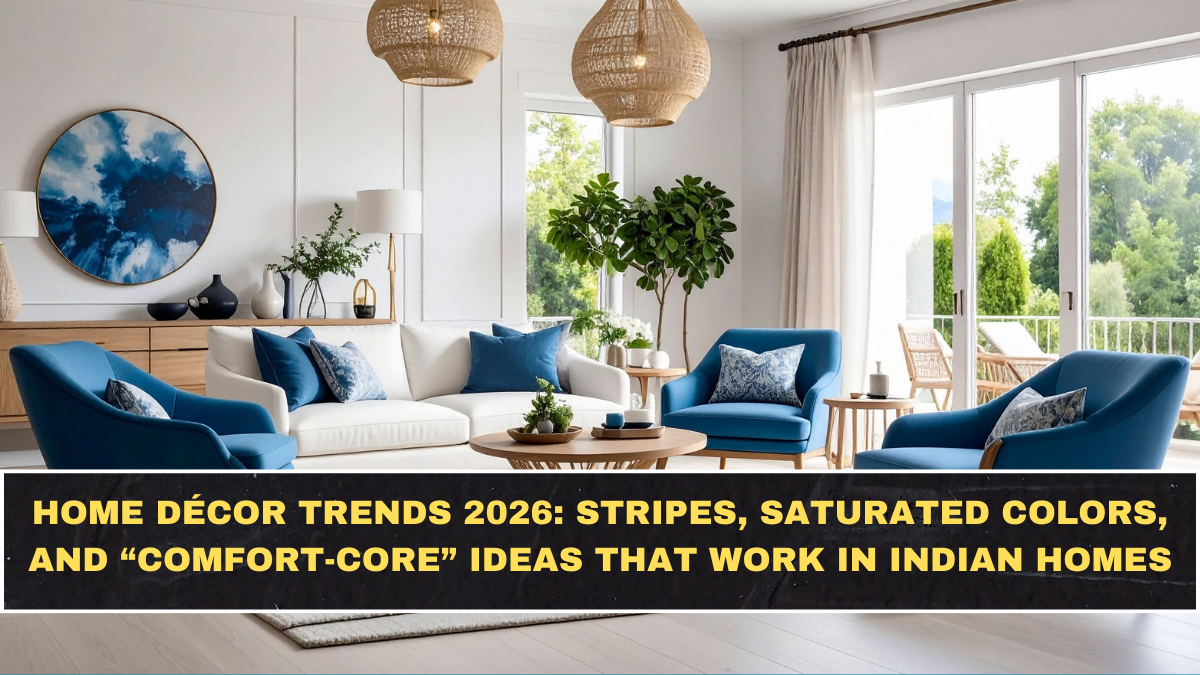
Home décor trends in 2026 are moving away from picture-perfect minimalism and toward spaces that actually feel lived-in. Indian homes are embracing warmth, personality, and visual depth instead of sterile white walls and showroom layouts. The focus is no longer on impressing guests for five minutes but on creating spaces that feel comfortable throughout the day.
This shift is driven by how homes are now used. Living rooms double as workspaces, bedrooms act as rest zones and recharge areas, and balconies are becoming emotional escape corners. The trends of 2026 reflect this reality by prioritising comfort, texture, and bold yet controlled expression.
Stripes Are Back, But Not the Old Way
Stripes are one of the strongest décor trends of 2026, but they are no longer loud or overwhelming. Instead of sharp contrasts, modern stripes are softer, wider, and often tone-on-tone. They appear on walls, curtains, rugs, and even upholstery in ways that elongate spaces visually.
In Indian homes, vertical stripes help low ceilings feel taller, while horizontal stripes can make narrow rooms appear wider. When used in muted colors, stripes add interest without dominating the room. The key is using stripes as a structure element rather than a decorative afterthought.
Saturated Colors Are Replacing Pale Neutrals
Homes in 2026 are moving toward deeper color saturation. Think rich greens, burnt terracotta, deep blues, warm plums, and grounded browns instead of light beige and grey. These colors add emotional warmth and age better over time.
Indian lighting conditions suit saturated tones well, especially in spaces with natural light. These colors create depth and reduce the “flat” look that many neutral homes develop. The trick is limiting saturation to walls, large furniture, or one dominant surface rather than everything at once.
Comfort-Core Is the New Luxury
Comfort-core is not about clutter or laziness. It is about softness, usability, and emotional ease. Plush cushions, layered throws, rounded furniture edges, and textured fabrics define this trend strongly.
Indian homes are adapting comfort-core by mixing traditional elements like cotton dhurries, wooden furniture, and soft lighting with modern layouts. Comfort-core values how a space feels after five hours, not how it looks in a single photo.
Textures Matter More Than Accessories
Instead of adding more décor items, 2026 focuses on texture variation. Rough meets smooth, matte meets subtle shine, and soft fabrics balance hard surfaces. This creates visual richness without overcrowding.
Textures also hide daily wear better, making homes feel relaxed rather than fragile. In Indian households, this approach works well with high-use spaces like living rooms and dining areas.
Lighting Is Softer and More Layered
Harsh overhead lighting is slowly disappearing. Homes are adopting layered lighting using table lamps, wall lights, and warm LEDs. This improves mood and makes rooms feel calmer.
Lighting placement is becoming more intentional, especially in Indian homes where evenings are long and social. Soft light enhances colors, textures, and comfort-core aesthetics naturally.
Patterns Are Intentional, Not Random
Patterns in 2026 are controlled and purpose-driven. One patterned element per space is enough. Mixing too many patterns creates visual fatigue rather than interest.
Indian homes benefit from this approach because traditional patterns already carry visual weight. Let one pattern breathe instead of competing with others.
Furniture Shapes Are Getting Softer
Sharp corners and rigid shapes are giving way to rounded furniture and curved silhouettes. Softer shapes feel safer, more welcoming, and visually calming.
This trend suits Indian family homes well, especially with children or elders. Rounded furniture also pairs naturally with comfort-core styling.
Natural Elements Are Used More Thoughtfully
Plants, wood, stone, and clay continue to play a role, but in moderation. Instead of filling every corner with plants, people are choosing fewer, healthier ones.
Natural materials are being selected for durability and feel rather than trend value. Longevity is becoming a style choice.
Small Homes Are Driving Smart Styling
Most Indian homes are not large, and 2026 décor trends respect that. Multi-functional furniture, visual zoning, and light-reflecting surfaces help smaller spaces feel complete.
Trends are adapting to reality rather than forcing unrealistic layouts.
Conclusion: Home Décor in 2026 Is About Feeling, Not Showing
Home décor trends in 2026 are less about copying Instagram rooms and more about designing spaces that support daily life. Stripes, saturated colors, and comfort-core ideas work because they respond to how homes are actually used.
When décor choices feel natural and supportive, homes become places of rest rather than performance. The best décor decision is the one that still feels right after months of use.
FAQs
Are stripes suitable for small Indian homes?
Yes, when used in soft colors and limited areas, stripes enhance space perception.
Which saturated colors work best in Indian lighting?
Deep greens, terracotta, navy, and warm browns perform very well.
What is comfort-core décor exactly?
It focuses on softness, usability, and emotional comfort over visual perfection.
Should I avoid neutral colors completely?
No, neutrals still work as base tones alongside richer accents.
How can I update my home without renovation?
Change lighting, add texture through fabrics, and update color accents gradually.
Is this trend budget-friendly?
Yes, most changes rely on styling and color rather than structural upgrades.