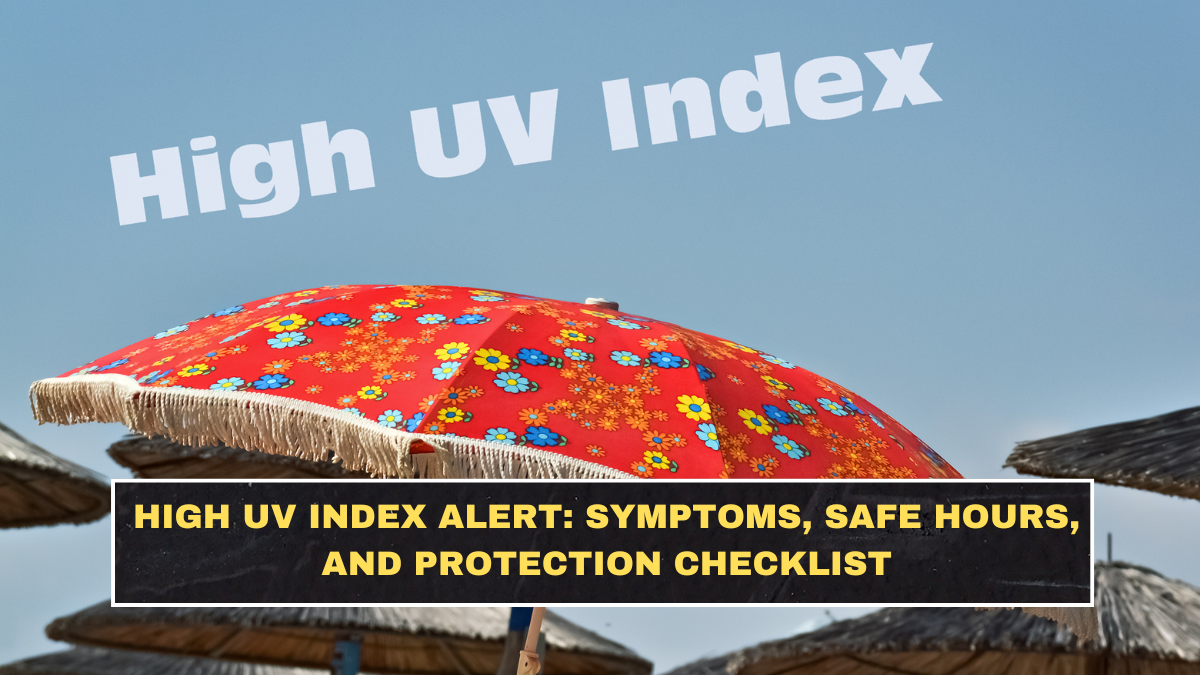
Several regions in India, including parts of Kerala, are experiencing high UV index levels ranging between 8 and 10. This level is classified as “very high” risk, meaning unprotected exposure to sunlight can cause skin and eye damage within a short time.
Unlike heatwaves, UV radiation is invisible but equally harmful, making awareness and protection essential during peak sunlight hours.
UV Index Scale (Standard Classification)
| UV Index | Risk Level | Exposure Impact |
|---|---|---|
| 0–2 | Low | Minimal risk |
| 3–5 | Moderate | Moderate risk |
| 6–7 | High | Protection needed |
| 8–10 | Very High | Damage possible within minutes |
| 11+ | Extreme | Severe risk |
A UV index of 8–10 means skin damage can begin within 10–20 minutes of exposure.
What High UV Index Means in Practical Terms
| Factor | Impact |
|---|---|
| Skin exposure | Risk of sunburn |
| Eye exposure | Risk of irritation/damage |
| Outdoor activity | Increased health risk |
| Long-term effect | Skin aging, pigmentation |
UV radiation affects even when temperature feels manageable.
Peak UV Exposure Timing
| Time Slot | Risk Level |
|---|---|
| 6 AM – 9 AM | Low to moderate |
| 10 AM – 3 PM | Very high (peak UV) |
| 4 PM – 6 PM | Moderate |
| Evening | Low |
Avoiding peak hours is the most effective protection strategy.
Symptoms of High UV Exposure
| Symptom | Meaning |
|---|---|
| Skin redness | Early sunburn |
| Eye irritation | UV damage |
| Headache | Heat + UV exposure |
| Fatigue | Prolonged exposure |
Ignoring early symptoms can lead to severe skin damage.
Protection Checklist (What Actually Works)
| Action | Purpose |
|---|---|
| Use sunscreen (SPF 30+) | Blocks UV radiation |
| Wear sunglasses | Protect eyes |
| Cover skin with clothing | Reduce exposure |
| Stay indoors during peak hours | Avoid direct UV |
| Use umbrella/hat | Shield from sunlight |
Protection must be consistent, not occasional.
Special Risk Groups
| Group | Risk Level |
|---|---|
| Children | High |
| Elderly | High |
| Outdoor workers | Very high |
| Fair skin individuals | Higher sensitivity |
These groups should take extra precautions.
Common Mistakes People Make
Here’s the blunt reality:
People think UV protection is optional. It’s not.
-
Skipping sunscreen
-
Staying outdoors during peak hours
-
Assuming cloudy weather = safe
UV rays penetrate clouds, so protection is still required.
Long-Term Effects of Ignoring UV Exposure
| Effect | Description |
|---|---|
| Skin damage | Sunburn, pigmentation |
| Premature aging | Wrinkles, dull skin |
| Eye issues | Irritation, vision impact |
| Health risks | Increased long-term skin risk |
Repeated exposure without protection increases long-term damage.
What You Should Do Daily
-
Apply sunscreen before going outside
-
Reapply every 2–3 hours
-
Avoid direct sun during peak UV hours
-
Use protective accessories
Consistency is more important than intensity.
Conclusion
A high UV index alert indicates significant risk of skin and eye damage within short exposure periods. Understanding UV levels, avoiding peak sunlight hours, and following basic protection steps can prevent both immediate and long-term health issues. Most damage occurs due to neglect, not lack of awareness.
FAQs
What does UV index 8–10 mean?
It indicates very high risk where skin damage can occur quickly without protection.
What are peak UV hours in India?
Typically between 10 AM and 3 PM.
Is sunscreen necessary every day?
Yes, especially during high UV index conditions.
Can UV rays affect eyes?
Yes, they can cause irritation and long-term damage.
Is UV exposure harmful even on cloudy days?
Yes, UV rays can penetrate clouds.
Click here to know more.