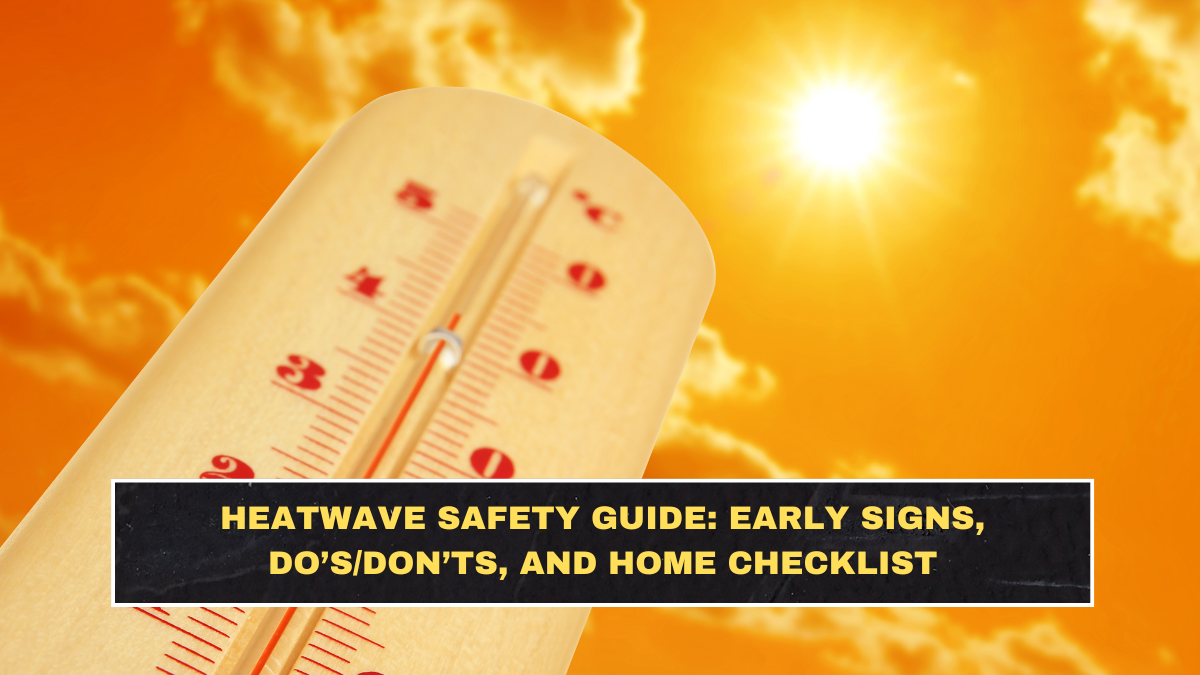
Heatwaves are periods of unusually high temperatures that can last for several days and affect large regions. In India, heatwaves are most common during the late spring and summer months when temperatures rise significantly above seasonal averages.
Extreme heat can lead to health risks such as dehydration, heat exhaustion, and heat stroke. Understanding the early warning signs and following simple safety precautions can help individuals and families stay safe during high-temperature conditions.
What Is a Heatwave
Meteorological agencies define a heatwave when temperatures rise substantially above normal levels for consecutive days.
| Condition | Description |
|---|---|
| Normal temperature | Seasonal average heat |
| Above normal | Slightly higher temperature |
| Heatwave | Significantly above normal temperature |
| Severe heatwave | Extreme heat lasting multiple days |
Such conditions can affect both urban and rural populations.
Early Signs of Heat-Related Illness
Exposure to extreme heat can affect the human body in several ways. Recognizing early symptoms can help prevent serious medical conditions.
| Symptom | Explanation |
|---|---|
| Excessive sweating | Body attempting to cool itself |
| Fatigue | Loss of energy due to heat exposure |
| Headache | Dehydration or overheating |
| Dizziness | Reduced blood pressure from heat |
If symptoms worsen, medical attention may be necessary.
Heat Stroke Warning Signs
Heat stroke is the most severe form of heat-related illness and requires immediate medical attention.
| Warning Sign | Description |
|---|---|
| Very high body temperature | Body overheating |
| Confusion or disorientation | Heat affecting brain function |
| Rapid pulse | Stress on cardiovascular system |
| Lack of sweating | Body unable to regulate heat |
Immediate cooling and medical assistance are essential in such situations.
Groups Most Vulnerable to Heat
Certain groups are more vulnerable to heat-related illnesses due to age, health conditions, or occupational exposure.
| Group | Risk Factor |
|---|---|
| Children | Sensitive to temperature changes |
| Elderly individuals | Reduced heat tolerance |
| Outdoor workers | Prolonged sun exposure |
| People with medical conditions | Reduced body resilience |
Extra precautions are recommended for these groups during heatwaves.
Heatwave Do’s and Don’ts
Following simple safety guidelines can reduce health risks during extreme heat.
| Do’s | Don’ts |
|---|---|
| Drink plenty of water | Avoid dehydration |
| Wear light clothing | Avoid heavy fabrics |
| Stay indoors during peak heat | Avoid outdoor work in midday sun |
| Use shade and ventilation | Avoid closed hot spaces |
These practices help maintain body temperature and reduce heat stress.
Home Heat Safety Checklist
Preparing homes for heatwave conditions can improve comfort and safety for families.
| Action | Purpose |
|---|---|
| Keep drinking water available | Maintain hydration |
| Use curtains or blinds | Reduce indoor heat |
| Improve ventilation | Allow air circulation |
| Check cooling appliances | Ensure proper functioning |
Simple household preparations can make a significant difference during extreme heat periods.
Outdoor Safety Tips
People who must spend time outdoors should follow additional safety precautions.
| Safety Tip | Benefit |
|---|---|
| Wear hats or caps | Protect from direct sunlight |
| Use sunscreen | Reduce skin damage |
| Take frequent breaks | Prevent exhaustion |
| Carry water bottles | Maintain hydration |
These steps reduce the risks associated with prolonged exposure to heat.
Conclusion
Heatwaves can create challenging conditions for communities, particularly when temperatures remain high for extended periods. Understanding the symptoms of heat-related illness and following practical safety precautions can help reduce health risks.
By staying hydrated, avoiding peak sun exposure, and maintaining safe indoor environments, individuals and families can protect themselves during extreme heat conditions.
FAQs
What causes a heatwave?
Heatwaves occur when atmospheric conditions trap heat over a region, leading to prolonged high temperatures.
What are early signs of heat exhaustion?
Common symptoms include excessive sweating, fatigue, dizziness, and headaches.
Who is most vulnerable during a heatwave?
Children, elderly individuals, outdoor workers, and people with certain medical conditions are more vulnerable.
How can people stay safe during extreme heat?
Staying hydrated, avoiding direct sunlight during peak hours, and keeping living spaces cool can help reduce heat-related health risks.