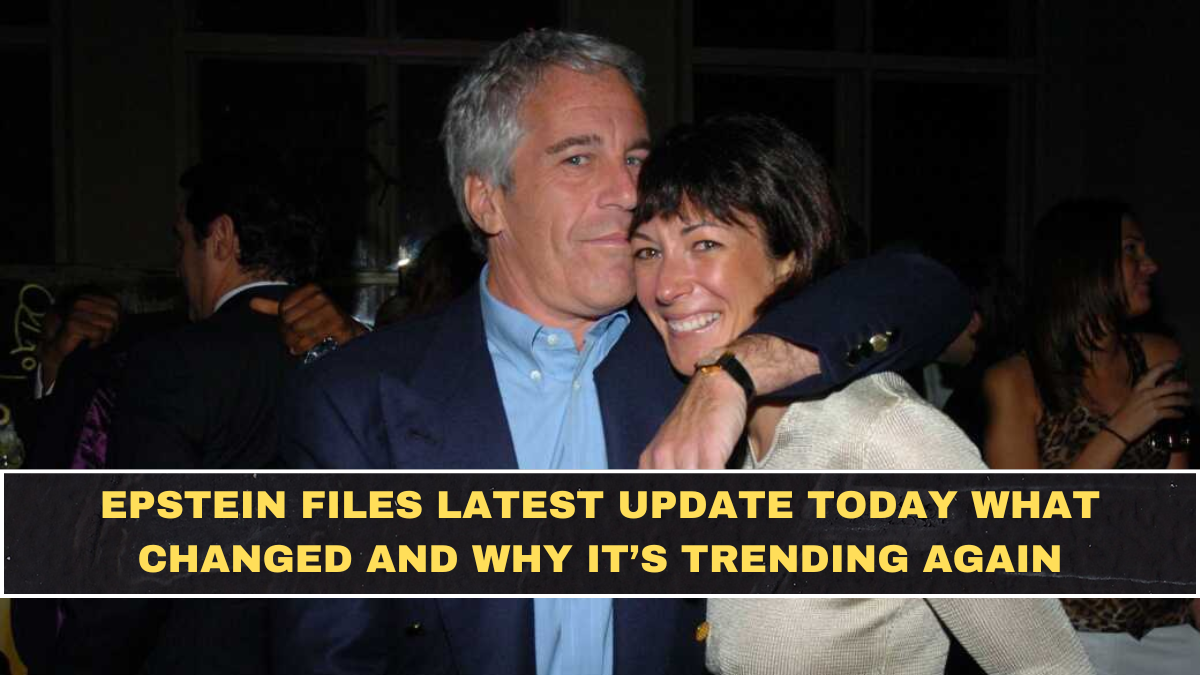
Search interest around the Epstein files has surged again today, and as always, the speed of online reaction has outpaced careful explanation. Many readers are seeing fragments of claims, screenshots, and confident assertions without clarity on what has genuinely changed versus what is being recycled. This gap between attention and understanding is exactly where confusion thrives.
This article focuses only on what is real and verifiable at this moment, without speculation or exaggeration. It explains what has actually changed, what remains exactly the same, which claims are unconfirmed, and why the topic is trending again despite limited substantive movement.

What Actually Changed Today
The confirmed development today relates to procedural movement, not a dramatic disclosure. This typically involves court handling, administrative clarification, or access-related steps connected to existing records rather than the creation of new material. These actions are part of long-running legal processes, not sudden revelations.
What matters is that the change affects how records are reviewed or referenced, not what those records suddenly contain. No new category of documents was created, and no sweeping release to the public occurred today.
What Has Been Officially Confirmed
What is confirmed is narrow but important. Certain records are now being handled under clarified rules, or a procedural step has progressed that was already expected in the legal timeline. This kind of movement often triggers renewed attention because it signals activity, even if content remains unchanged.
There has been no confirmation of new criminal charges, no new verdicts, and no official announcement of additional names being released publicly. These facts are consistent with how similar updates have unfolded in the past.
What Has Not Changed at All
Despite the online noise, many things remain exactly the same. There is still no single, official, comprehensive list of individuals labeled as clients or offenders. Existing redactions tied to victim protection and privacy remain in place.
The scope of publicly accessible documents has not suddenly expanded in a way that alters established understanding. Anyone suggesting otherwise is overstating the significance of the update.
Why Old Claims Are Circulating Again
Whenever the Epstein files trend, older material resurfaces almost immediately. This includes excerpts from depositions, previously released filings, and summaries that have circulated multiple times before. Without timestamps or context, these materials are easily mistaken for new disclosures.
Content creators often repackage older information with updated framing to match the current spike in attention. This recycling effect creates the illusion of constant new revelations where none exist.
Rumors Spreading That Are Not Verified
Several familiar rumors have resurfaced alongside today’s update. These include claims of secret annexes, imminent mass exposure, or unrestricted public access to unredacted files. None of these claims are supported by confirmed developments today.
Another common rumor is that trending implies legal consequences are imminent. Legal processes do not move according to social media cycles, and no such outcomes have been confirmed in connection with this update.
Why the Topic Keeps Trending in Cycles
The Epstein case remains emotionally charged because it represents unresolved accountability at the intersection of power and secrecy. Each procedural update acts as a spark that reignites broader frustration and curiosity, regardless of its actual scale.
Algorithms amplify this effect by prioritizing engagement over context. As a result, small, technical updates can generate outsized attention that feels disproportionate to their real-world impact.
What Readers Should Pay Attention To Next
The developments that genuinely matter tend to arrive quietly. These include court rulings that change access rules, final judgments in related cases, or formal clarifications issued through legal channels. These events carry real consequences, even if they attract less immediate attention.
Watching for confirmed procedural outcomes rather than viral claims helps maintain clarity and avoids emotional fatigue.
How to Interpret Future “Breaking” Claims
When future updates are labeled as breaking, the key question is what function they serve in the legal process. Do they introduce new evidence, or do they adjust how existing evidence is handled? Most updates fall into the second category.
Approaching each claim with this lens helps distinguish meaningful change from noise-driven amplification.
Why Accuracy Matters More Than Speed
In high-profile cases, speed of sharing often competes with accuracy. Misinterpretation harms not only public understanding but also individuals who may be referenced without wrongdoing. Responsible reading protects against both misinformation and unnecessary harm.
Accuracy does not reduce accountability; it strengthens it by grounding discussion in fact rather than assumption.
Conclusion: Activity Does Not Equal Revelation
Today’s Epstein files update reflects procedural movement, not explosive disclosure. While the topic remains serious and worthy of attention, treating every trend spike as a turning point leads to misunderstanding.
Separating what changed from what did not is the only way to follow this story responsibly. Awareness grows through clarity, not amplification.
FAQs
What changed in the Epstein files today?
A procedural or administrative step moved forward, not a major public release.
Were new names officially released today?
No confirmed public release of new names occurred today.
Are unredacted files now public?
No. Unredacted access does not mean unrestricted public availability.
Why are old documents being shared again?
They resurface during attention spikes and are often mistaken for new material.
Does trending mean legal action is imminent?
No. Social media trends do not dictate legal timelines.
Will this topic trend again soon?
Yes. Similar spikes are likely whenever procedural updates occur.