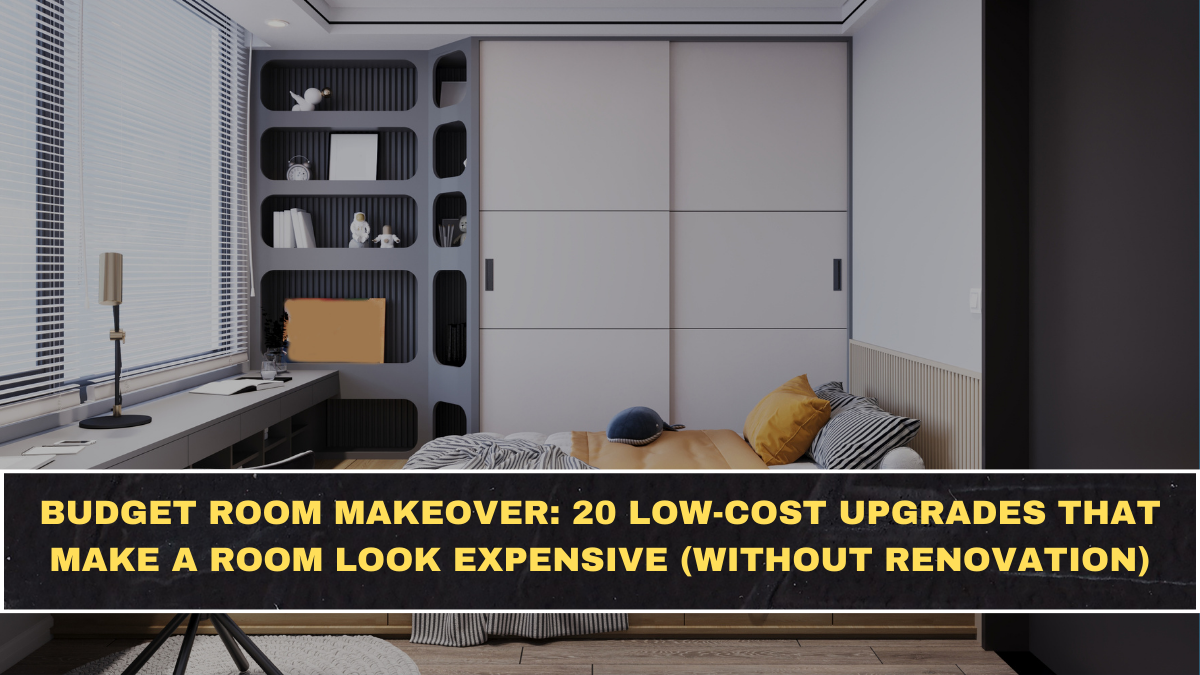
A budget room makeover in 2026 is no longer about quick fixes that look good for a week and then fall apart. People want rooms that feel intentional, comfortable, and visually upgraded without tearing down walls or buying everything new. The good news is that a room can look significantly more expensive with small, well-chosen changes that focus on proportion, light, and consistency.
Most rooms don’t look “cheap” because of furniture quality alone. They look unfinished because of poor lighting, mismatched elements, and cluttered surfaces. When you correct these basics, even affordable furniture and décor start to look cohesive. This guide focuses on upgrades that actually change how a room feels day to day, not just how it photographs.

Start With Decluttering, But Do It Strategically
Decluttering is often mentioned but rarely explained properly. A room feels messy when too many small items compete for attention, especially at eye level. Removing excess décor from shelves, tables, and walls immediately creates visual calm and makes the remaining pieces stand out.
Instead of clearing everything, group items intentionally and leave breathing space around them. Empty space is not wasted space; it frames what you keep. This single change can make a room feel larger and more refined without spending a rupee.
Upgrade Lighting Before Buying New Furniture
Lighting has more impact on room quality than most furniture upgrades. Harsh white lights flatten textures and make even good décor look dull. Switching to warm or neutral lighting instantly improves mood and depth.
Adding a table lamp, floor lamp, or wall light creates layers instead of relying on one overhead bulb. Layered lighting makes rooms feel designed rather than accidental, and it works especially well in Indian homes where evenings are long.
Change Cushion Covers and Curtains Together
Soft furnishings control a room’s color story more than walls do. Old, faded cushion covers or mismatched curtains instantly date a space. Replacing them with coordinated colors and textures is one of the fastest budget room makeover tricks.
Choose one main color and one supporting neutral, then repeat them across cushions and curtains. This repetition creates harmony and makes the room feel planned instead of pieced together.
Add One Large Mirror for Depth
A single well-placed mirror can double visual space and improve natural light. Mirrors work best when they reflect a window, light source, or open area rather than clutter.
Avoid small decorative mirrors scattered across walls. One medium-to-large mirror with a clean frame looks far more premium and reduces the need for additional wall décor.
Use Rugs to Define the Room Properly
Rugs often make or break a room’s proportions. A rug that is too small makes furniture look awkward and disconnected. Even on a budget, choosing the correct rug size is more important than choosing an expensive pattern.
In living rooms, front legs of sofas and chairs should sit on the rug. This anchors the space and gives a hotel-like finish without changing furniture.
Wall Art Should Be Fewer and Larger
Multiple small frames can make walls feel busy and chaotic. Replacing them with fewer, larger pieces creates instant sophistication. Large art doesn’t have to be expensive; prints, fabric panels, or framed posters work well.
Hang art at eye level and keep spacing consistent. Poor placement is more damaging than simple artwork.
Introduce Texture Through Fabrics and Materials
Texture adds richness without visual noise. Linen, cotton, jute, wood, and matte metals create depth when layered thoughtfully.
Instead of buying more décor, switch materials. A textured throw, a woven basket, or a wooden tray can change how a room feels instantly.
Rearrange Furniture for Better Flow
Many rooms feel uncomfortable simply because furniture placement blocks movement. Pulling furniture slightly away from walls and allowing clear walking paths improves comfort and balance.
Try rearranging before buying anything new. Often, a better layout reveals unused potential in the same pieces you already own.
Upgrade Hardware and Small Details
Small details signal quality. Replacing old knobs, handles, or switch plates is inexpensive but impactful. These elements are touched daily and subconsciously shape how premium a space feels.
Matching finishes across the room improves consistency and avoids visual distraction.
Use Plants Sparingly but Intentionally
Plants bring life, but too many create clutter. Choose one or two healthy plants and give them space. Larger plants tend to look more premium than many small ones.
Place plants where they receive proper light to keep them healthy, as dying plants quickly ruin the room’s feel.
Conclusion: A Budget Room Makeover Is About Control, Not Cost
A budget room makeover works when you control clutter, light, color, and layout instead of chasing trends. Expensive-looking rooms are usually calm, balanced, and intentional rather than overloaded.
When each element has a purpose, even affordable décor feels thoughtful. Focus on fewer upgrades done well, and the room will continue to look good long after the excitement of a makeover fades.
FAQs
How much should a budget room makeover cost?
It can be done gradually within a small budget by prioritising lighting, soft furnishings, and layout changes.
Do I need to repaint walls for a makeover?
No, many improvements can be achieved without repainting by changing décor and lighting.
What makes a room look expensive instantly?
Good lighting, consistent colors, fewer accessories, and correct furniture proportions.
Is DIY décor worth it?
Yes, when done cleanly and intentionally, DIY pieces can add character without looking cheap.
Can small rooms look premium too?
Absolutely. Small rooms often benefit the most from thoughtful styling and decluttering.
What should I avoid during a makeover?
Avoid overcrowding, poor lighting choices, and mixing too many styles at once.