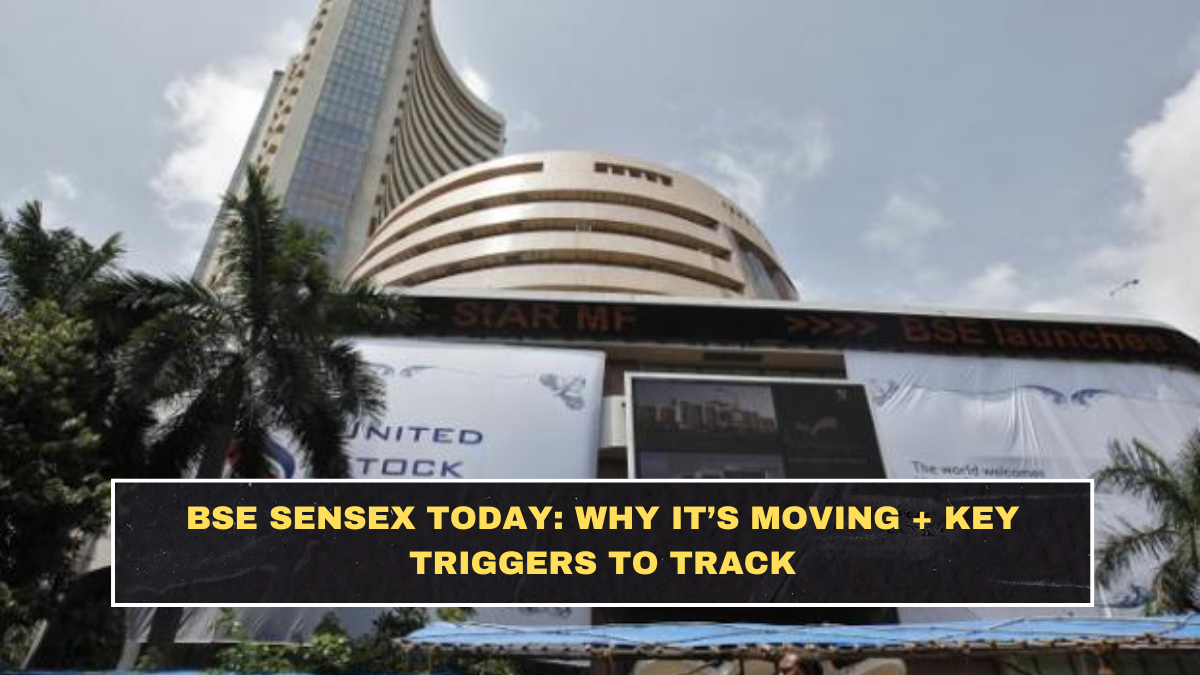
The BSE Sensex, India’s benchmark equity index, tracks the performance of 30 large-cap companies listed on the Bombay Stock Exchange (BSE). Market participants closely watch the index every trading session because it reflects the broader sentiment of institutional investors, global fund flows, and sectoral movements in the Indian economy.
Daily movements in the Sensex are usually influenced by global market trends, foreign institutional investor (FII) activity, crude oil prices, interest rate expectations, and sector performance. When banking, IT, or energy stocks move sharply, they often push the entire index higher or lower.
For traders and long-term investors alike, understanding what actually drives the Sensex in a given session helps in assessing market momentum and anticipating the next trend shift.
Key Market Indicators Investors Track
Several real-time indicators determine the direction of the Sensex during a trading session. These include global market performance, domestic macroeconomic data, and institutional fund flows.
| Indicator | Why It Matters | Typical Impact on Sensex |
|---|---|---|
| Global Market Trends | US, Asian, and European markets set early sentiment | Positive global cues often lift Indian markets |
| FII/DII Activity | Institutional buying or selling drives liquidity | Heavy FII buying can push indices higher |
| Crude Oil Prices | India imports most of its crude oil | Rising oil prices often pressure markets |
| Rupee Movement | Currency strength impacts foreign investment | A weak rupee may trigger selling by FIIs |
| Sector Performance | Banking, IT, and energy stocks dominate the index | Strong sector rallies lift the index |
Because these factors change quickly, the Sensex often experiences intraday volatility, especially when global developments or economic announcements occur.
Sectoral Drivers Behind Sensex Movement
The Sensex is heavily influenced by a few key sectors. When major stocks in these sectors move together, they can drive the entire index higher or lower within a single session.
| Sector | Weight in Sensex (Approx.) | Key Influence |
|---|---|---|
| Banking & Financial Services | ~35–40% | Large banks often lead market direction |
| Information Technology | ~15–18% | Global tech demand and US markets impact IT stocks |
| Oil & Gas | ~12–15% | Crude price changes affect profitability |
| FMCG | ~8–10% | Defensive sector during volatility |
| Automobile | ~6–8% | Domestic consumption trends influence performance |
Banking stocks such as large private lenders often act as momentum leaders, while IT companies react strongly to global technology trends and US market movements.
Global Cues That Influence the Sensex
Indian equity markets are deeply connected to global financial systems. Major developments in global markets can trigger immediate reactions in the Sensex.
| Global Factor | Market Reaction |
|---|---|
| US Federal Reserve policy signals | Rate hikes can cause selling pressure |
| Geopolitical tensions | Markets may turn volatile |
| Oil supply disruptions | Energy costs affect multiple sectors |
| Global recession concerns | Investors move toward safer assets |
For example, tensions affecting global oil supply often lead to rising crude prices, which can negatively affect Indian equities due to higher import costs and inflation pressure.
Domestic Triggers That Move the Market
Apart from global factors, several domestic developments directly influence the Sensex.
| Domestic Trigger | Impact on Markets |
|---|---|
| RBI policy announcements | Changes in interest rates affect banking stocks |
| Corporate earnings results | Strong earnings push indices higher |
| Government policy changes | Infrastructure or tax reforms impact sectors |
| Inflation and GDP data | Economic indicators guide investor sentiment |
When strong corporate earnings coincide with positive global cues, markets often experience broad-based rallies across sectors.
What Traders Watch for the Next Session
Professional traders and institutional investors constantly monitor certain indicators to estimate whether the Sensex trend will continue or reverse.
| Market Signal | What It Indicates |
|---|---|
| Rising trading volumes | Strong participation in the rally |
| FII inflows | Foreign confidence in Indian markets |
| Sector rotation | Shift of money from one sector to another |
| Resistance levels | Points where markets may face selling pressure |
These signals help investors determine whether the market is entering a sustained trend or simply reacting to short-term news events.
Conclusion
The BSE Sensex today reflects a combination of global cues, institutional fund flows, sector performance, and domestic economic indicators. Banking, IT, and energy stocks remain the biggest drivers of index movements, while global developments such as oil prices and geopolitical tensions often influence investor sentiment.
For investors, focusing on sector trends, institutional activity, and macroeconomic signals provides a clearer understanding of why the market is moving and what could shape the next trading session.
FAQs
What is the BSE Sensex?
The BSE Sensex is a benchmark stock market index that tracks the performance of 30 large-cap companies listed on the Bombay Stock Exchange. It represents the overall health and direction of the Indian equity market.
What factors affect the Sensex movement?
Key factors include global market trends, foreign institutional investor flows, crude oil prices, currency movements, corporate earnings, and domestic economic data.
Which sectors influence the Sensex the most?
Banking and financial services have the largest influence, followed by information technology, oil and gas, FMCG, and automobile sectors.
Why does the Sensex move with global markets?
Indian markets are closely connected to global financial systems. Developments in US, European, and Asian markets influence investor sentiment and capital flows into Indian equities.
How can investors track Sensex movements?
Investors can track Sensex performance through stock exchanges like BSE, financial news platforms, and brokerage apps that provide real-time market data and sector analysis.
Click here to know more.