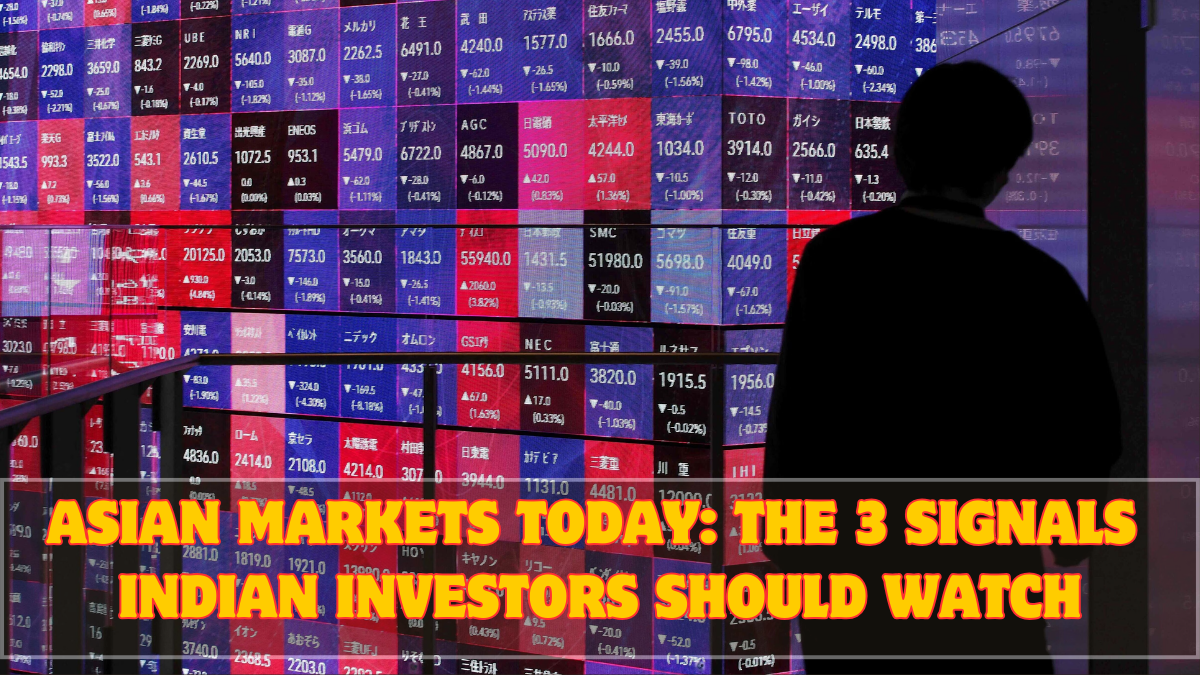
Asian markets today often look noisy—green here, red there, headlines pulling in opposite directions. But most short-term moves across Asia boil down to a few repeatable signals. If you’re an Indian investor, you don’t need to track every index tick. You need to watch the right three indicators and understand what they imply for Indian equities.
This guide filters the chaos and explains what actually matters.
Why Asian Markets Matter to Indian Investors
Asia trades first. That makes it a sentiment-setter.
Movements across Asia influence:
• Opening mood of Indian markets
• Risk-on vs risk-off behaviour
• Sector rotation (IT, metals, pharma)
But reacting blindly to red or green screens is a mistake.
Signal 1: Direction and Tone of the Nikkei
The Nikkei 225 is more than a Japan-only indicator.
Why it matters:
• Reflects global risk appetite
• Reacts quickly to US cues
• Sensitive to currency moves
A steady Nikkei with low volatility is more important than a sharp spike.
How Nikkei Moves Translate to India
The connection isn’t direct—but it’s useful.
What to watch:
• Sustained trends over 2–3 sessions
• Sector leadership (tech vs cyclicals)
• Volume-backed moves
Short-lived rallies often fade before Indian markets open.
Signal 2: Hang Seng and China Risk Sentiment
The Hang Seng Index reflects China-linked risk.
Why it matters:
• Policy sentiment in China
• Global growth expectations
• Commodity demand outlook
Sharp Hang Seng drops usually signal caution—not panic.
What Hang Seng Weakness Means for India
For Indian investors, this often affects:
• Metal stocks
• Energy stocks
• Export-oriented names
But India’s domestic story can decouple quickly.
Signal 3: Regional Risk Factors (Not Headlines)
Headlines exaggerate. Risk factors matter.
Key risk factors to monitor:
• Bond yield movement in Asia
• Currency volatility
• Policy commentary tone
Markets react more to surprises than known problems.
Why “Asia Is Down” Is a Useless Insight
Generic statements mislead.
Better questions:
• Is selling broad-based or selective?
• Are defensives outperforming?
• Is volatility rising or falling?
Context beats color.
How Asian Market Moves Impact Nifty Openings
India often reacts emotionally at the open.
Typical patterns:
• Gap-down opens after Asia weakness
• Mid-session recovery if cues stabilise
• Sector rotation rather than index collapse
Understanding this prevents panic trades.
What It Means for India’s IT Stocks
IT stocks react fastest to global cues.
Watch for:
• Tech-heavy Asian indices
• Currency movement
• US futures alignment
IT reacts to sentiment before fundamentals.
Commodities and Asian Market Signals
Asia influences commodity sentiment.
Impacted areas:
• Metals
• Energy
• Mining-linked stocks
China-linked moves matter more than Japan here.
Why Domestic Factors Still Dominate
Asia sets the tone—but India sets direction.
Indian markets respond stronger to:
• Domestic earnings
• Policy announcements
• FII flows
Asian cues fade if domestic data disagrees.
How Long Asian Signals Usually Last
Most Asia-driven moves are short-lived.
Typical lifespan:
• 1 trading session
• Sometimes half a session
Don’t build long-term views on morning cues alone.
Mistakes Indian Investors Make Watching Asia
Common errors:
• Panic selling at open
• Overtrading based on headlines
• Ignoring domestic context
Asia informs—it doesn’t command.
How to Use Asian Cues Smartly
Practical approach:
• Use Asia to plan entries
• Avoid impulsive exits
• Focus on stock-specific setups
Asian cues are tools, not triggers.
What to Track Daily (Simple List)
You don’t need everything.
Track:
• Nikkei trend
• Hang Seng stability
• Currency movement
Ignore the rest.
Why This Matters More in Volatile Markets
Volatility amplifies misinterpretation.
Calm analysis:
• Reduces emotional decisions
• Improves entry timing
• Protects capital
Noise kills returns.
Conclusion
Asian markets today offer valuable signals—but only if you know what to filter. Watching the Nikkei, Hang Seng, and key risk factors gives Indian investors a clearer sense of global sentiment without information overload. Asia sets the morning mood, but disciplined investors let domestic fundamentals decide the day.
Observe calmly. Act selectively.
FAQs
Do Asian markets always impact Indian markets?
No. They influence sentiment, not long-term direction.
Which Asian index matters most for India?
Nikkei for risk appetite, Hang Seng for China-linked sentiment.
Should investors trade based only on Asian cues?
No. Use them as context, not triggers.
How long do Asian market effects last?
Usually one session or less.
What’s the biggest mistake investors make with Asian cues?
Overreacting to headlines instead of analysing context.