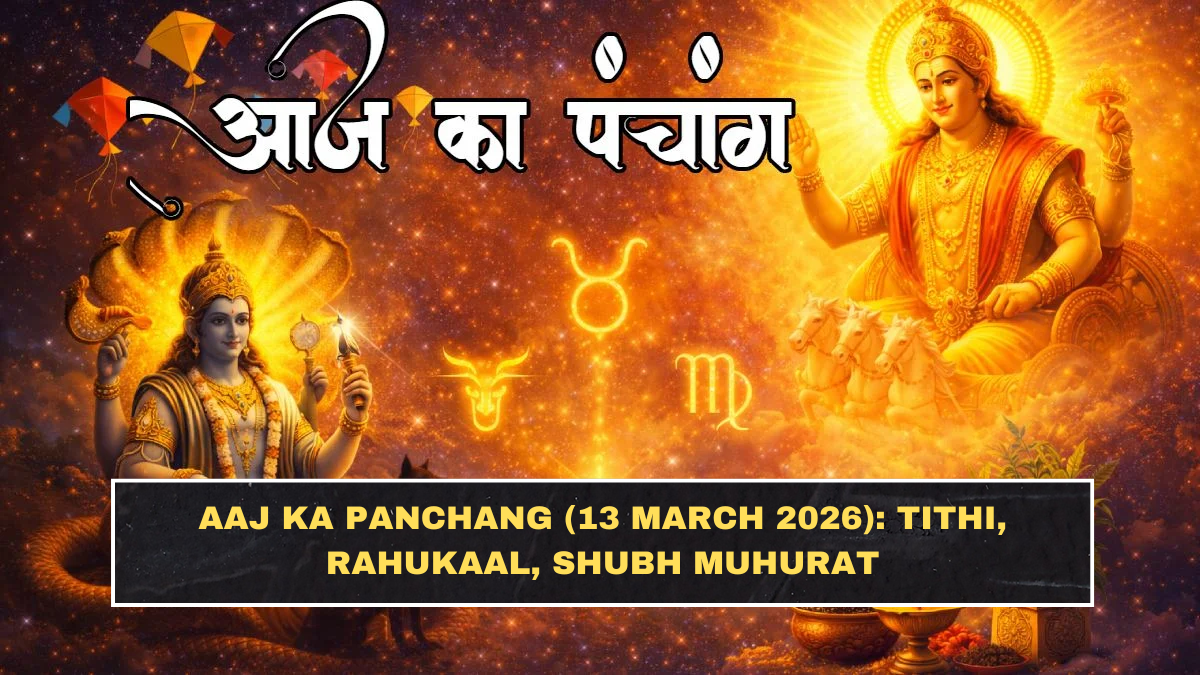
The Panchang is an important element of the traditional Hindu calendar used to determine auspicious and inauspicious timings during the day. Many people check the Panchang every morning to know the tithi, nakshatra, rahukaal, and shubh muhurat before starting important activities.
The Aaj Ka Panchang for 13 March 2026 provides a daily astrological overview including lunar phases and planetary timings followed across many regions of India.
Panchang Components Explained
The Panchang consists of five primary elements that together form the daily Hindu calendar calculation.
| Panchang Element | Meaning |
|---|---|
| Tithi | Lunar day in the Hindu calendar |
| Nakshatra | Constellation of the moon |
| Yoga | Planetary alignment affecting daily activities |
| Karana | Half of a lunar day |
| Vara | Day of the week |
These elements are used in astrology to determine favorable timings.
Panchang Details for 13 March 2026
Below is a simplified overview of the Panchang elements for the day.
| Element | Details |
|---|---|
| Day | Friday |
| Tithi | Lunar phase of the day |
| Nakshatra | Moon’s constellation |
| Yoga | Astrological combination |
| Karana | Half-day lunar segment |
These values are calculated using astronomical positions of the moon and sun.
Rahukaal Timing Today
Rahukaal is considered an inauspicious time period according to traditional astrology. Many people avoid starting important activities during this time.
| Location | Rahukaal Timing |
|---|---|
| North India | Afternoon period |
| Central India | Afternoon period |
| Western India | Afternoon period |
| Eastern India | Afternoon period |
The exact timing may vary slightly depending on the city and sunrise time.
Shubh Muhurat Today
Shubh Muhurat refers to favorable time periods during the day that are considered suitable for important tasks or ceremonies.
| Activity | Muhurat Consideration |
|---|---|
| Business activities | Chosen during auspicious hours |
| Religious rituals | Often aligned with Panchang |
| Travel | Sometimes planned around Muhurat |
| Ceremonies | Timed with favorable planetary positions |
Astrologers often recommend checking the Panchang before selecting these timings.
Sunrise and Sunset Timing
Sunrise and sunset timings are important factors in calculating Panchang values for any day.
| Event | Approximate Timing |
|---|---|
| Sunrise | Morning hours |
| Sunset | Evening hours |
| Day duration | Daylight period |
| Night duration | After sunset period |
These timings vary depending on geographical location.
Importance of Panchang in Daily Life
The Panchang has been used for centuries in Indian traditions to plan activities and ceremonies.
| Use | Purpose |
|---|---|
| Religious rituals | Selecting auspicious time |
| Festivals | Determining festival dates |
| Marriage ceremonies | Choosing favorable timing |
| Daily planning | Avoiding inauspicious periods |
Many households refer to the Panchang as part of their daily routine.
Regional Variations in Panchang
Different regions in India may follow slightly different Panchang calculations depending on local traditions.
| Panchang Type | Region |
|---|---|
| North Indian Panchang | Northern states |
| South Indian Panchang | Southern states |
| Gujarati Panchang | Western India |
| Bengali Panchang | Eastern India |
Despite these variations, the fundamental principles remain similar.
Conclusion
The Aaj Ka Panchang for 13 March 2026 provides an overview of important astrological elements including tithi, nakshatra, rahukaal, and shubh muhurat. Many people consult the Panchang daily to plan religious activities, ceremonies, or personal decisions based on traditional beliefs.
Understanding these elements helps individuals align their daily routines with the traditional Hindu calendar system.
FAQs
What is Panchang?
Panchang is a traditional Hindu calendar used to determine auspicious and inauspicious timings.
What is Rahukaal?
Rahukaal is considered an inauspicious period during the day when many people avoid starting new activities.
Why do people check Panchang daily?
Many people use Panchang to plan religious rituals, ceremonies, and important events.
Does Panchang timing change by location?
Yes, timings such as sunrise, sunset, and Rahukaal can vary slightly depending on geographical location.