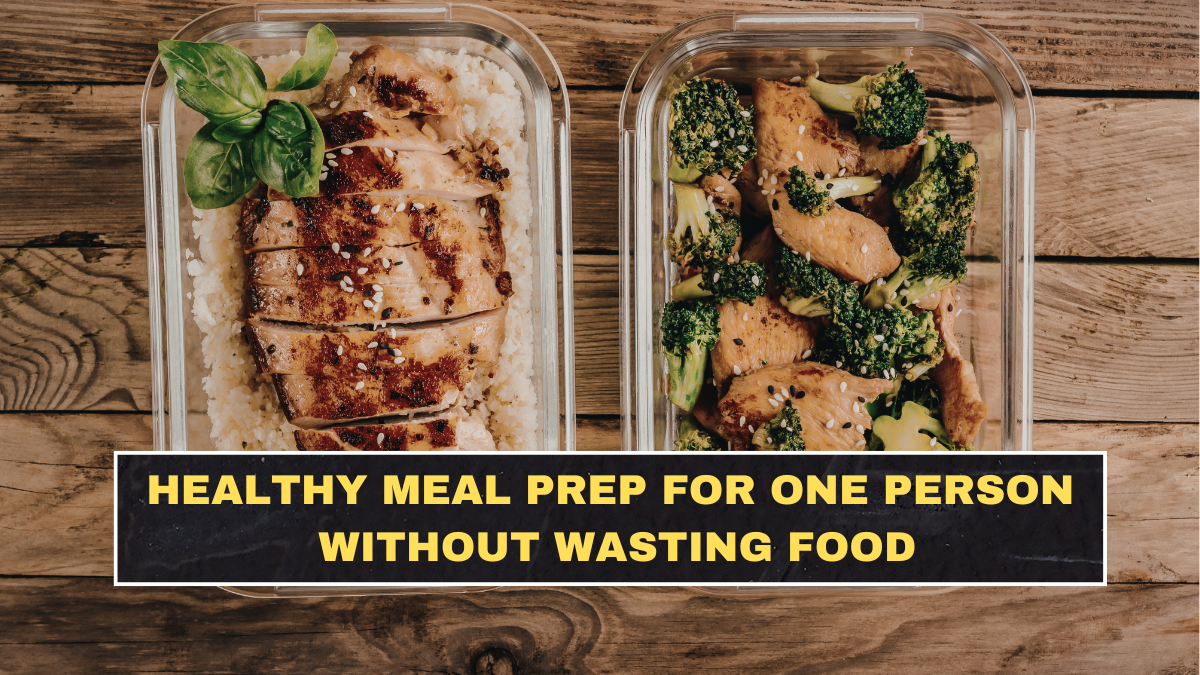
Meal prep for one person fails for a predictable reason: people cook like they are feeding a household, then act surprised when half the food dies in the fridge. The better approach is not cooking less blindly. It is cooking smarter. Harvard’s Nutrition Source recommends meal-prep strategies and uses the Healthy Eating Plate as a simple planning guide, while Cleveland Clinic says meal prepping helps make healthy eating easier during busy days. USDA food-safety guidance also says leftovers kept in the refrigerator should generally be eaten within 3 to 4 days, which means over-prepping is not efficient, it is just wasteful.
Why does meal prep for one person usually go wrong?
Because solo eaters often make one of two bad choices. They either cook too much and waste food, or they try to cook every single meal fresh and burn out. NHS budget-eating guidance specifically recommends batch-cooking and freezing part of what you make, and Harvard’s meal-prep guide highlights recipes and strategies that work well in bigger batches. The real goal is not to fill the fridge with seven identical containers. It is to create a few flexible meals and freeze what you will not eat in time.
What should healthy meal prep for one person actually focus on?
It should focus on three things: repeatable meals, balanced portions, and storage that matches your real week. Harvard’s Healthy Eating Plate framework centers meals around vegetables and fruits, healthy protein, and whole grains, while Cleveland Clinic says meal prep helps reduce takeout reliance and makes healthy choices easier when life gets busy. So the smart structure is simple: prep one protein, one grain or starch, and two vegetables or add-ins that can mix into multiple meals.
| Prep category | Smart solo-prep choice | Why it works |
|---|---|---|
| Protein | Chicken, tofu, beans, eggs, fish | Easy to portion across meals |
| Carb or grain | Rice, potatoes, oats, quinoa, whole-grain pasta | Keeps meals filling and flexible |
| Vegetables | Frozen mixed veg, broccoli, peppers, greens | Reduces waste and adds volume |
| Flavor base | Olive oil, yogurt, sauces, herbs, spices | Prevents repetitive meals |
| Freezer meal | Soup, chili, curry, pasta sauce | Saves leftovers before they spoil |
How much food should one person prep at a time?
Usually 3 to 4 days of refrigerated meals is the smarter limit. USDA says leftovers should be refrigerated promptly and used within 3 to 4 days, or frozen for longer storage. That means a full 7-day fridge-prep plan is often dumb unless part of it is frozen. For one person, the better system is to prep a few meals for the next several days and freeze one or two portions right away. That cuts waste without forcing daily cooking.
Which foods are best for low-waste solo meal prep?
The best foods are the ones that store well, reheat well, and work in more than one meal. Harvard recommends whole grains, beans, vegetables, and healthy protein as the backbone of balanced meal prep, while NHS budget guidance recommends whole unprocessed foods, batch-cooking, and freezing half when useful. That is why solo prep works best with foods like oats, rice, beans, lentils, chicken, eggs, frozen vegetables, soups, stews, and roasted vegetables. They are practical, not glamorous, and that is exactly why they work.
What does a realistic meal-prep plan for one person look like?
A realistic plan is not seven perfect boxed meals. It is a small system. For example, cook one batch of chicken or lentils, one pot of rice or potatoes, one tray of vegetables, and one breakfast base like overnight oats. That gives enough for lunches and dinners without locking you into one exact plate every day. Cleveland Clinic’s meal-prep guidance says prepping meals, snacks, or ingredients ahead of time can all count, which matters because ingredient prep is often smarter for one person than full meal assembly.
A simple weekly setup could look like this:
- Breakfast: overnight oats or Greek yogurt bowls
- Lunch: rice bowl with protein and vegetables
- Dinner: soup, stir-fry, or roasted tray meal
- Backup freezer portion: chili, curry, or pasta sauce
That is enough structure to stay organized without turning your fridge into a punishment system. Harvard’s plate approach and Cleveland Clinic’s prep advice both support this kind of flexible setup.
How do you keep solo meal prep from getting boring?
By prepping components, not cloning full meals. The same chicken can become a grain bowl one day, a wrap the next day, and a salad topper after that. The same beans can go into soup, a rice bowl, or a quick skillet meal. Harvard’s meal-prep guide leans into flexible batch-friendly ingredients, and Cleveland Clinic’s healthy meal-prep advice also focuses on making healthy eating easier, not making every meal identical. If you are bored by day two, the problem is usually lack of variation in flavors, not the idea of meal prep itself.
What storage rules matter most when prepping for one?
Food safety matters more when you live alone because nobody else is around to help finish leftovers quickly. USDA says leftovers should be refrigerated within 2 hours, or within 1 hour if temperatures are above 90°F, and reheated leftovers should reach 165°F. It also says refrigerated leftovers should be used within 3 to 4 days. Those rules matter because solo cooks are more likely to “keep it one more day” and gamble with old food. That is not meal prep. That is laziness disguised as thrift.
What is the smartest meal-prep mindset for one person?
Think in modules, not full menus. Prep enough to remove friction, but not so much that you create waste. Build meals around a simple healthy structure, freeze what you will not eat in time, and buy foods that reappear across different meals. Harvard’s Healthy Eating Plate, NHS budget guidance, and Cleveland Clinic’s meal-prep advice all point toward the same truth: simple systems beat ambitious ones.
Conclusion?
Healthy meal prep for one person works when it matches reality. Prep 3 to 4 days ahead, use balanced components, freeze extra portions early, and stop buying food like your future self has infinite appetite and motivation. The mistake is not cooking for one. The mistake is pretending solo cooking should look like family meal prep. It should not. It should be smaller, smarter, and much less wasteful.
FAQs
How many days should one person meal prep for?
Usually 3 to 4 days for refrigerated meals is the safest practical range, since USDA says leftovers are generally good in the fridge for 3 to 4 days.
Is freezing meal prep better for one person?
Often yes. NHS budget guidance recommends batch-cooking and freezing half for another day, which is especially useful when cooking for one.
What is the best meal-prep method for one person?
Prepping flexible ingredients instead of seven identical meals is usually the smarter method because it reduces boredom and waste. That approach is supported by Harvard and Cleveland Clinic meal-prep guidance.
What foods are best for solo meal prep?
Foods that store and reheat well, such as grains, beans, soups, roasted vegetables, eggs, and simple proteins, are usually the strongest choices. Harvard and NHS guidance both support these kinds of batch-friendly basics.
Click here to know more