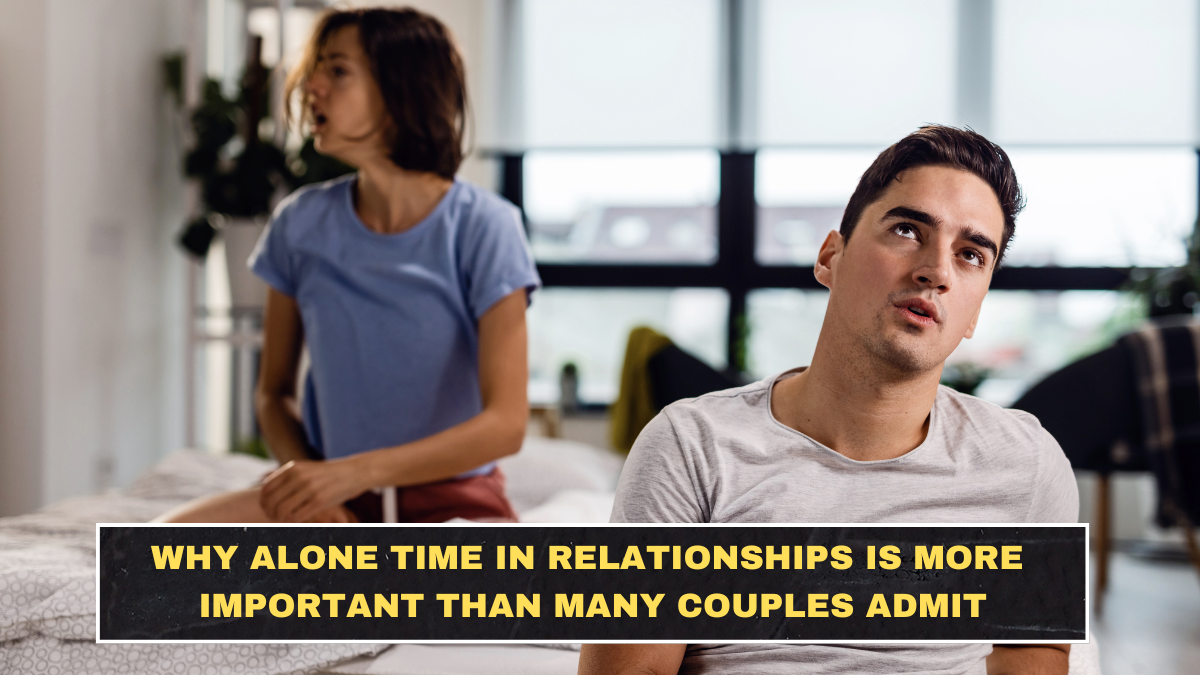
A lot of couples still treat alone time like a warning sign. That is backward. Wanting space does not automatically mean less love, less commitment, or secret dissatisfaction. In modern adult life, people are juggling work, devices, family demands, and constant low-grade social pressure. The American Psychological Association reported in 2025 that 54% of U.S. adults said they had felt isolated from others, 50% said they had felt left out, and many described broad emotional disconnection. That matters because when people are already stretched thin, constant access inside a relationship can start feeling less like intimacy and more like overload.
There is also the basic time reality. The U.S. Bureau of Labor Statistics reported that in 2024, 87% of full-time employed people worked on an average weekday, and on days they worked, full-time workers averaged 8.1 hours. That is before commuting, chores, childcare, or digital interruption. So when couples act like healthy relationships should involve constant texting, constant updates, and zero need for personal space, they are not being romantic. They are being unrealistic.
Why does alone time matter inside a healthy relationship?
Because autonomy matters, and relationships usually work better when closeness does not crush it. Research published in Personality and Social Psychology Bulletin in 2025 found that people in relationships reported more autonomy when interacting with romantic partners than when alone, while interactions with non-close others were linked to lower autonomy. That is important because it suggests healthy relationships do not erase independence; at their best, they can support it. But that only works when the relationship is not built on constant surveillance or emotional overreach.
Other relationship research also points in the same direction. A 2023 study on romantic relationship quality found that autonomy-need satisfaction was positively associated with perceived relationship quality. In plain English, people tend to experience better relationships when they do not feel trapped inside them. That should be obvious, but many couples still confuse attachment with access and love with availability.
What does healthy alone time actually look like?
Healthy alone time is not emotional withdrawal. It is time to think, rest, recover, focus, or simply exist without always being “on” for another person. For one couple, that may mean an evening alone after work. For another, it may mean separate hobbies, solo errands, independent friendships, or less pressure to text constantly during the day. The point is not the exact format. The point is whether both people can have space without turning it into a threat.
This matters more now because digital life has blurred the line between connection and intrusion. APA’s early 2026 reporting on digital companions and emotional connection noted broader concern that excessive reliance on always-on digital interaction can worsen loneliness and distort relational habits. That does not mean texting your partner is bad. It means constant emotional availability is not the same thing as relationship quality. Sometimes it is just constant contact wearing a flattering label.
| Relationship pattern | What it usually means | Healthier alternative |
|---|---|---|
| Constant texting all day | Reassurance-seeking or habit, not always closeness | Check-ins without pressure |
| Feeling guilty for wanting space | Weak boundary culture | Normalize solo time openly |
| Interpreting solitude as rejection | Anxiety or insecurity driving the story | Talk about needs directly |
| No individual hobbies or routines | Over-merging identities | Keep some separate interests |
| Silence always feels threatening | Dependence on constant validation | Build trust without nonstop contact |
Why do so many couples struggle to ask for space?
Because many people hear “I need some time alone” as “I am pulling away from you.” That reaction is usually driven by insecurity, not logic. If a relationship only feels safe when there is constant contact, the real issue is not the alone time. The real issue is that the bond cannot tolerate ordinary separation without panic. APA relationship guidance has long emphasized that personal space is part of long-term relationship functioning, not evidence of failure.
There is also a cultural issue here. Couples are still sold the idea that closeness means doing everything together, knowing everything instantly, and treating independence as suspicious. That mindset sounds romantic when you are younger or insecure. In adult life, it often becomes suffocating. The people who refuse to admit they need space usually end up taking it badly later through irritation, emotional shutdown, avoidance, or unnecessary fights. That is the dumber version of the same need.
How should couples talk about alone time without creating drama?
By being specific instead of vague. “I need space” sounds loaded because it is shapeless. “I need an hour after work to decompress” or “I want one evening a week to reset on my own” is clearer and less threatening. The more concrete the request, the easier it is to separate a normal personal need from an emotional rejection. Research published in 2026 on tailoring relationship behaviors to different attachment needs also found that avoidantly attached people benefit when intimacy is offered without compromising autonomy, while anxiously attached people benefit from reassurance. That is a useful reminder: good couples do not force one style on both people.
The other important piece is consistency. If one person asks for alone time only after conflict, it can feel like punishment. If it is discussed as a normal ongoing need, it becomes part of the relationship structure instead of a crisis signal. That is how mature couples handle space: not as drama, but as maintenance.
What happens when couples ignore the need for space?
Usually resentment builds before honesty does. One person starts feeling crowded, the other starts sensing distance, and both end up reacting to symptoms instead of the real issue. A 2026 study on marital satisfaction and burnout risks found that burnout tendencies were linked to relationship satisfaction patterns among couples. Different study, same basic lesson: emotional strain inside a partnership does not stay abstract for long. It leaks into satisfaction, patience, and conflict.
Conclusion?
Alone time in relationships matters because love is not supposed to erase personhood. Healthy couples do not prove closeness by being constantly available. They prove it by building enough trust that space does not feel like abandonment. Between long workdays, digital overload, and growing emotional fatigue, personal space is not some selfish extra in 2026. For many couples, it is part of what keeps the relationship breathable.
FAQs
Is wanting alone time in a relationship a bad sign?
No. Wanting alone time can be a normal autonomy need, and research links autonomy satisfaction with better perceived relationship quality.
How much alone time is healthy for couples?
There is no universal number. What matters is whether both partners can discuss space openly and whether the arrangement helps rather than harms the relationship.
Can too much contact hurt a relationship?
Yes. Constant access can create overload, reassurance dependency, and resentment when couples mistake nonstop communication for genuine closeness.
What is the best way to ask for alone time?
Be concrete, calm, and reassuring. Specific requests usually create less fear than vague statements like “I need space.”