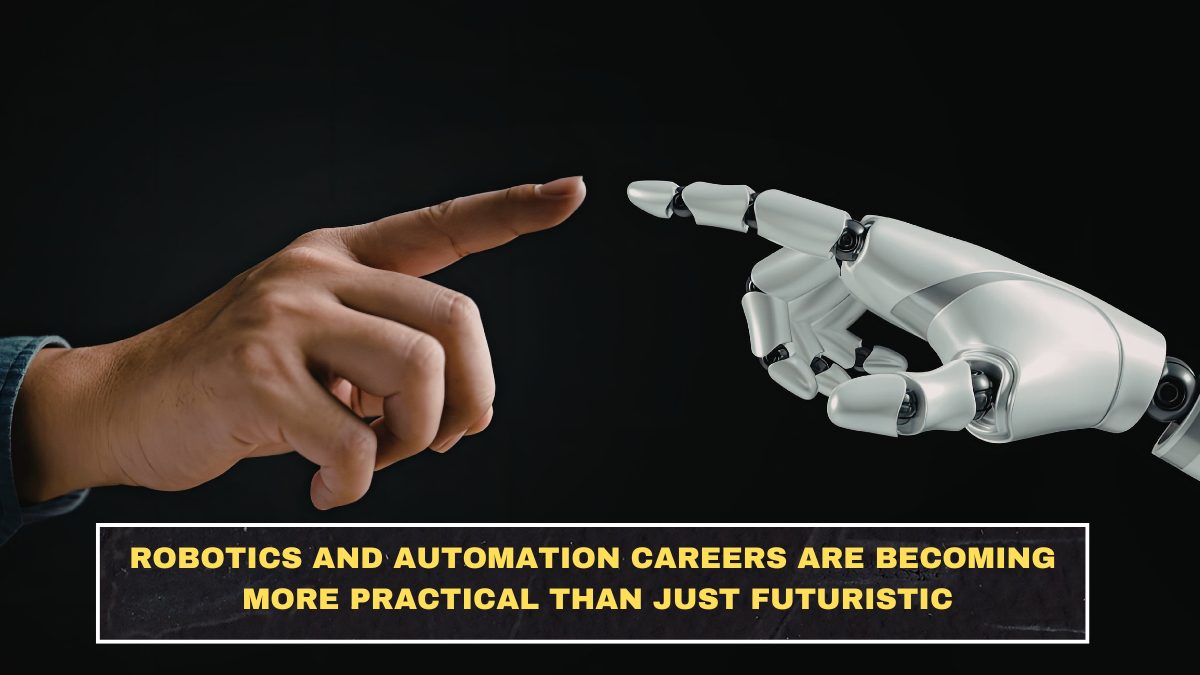
Students often treat robotics like a flashy future topic, as if it belongs only in science fiction, elite labs, or expensive engineering colleges. That thinking is outdated. Robotics and automation are already part of factories, warehouses, automotive plants, electronics production, packaging, logistics, and quality control. The real opportunity is not just “building humanoid robots.” It is working in the systems that help companies produce faster, reduce errors, manage labor shortages, and improve consistency. That makes this field far more practical than many students assume.
The numbers support that shift. The International Federation of Robotics reported 4,281,585 robots operating in factories worldwide in 2023, up 10% from the prior year, and annual installations stayed above half a million for the third straight year. On top of that, the World Economic Forum says 58% of employers expect robotics and automation to transform their business by 2030. That does not mean every student should rush blindly into robotics. It means the field is now tied to real industrial demand, not just futuristic marketing.
What robotics and automation careers actually include
This field is broader than most students think. It includes robot programming, industrial automation, PLC and control systems, mechatronics, maintenance engineering, production systems, machine vision, quality automation, and smart manufacturing support. Some jobs are heavily engineering-based, while others are more hands-on and suitable for diploma holders, technicians, or students from applied technical backgrounds. The mistake is assuming there is only one path. There are several, and that is exactly why the field has become more practical.
A company adopting automation does not just need one robotics expert. It needs people who can install systems, maintain machines, troubleshoot breakdowns, improve process flow, program industrial equipment, and keep production running. That is why careers in this area often sit between mechanical engineering, electrical systems, software, and operations. Students who like practical problem-solving may fit this field better than those chasing generic “AI jobs” without understanding what real companies actually need.
Why this field has stronger long-term scope now
Modern industry is under pressure to improve productivity, reduce waste, and stay competitive. Robotics and automation help do that. This is one reason industrial engineering is showing a strong outlook. The US Bureau of Labor Statistics projects industrial engineer employment to grow 11% from 2024 to 2034, much faster than the average for all occupations, with about 25,200 openings per year. That is a useful signal because many automation careers connect directly to production efficiency, systems optimization, and process improvement.
Students also need a more honest view of mechatronics. The same BLS data shows electro-mechanical and mechatronics technologists and technicians are projected to grow only 1% from 2024 to 2034, which is slower than average. That sounds disappointing until you read the full picture: there are still about 1,300 openings per year, mainly because companies still need replacements and technical support talent. So no, every automation job is not exploding. But the field is still relevant, and stronger opportunities often sit in adjacent roles like industrial engineering, controls, maintenance, and systems integration.
Best career paths in robotics and automation
| Career path | What the work usually involves | Why it looks practical now |
|---|---|---|
| Automation engineer | PLCs, control systems, production automation, troubleshooting | Factories need reliable automated processes |
| Robotics technician | Installing, testing, repairing, and maintaining robotic systems | Demand grows as more robots enter factories |
| Mechatronics engineer/technician | Working across mechanical, electrical, and control systems | Useful in smart manufacturing environments |
| Industrial engineer | Improving workflow, efficiency, quality, and system performance | Strong job outlook tied to automation adoption |
| Maintenance engineer | Preventing downtime and fixing machine issues quickly | Automated plants cannot afford long stoppages |
| Robot programmer / systems integrator | Configuring robots and integrating them into production lines | Needed when companies upgrade from manual to automated systems |
The smarter way to look at this field is not to ask which title sounds coolest. Ask which role companies will keep paying for when the excitement dies down. Maintenance, process optimization, industrial automation, and systems integration usually survive better than hype-heavy job labels. Businesses may delay experiments, but they rarely stop caring about uptime, cost reduction, and output quality.
Which students may be a good fit
This career path can suit students who enjoy machines, systems, real-world troubleshooting, and technical environments where software and hardware meet. It can be a strong fit for those interested in mechanical engineering, electrical work, electronics, production, or industrial systems. Students who only want desk-based theory may struggle. This field often rewards people who can think clearly under pressure and solve practical problems on the ground.
The entry routes are also flexible. A BTech or diploma in mechatronics, mechanical, electrical, electronics, or industrial engineering can help. Students can also improve their chances with PLC training, CAD basics, sensor and control system knowledge, industrial safety understanding, and hands-on lab or plant exposure. The brutal truth is simple: employers trust demonstrated skill more than polished buzzwords. A student who can actually read systems and fix problems has more value than one who only talks about the future of robotics.
Conclusion
Robotics and automation careers are no longer just futuristic conversation topics. They are becoming practical career paths because industry is already using these systems at scale, and the demand is tied to productivity, manufacturing efficiency, and operational reliability. The global robot base is rising, employers expect automation to reshape business, and adjacent roles like industrial engineering already show stronger growth data. Students who approach this field realistically, not romantically, may find solid long-term opportunities here.
FAQs
Is robotics only for top-level engineers?
No. Some roles require strong engineering knowledge, but many careers in automation and robotics are also open through diplomas, technician training, and applied technical education. The field is broader than students think.
Is mechatronics still worth it if growth looks slow?
Yes, but only if you understand the market properly. Pure mechatronics growth may not look explosive, yet the skills connect well to automation, maintenance, controls, and smart manufacturing roles that still have practical demand.
Which career in this field looks strongest right now?
Industrial engineering and automation-related roles currently look stronger in terms of job outlook because companies actively need process improvement, efficiency, and production support.
Do robotics careers exist only in factories?
No. Factories are a major area, but automation also matters in logistics, warehousing, packaging, electronics, automotive production, and other modern industrial systems.
What should a student learn first?
Start with basics such as electrical systems, sensors, PLC concepts, mechanical fundamentals, troubleshooting, and how automated production systems work. Without those basics, the rest becomes empty theory.
Click here to know more