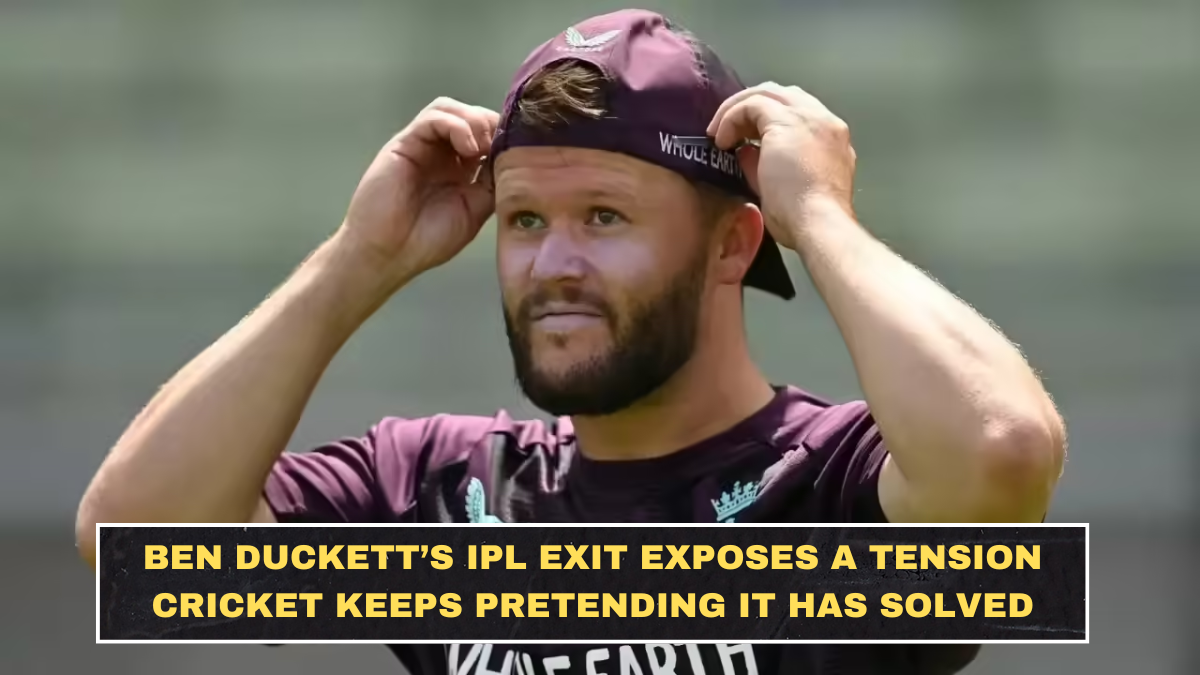
Ben Duckett pulled out of IPL 2026 just four days before the season began, saying he wanted to focus on his England career and be in the right physical and mental state for the international summer. That decision cost Delhi Capitals a player they had bought for 20 million rupees (₹2 crore) and now leaves Duckett facing a possible two-season IPL ban under league rules for players who withdraw after being picked at auction without a valid injury or approved reason.
This is not just a player-availability story. It exposes the conflict cricket still refuses to solve properly: franchises want certainty, national teams want loyalty, and players are stuck pretending they can serve both without consequence. Duckett’s withdrawal made that contradiction visible again.
What Duckett actually said
Reuters reported that Duckett called the decision “deeply difficult” and said representing England remained his priority. He apologised to Delhi Capitals, their fans, and everyone affected, saying he needed to make sure he was fully ready for England’s season. Reuters later reported that after a poor Ashes tour and an off-field incident in Australia, Duckett also saw this as part of resetting his international career.
That makes the move understandable from his side. But understandable does not mean consequence-free. Delhi did not buy him as a placeholder. They bought him as a squad asset, and late withdrawals damage planning, replacements, and team balance. That is exactly why the IPL toughened its stance last year.
Why the ban rule matters
The relevant rule is straightforward. Reports across Reuters and Cricbuzz said overseas players who pull out after being picked at the auction can be banned from the next two IPL seasons/auctions if they do not have a legitimate reason. In Duckett’s case, that means he could miss IPL 2027 and IPL 2028 and be shut out of the next two player auctions.
Here is the simple breakdown:
| Issue | Verified detail | Why it matters |
|---|---|---|
| Team affected | Delhi Capitals | They lose a player after auction planning was already done. |
| Auction price | ₹2 crore / 20 million rupees | This was a real squad investment, not a cheap backup. |
| Timing | Pulled out four days before IPL 2026 began | Late exits create maximum disruption. |
| Stated reason | Focus on England career and readiness | National priority over franchise commitment. |
| Likely penalty | Two-season IPL ban | The league is trying to deter last-minute withdrawals. |
Why this matters beyond Duckett
The real issue is structural. England players are increasingly squeezed between franchise money and international survival. Duckett had a poor Ashes, lost ground in England’s setup, and then chose county cricket with Nottinghamshire and recovery time over a short IPL payday, according to Reuters and other coverage. That tells you where his real pressure sat. It was not the IPL. It was his England place.
For franchises, this is a recurring headache. Delhi Capitals were hit by a similar England-linked withdrawal situation with Harry Brook in a previous cycle, and now Duckett has done the same kind of late exit. Teams are right to be annoyed because auction strategy becomes weaker if overseas players can walk away when national priorities change.
The tension cricket keeps avoiding
Cricket still acts as if the calendar can satisfy everyone. It cannot. A player coming off a bad international winter, trying to save his Test place, and needing domestic red-ball work is not going to treat a T20 league the same way a franchise owner does. Duckett’s choice may look disloyal to Delhi, but from his side it was a career-protection move. That is the uncomfortable truth.
A few points matter most:
- The IPL wants player commitment once auction picks are made.
- International players still prioritise national careers when those are under threat.
- Late withdrawals hurt franchises more than casual fans admit.
- Ban rules may punish the symptom, but they do not fix the calendar conflict itself. This last point is an inference from the repeated nature of these withdrawals.
Conclusion
Ben Duckett’s IPL exit matters because it shows cricket still has no clean answer to the club-versus-country problem. Duckett chose England and accepted the risk of a two-season IPL ban. Delhi Capitals lost a planned overseas batter. The league can punish that choice, but punishment is not the same as solving the underlying tension. Until the calendar and incentives make more sense, this problem will keep returning.
FAQs
Why did Ben Duckett pull out of IPL 2026?
He said he withdrew to focus on his England career and make sure he was physically and mentally ready for the international season.
Which IPL team signed Ben Duckett?
Duckett had been signed by Delhi Capitals for ₹2 crore.
What ban could he face?
Reports said he risks a two-season IPL ban, which would keep him out of the next two seasons and auctions if the withdrawal is judged outside the allowed reasons.
Why is this a bigger issue than one player leaving?
Because it highlights the unresolved clash between franchise commitments and international-career priorities for top players.