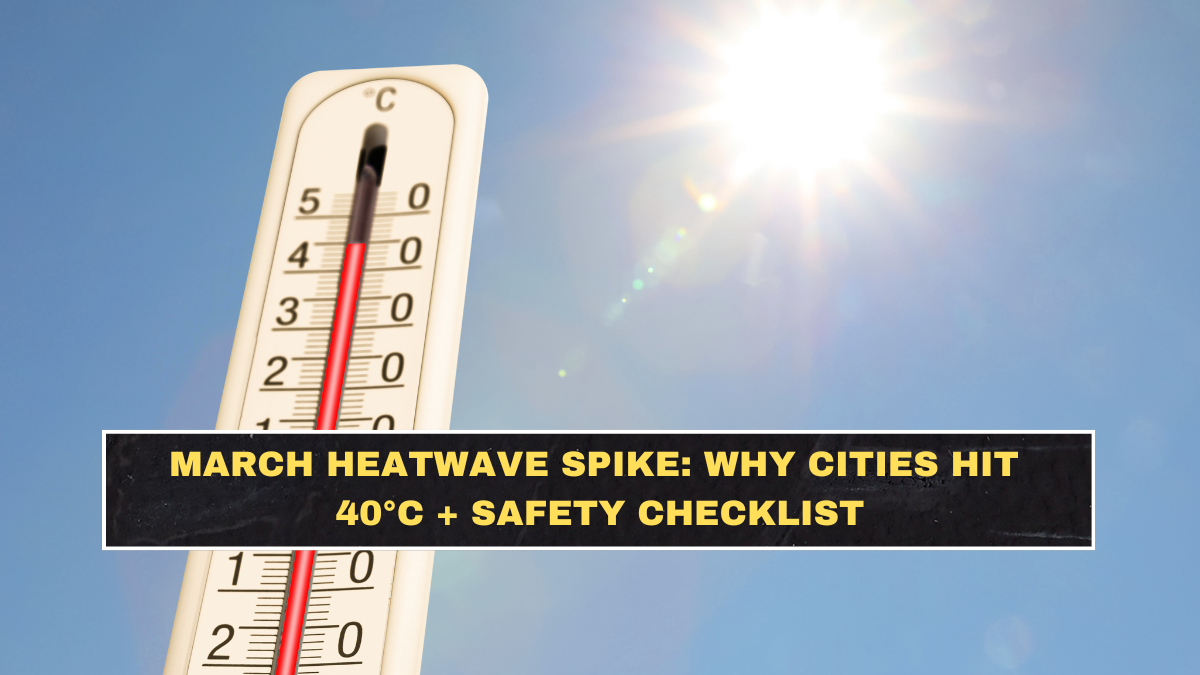
Several parts of India are recording unusually high temperatures early in March, with some cities touching or approaching 40°C. According to observations linked to the India Meteorological Department, this spike is due to a combination of clear skies, dry winds, and absence of cooling weather systems.
When cloud cover is low and dry heat builds up over land, temperatures rise faster than usual. This creates early heatwave-like conditions even before peak summer.
Cities Most Likely to Be Affected
| Region Type | Why Heat Builds Faster |
|---|---|
| Inland Cities | No coastal cooling effect |
| Urban Areas | Concrete heat retention |
| Dry Zones | Low humidity, faster heating |
| Northern/Central India | Strong dry wind patterns |
These patterns are based on typical IMD heatwave observations.
What a Heatwave Means in Practical Terms
A heatwave is not just “hot weather.” It is defined by sustained high temperatures above normal levels for a region.
Real-world effects include:
-
Rapid dehydration
-
Heat exhaustion or heatstroke risk
-
Increased electricity usage (cooling demand)
-
Reduced outdoor productivity
Ignoring these signs is where health risks begin.
Health Risks You Should Not Ignore
| Condition | Early Signs |
|---|---|
| Dehydration | Thirst, dry mouth, fatigue |
| Heat Exhaustion | Dizziness, weakness, sweating |
| Heatstroke | High body temp, confusion, no sweat |
Heatstroke is a medical emergency and requires immediate attention.
Safety Checklist for Daily Life
| Situation | What You Should Do |
|---|---|
| At Home | Stay hydrated, use cooling methods |
| Outdoors | Avoid peak heat hours (12–4 PM) |
| Work Routine | Take breaks, limit sun exposure |
| Clothing | Wear light, breathable fabrics |
These are basic but effective steps to reduce risk.
What to Do If You Feel Heat Stress
-
Move to a cooler or shaded place immediately
-
Drink water or oral rehydration fluids
-
Avoid physical exertion
-
Seek medical help if symptoms worsen
Delaying response can turn mild symptoms into serious conditions.
Why Early Heatwaves Are a Concern
Early heatwaves can extend the duration of extreme temperatures across the season. This affects:
-
Agriculture (crop stress)
-
Water availability
-
Power demand and outages
-
Public health systems
This is not just weather—it’s a broader environmental and economic issue.
What You Should Track Daily
-
IMD temperature updates
-
Heatwave alerts in your region
-
Hydration levels and personal health
-
Local advisories for schools or work
Staying updated helps you act before conditions worsen.
What Most People Get Wrong
Here’s the reality:
-
Underestimating heat because “it’s March”
-
Ignoring hydration until symptoms appear
-
Staying outdoors during peak heat hours
-
Not adjusting daily routine
Heat doesn’t feel dangerous—until it is.
Conclusion
The March heatwave spike is a result of real weather conditions and is already impacting multiple regions. With temperatures touching 40°C, the focus should shift from awareness to action.
If you treat this like normal heat, you’re making a mistake. The smarter move is to adapt early, stay hydrated, and reduce exposure before it becomes a health issue.
FAQs
Why is it so hot in March in India?
Due to dry conditions, clear skies, and absence of cooling systems.
What temperature qualifies as a heatwave?
It depends on regional thresholds but involves sustained high temperatures above normal.
How can I stay safe during a heatwave?
Stay hydrated, avoid peak sun hours, and reduce outdoor activity.
What are early signs of heat exhaustion?
Dizziness, fatigue, and excessive sweating.
Is early heatwave dangerous?
Yes, it can increase health risks and prolong extreme conditions.
Click here to know more.