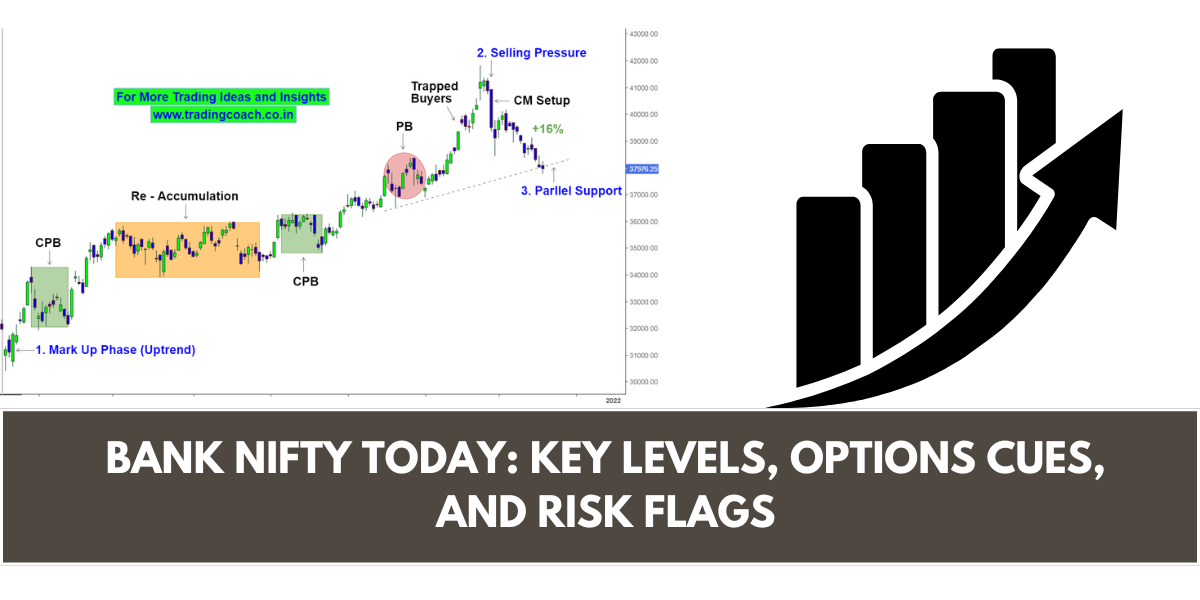
Searches for Bank Nifty today increase every trading session because the index represents the performance of major banking stocks listed on the National Stock Exchange. Since banks play a central role in India’s financial system, movements in banking stocks often influence the broader stock market.
Traders and analysts track Bank Nifty closely because it tends to show strong price swings compared with broader indices. This volatility creates trading opportunities but also increases risk, which is why understanding market levels and options data is important for market participants.
What the Bank Nifty Index Represents
The Nifty Bank Index, commonly called Bank Nifty, measures the performance of major banking companies listed on the National Stock Exchange.
| Index Detail | Information |
|---|---|
| Index Name | Nifty Bank (Bank Nifty) |
| Exchange | National Stock Exchange (NSE) |
| Sector | Banking and financial services |
| Number of Companies | 12 major banking stocks |
| Launch Year | 2003 |
Because banking stocks carry heavy weight in the broader Nifty index, movements in Bank Nifty often influence overall market sentiment.
Major Banks in the Bank Nifty Index
The Bank Nifty index includes some of India’s largest private and public sector banks.
| Bank | Type |
|---|---|
| HDFC Bank | Private Sector |
| ICICI Bank | Private Sector |
| State Bank of India | Public Sector |
| Kotak Mahindra Bank | Private Sector |
| Axis Bank | Private Sector |
| IndusInd Bank | Private Sector |
Changes in the share prices of these banks directly affect the Bank Nifty index.
Key Market Data Traders Monitor
During the trading session, traders observe several data points to understand how the index is behaving.
| Market Indicator | Description |
|---|---|
| Opening Level | Bank Nifty value at market open |
| Day High | Highest level reached during session |
| Day Low | Lowest level during session |
| Closing Level | Final value at market close |
| Net Change | Gain or loss compared with previous close |
These indicators help traders understand whether momentum is strengthening or weakening during the day.
Options Data and Market Sentiment
Options data provides clues about trader positioning and potential support or resistance levels in the market. Many traders analyze open interest data in options contracts to understand where large market participants expect price reactions.
| Options Indicator | What It Suggests |
|---|---|
| High call open interest | Possible resistance zone |
| High put open interest | Possible support zone |
| Rising call writing | Bearish market expectation |
| Rising put writing | Bullish market expectation |
Although options data does not guarantee market direction, it often provides insights into market sentiment.
Key Factors That Move Bank Nifty
Several economic and market-related factors influence the movement of banking stocks.
| Market Trigger | Impact on Banks |
|---|---|
| RBI policy decisions | Affect interest rates and lending |
| Loan growth data | Indicates credit demand |
| Banking sector earnings | Reflect financial performance |
| Economic growth indicators | Influence borrowing activity |
| Global financial markets | Impact investor sentiment |
Because banks are closely tied to economic activity, macroeconomic events can significantly affect the index.
Example of Bank Nifty Market Snapshot
The following table shows typical information traders monitor during a trading session.
| Market Data | Example Description |
|---|---|
| Current Index Value | Bank Nifty level during session |
| Sector Trend | Banking stocks rising or falling |
| Volume Activity | Trading participation |
| Market Breadth | Number of advancing vs declining stocks |
This data helps traders determine whether the index is gaining strength or losing momentum.
Risk Factors Traders Should Watch
Trading Bank Nifty can be highly volatile because banking stocks often react quickly to news and policy announcements.
| Risk Factor | Why It Matters |
|---|---|
| RBI policy announcements | Interest rate changes affect banks |
| Economic slowdown | Reduces loan demand |
| Market volatility | Banking stocks react quickly |
| Global financial shocks | Can impact investor sentiment |
Managing risk is essential when trading such a volatile index.
Conclusion
The Bank Nifty today reflects the performance of major banking stocks and provides important signals about the financial sector. Because banks play a critical role in economic growth, movements in this index often influence the broader stock market.
Traders track technical levels, options data, and macroeconomic triggers to understand market direction. While Bank Nifty offers significant trading opportunities, its volatility also requires careful risk management and informed decision-making.
FAQs
What is the Bank Nifty index?
Bank Nifty is a stock market index representing major banking stocks listed on the National Stock Exchange.
How many banks are included in Bank Nifty?
The index includes 12 major banking companies.
Why does Bank Nifty move sharply?
Banking stocks react quickly to economic data, interest rate decisions, and market sentiment.
What is options data in Bank Nifty?
Options data shows trader positioning through open interest in call and put options.
Is Bank Nifty important for the broader market?
Yes, because banking stocks carry significant weight in the overall market, Bank Nifty movements often influence the Nifty index.