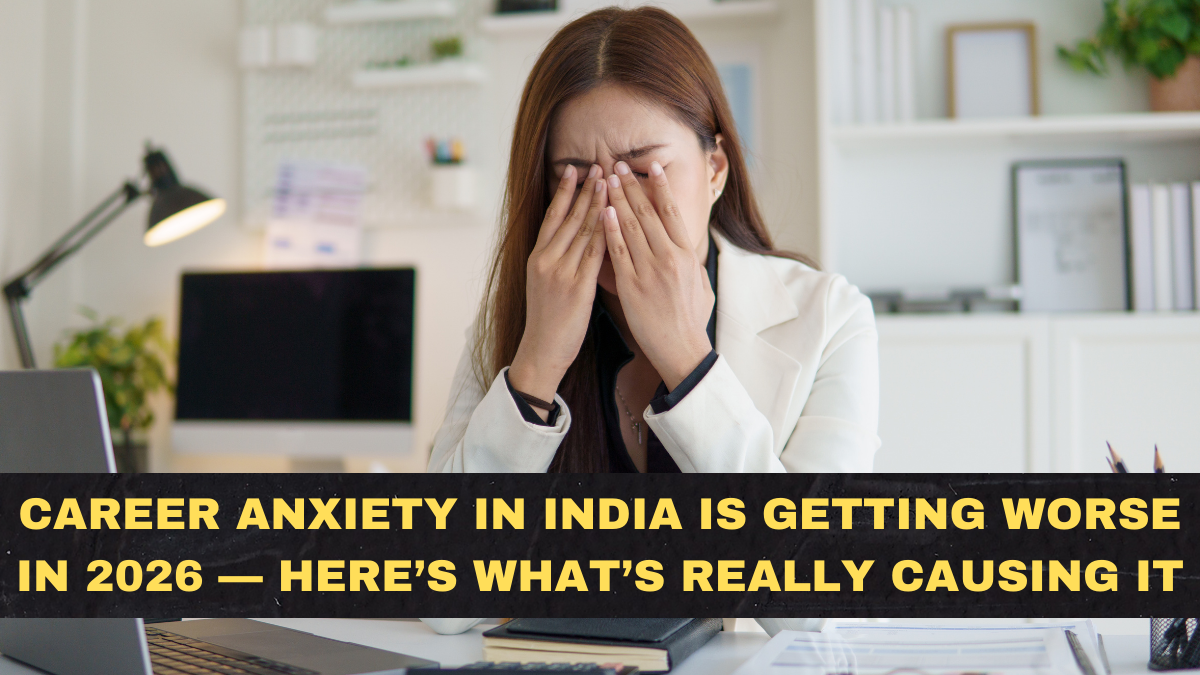
Career anxiety has quietly become one of the most common emotional struggles among young Indians in 2026. Students, fresh graduates, and even working professionals are increasingly anxious about their future, despite doing “everything right” on paper. Degrees are completed, jobs are taken, skills are learned, yet the feeling of uncertainty refuses to go away.
What makes career anxiety especially troubling is that it is not tied to a single failure or setback. It exists even among high performers and employed individuals. The fear is not just about losing a job or not getting one, but about falling behind permanently in a fast-changing, highly competitive environment where stability feels fragile and timelines feel unforgiving.
What Career Anxiety Actually Looks Like in 2026
Career anxiety is not always visible as panic or breakdown. Often, it shows up as constant overthinking, decision paralysis, and fear of making the “wrong” move.
People second-guess every choice, from course selection to job switches. Even small decisions feel high-risk.
In 2026, anxiety has become a background emotion in career planning.
Why Job Insecurity Feels Permanent Now
Short-term contracts, frequent layoffs, and rapid industry shifts have changed how people view employment.
Even stable roles feel temporary. Professionals no longer assume continuity, only survival.
This constant sense of uncertainty feeds long-term anxiety.
The Pressure of Too Many Career Choices
Paradoxically, more options have increased confusion rather than clarity.
Multiple career paths, online courses, and alternative roles overwhelm decision-making. Fear of choosing wrong leads to inaction.
In 2026, abundance of choice has become a source of stress.
Comparison Culture and Timeline Anxiety
Seeing peers achieve milestones faster triggers fear of being left behind.
People compare salaries, titles, and progress without context. Personal timelines feel invalid.
This constant comparison amplifies career anxiety even among capable individuals.
Why Students Feel Anxious Earlier Than Ever
Career pressure now starts in school, not adulthood.
Students worry about employability, relevance, and competition years before entering the job market.
Early anxiety becomes normalized, shaping how students view their future.
The Skill Anxiety Loop
The demand to continuously upskill creates its own stress cycle.
No matter how much people learn, they feel it is never enough. Obsolescence feels imminent.
In 2026, learning has shifted from empowerment to obligation.
Family Expectations Add Emotional Weight
Career outcomes are tied to family hopes and financial security.
Young people feel responsible not just for themselves but for collective stability.
This emotional responsibility deepens anxiety around career decisions.
Why Social Media Magnifies Career Fear
Success stories dominate feeds, while struggle remains hidden.
People internalize unrealistic benchmarks, assuming others are doing better.
Social media turns normal uncertainty into perceived failure.
The Link Between Career Anxiety and Mental Health
Persistent anxiety affects sleep, focus, and emotional well-being.
Many suppress stress to appear functional. Help is delayed or avoided.
In 2026, career anxiety is closely intertwined with mental health decline.
Why Career Anxiety Persists Even After Getting a Job
Employment does not automatically resolve anxiety.
Fear shifts from getting a job to keeping it, growing in it, or escaping it.
Anxiety adapts rather than disappears.
How People Are Quietly Coping With Career Anxiety
Some seek therapy or counseling. Others turn to peer communities or self-reflection.
Many simply normalize anxiety as part of life, which delays real support.
Coping exists, but often without resolution.
What Actually Helps Reduce Career Anxiety
Clarity matters more than certainty. Understanding personal priorities reduces noise.
Building adaptable skills and financial buffers restores a sense of control.
In 2026, reducing anxiety requires strategy, not reassurance.
Conclusion: Career Anxiety Is a Signal, Not a Weakness
Career anxiety in India is rising because the rules of work and success have changed faster than expectations.
In 2026, feeling anxious about the future does not mean something is wrong with you. It means you are responding to real uncertainty.
Acknowledging this anxiety, rather than dismissing it, is the first step toward healthier, more intentional career decisions that prioritize sustainability over constant fear.
FAQs
Why is career anxiety increasing in India in 2026?
Because of job insecurity, rapid change, social comparison, and unclear career paths.
Can employed professionals also experience career anxiety?
Yes, anxiety often continues due to fear of stagnation, layoffs, or future relevance.
How does social media affect career anxiety?
It amplifies comparison by showing selective success without context.
Is career anxiety linked to mental health issues?
Yes, prolonged career anxiety contributes to stress, burnout, and emotional fatigue.
Does upskilling reduce career anxiety?
Only when done strategically. Random learning often increases pressure.
What is the healthiest way to deal with career anxiety?
Gaining clarity on priorities, building adaptable skills, and seeking support early.