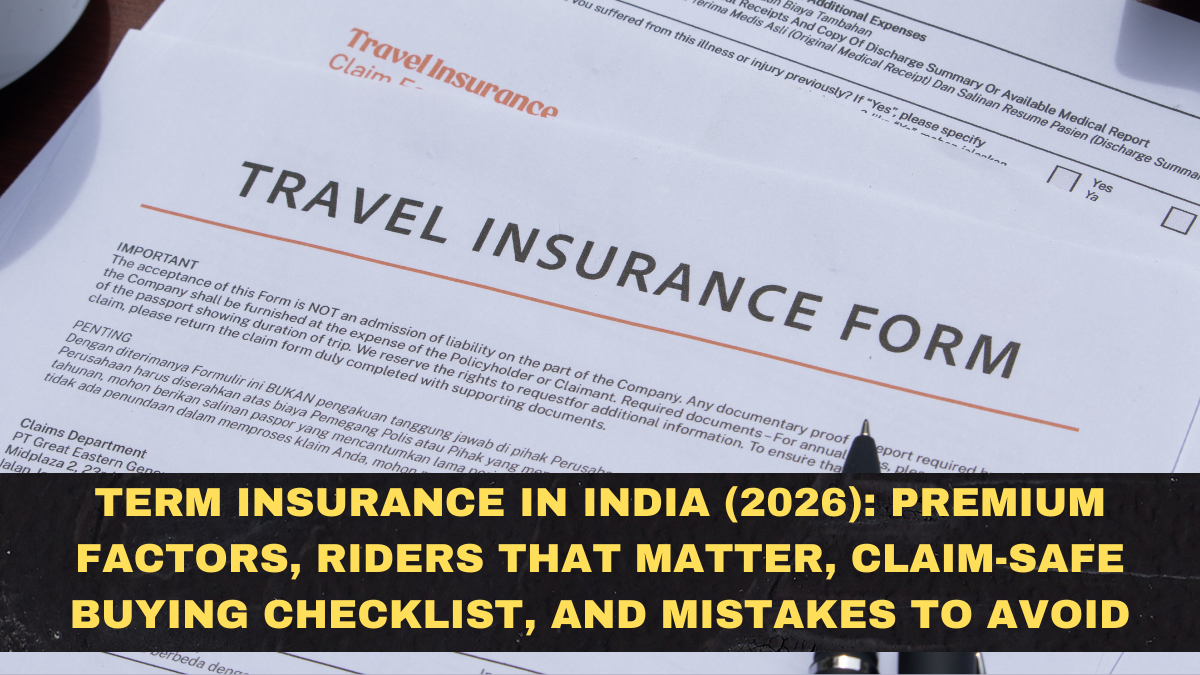
Term insurance in India in 2026 has quietly become one of the most misunderstood financial products, even though it is supposed to be the simplest. People obsess over the cheapest premium, compare only one number on aggregator apps, and assume all policies are the same as long as the cover amount looks large. That mindset is dangerously wrong. Term insurance is not a commodity product. It is a legal contract that your family will depend on when you are no longer around to clarify paperwork, correct mistakes, or fight claim disputes.
The tragedy is that most term insurance failures do not happen because insurers refuse claims randomly. They happen because people buy the wrong policy structure, hide or misunderstand medical disclosures, choose flashy riders they do not need, or pick coverage amounts that look impressive but collapse under real family expenses. The result is emotional devastation layered on top of financial loss, all because of lazy decision-making at the buying stage.
This guide explains how term insurance actually works in India in 2026, what genuinely drives premiums, which riders are worth paying for and which are mostly marketing noise, how to structure a claim-safe policy that your family can realistically use, and the silent mistakes that cause claim trouble years later.

Term Insurance in India 2026: Core Facts at a Glance
| Factor | What It Means in Practice | Why It Matters Later |
|---|---|---|
| Policy Type | Pure term, no maturity value | Maximum cover at lowest cost |
| Premium Drivers | Age, health, smoking, cover, policy term | Determines lifetime affordability |
| Claim Settlement | Depends on disclosure accuracy | Decides if family gets paid |
| Riders | Add-on benefits | Can increase usefulness or waste money |
| Nominee Details | Who receives money | Prevents legal delays |
Why Term Insurance Exists and What It Is Not
Term insurance is not an investment product. It is not a tax-saving scheme. It is not a wealth-building tool. It is a risk-transfer contract designed to replace your income for your dependents if you die during the policy term. That’s it. When people buy term insurance expecting maturity benefits or “returns,” they start comparing the wrong products and making structurally bad decisions.
Once you understand that term insurance exists purely to protect human life value, your buying logic becomes brutally simple. The goal is to maximize reliable payout certainty, not minimize premium by two hundred rupees per month.
What Actually Drives Your Term Insurance Premium in 2026
Premiums are driven primarily by four variables: your entry age, your medical risk profile, your smoking status, and the size and duration of coverage. Salary has almost nothing to do with it. People earning ₹30 lakh per year sometimes pay lower premiums than people earning ₹6 lakh simply because their health profile is cleaner.
The most expensive mistake people make is lying or downplaying medical history. This does not reduce premium meaningfully, but it massively increases claim rejection risk later. Insurers do not forgive non-disclosure. They wait until the claim stage to punish it.
How Much Term Cover You Actually Need
The old “10x annual income” rule is lazy and outdated. Real cover should be calculated based on outstanding loans, number of dependents, replacement income years, future education costs, and inflation-adjusted household expenses.
Most urban families in India are under-insured even when they hold ₹1 crore or ₹2 crore policies. The number looks big emotionally but collapses under real long-term obligations.
Which Riders Are Worth Paying For and Which Are Mostly Noise
The only consistently valuable rider for most people is the critical illness rider if it is well-structured and reasonably priced. Accidental death riders are usually unnecessary because term insurance already covers death from almost all causes. Waiver of premium riders can be useful in specific professions with injury risk.
Most other riders inflate premiums without materially improving family protection.
The Hidden Reason Claims Get Rejected
Claims are not rejected because insurers are evil. They are rejected because the proposal form contained incomplete, inconsistent, or false medical and lifestyle information. Alcohol habits, smoking history, BMI issues, blood pressure, and diabetes details are routinely misreported.
At claim time, insurers verify hospital records, pharmacy logs, and medical histories. That is when the policy collapses.
Why Buying the Cheapest Policy Is a Bad Strategy
Cheap premiums often come from aggressive underwriting assumptions, stricter claim scrutiny, or fragile business models. Saving ₹300 per month today can cost your family ₹2 crore later.
Claim reliability matters more than brand popularity or ad visibility.
The Claim-Safe Term Insurance Buying Checklist
Disclose everything medically, even if it increases premium. Choose a policy term that covers your working life. Add nominee details carefully. Avoid unnecessary riders. Recheck proposal answers before final submission. Keep soft copies of the proposal form forever.
This checklist prevents most claim disasters.
Conclusion
Term insurance in India in 2026 is simple only on the surface. Underneath, it is a legal and actuarial contract that works perfectly when bought correctly and fails brutally when bought casually. Most people treat it like a shopping app purchase instead of a once-in-a-lifetime financial decision.
The right term insurance policy is boring, slightly expensive, medically honest, and emotionally invisible until the day it saves your family’s financial future. The wrong policy is cheap, comforting, and useless exactly when it matters most.
Term insurance should not be optimized for premium. It should be optimized for payout certainty.
FAQs
Is term insurance better than endowment plans?
Yes. Term insurance provides far higher cover at much lower cost.
Should I hide minor health issues to reduce premium?
No. Non-disclosure is the top cause of claim rejection.
Are riders necessary?
Only a few, like critical illness, are genuinely useful.
Can I buy multiple term policies?
Yes. Many people split cover across insurers.
When should I buy term insurance?
As early as possible with a clean medical profile.
Click here to know more.