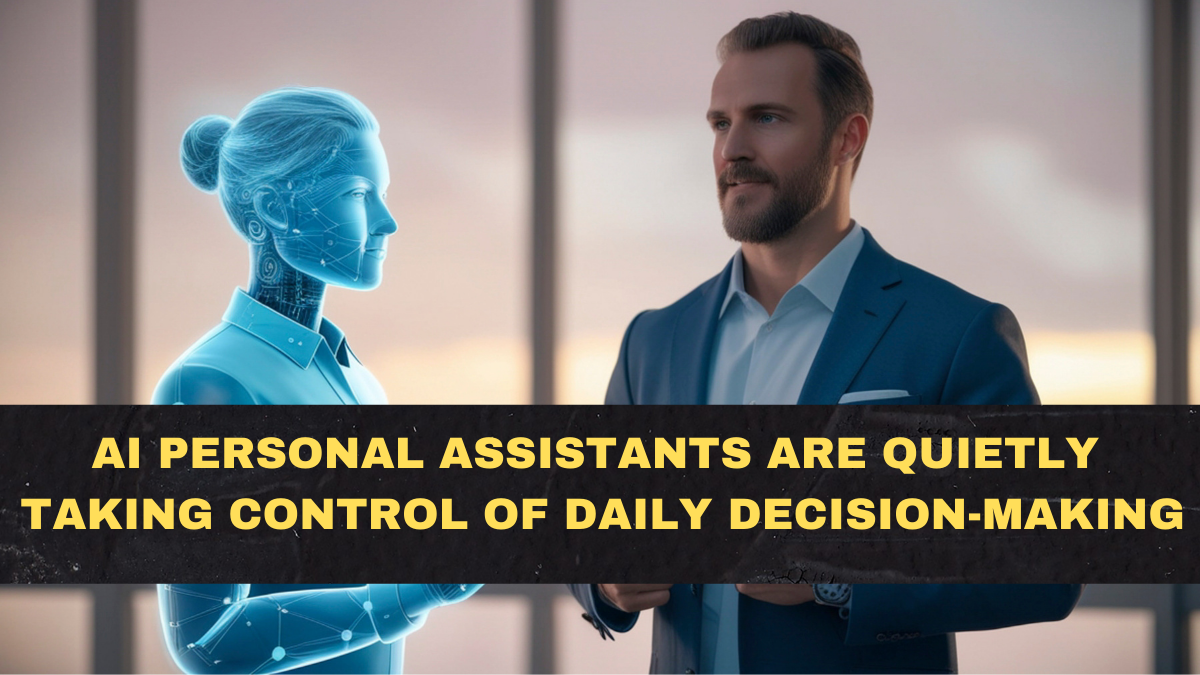
For years, personal assistants were glorified reminder tools. Set alarms. Add calendar events. Answer basic questions. In 2026, that role has changed dramatically. AI powered personal assistants are no longer waiting for instructions—they are actively shaping how people plan, prioritize, and decide throughout the day. What feels like convenience is slowly becoming delegation.
This shift is subtle, which is why it’s powerful. Through daily task automation and advanced digital productivity AI, assistants are beginning to influence what users focus on, when they rest, what they buy, and how they structure their lives. Decision-making is being outsourced one suggestion at a time.

What AI Powered Personal Assistants Actually Do Now
Modern AI assistants operate across contexts, not just commands.
They now:
• Prioritize tasks based on urgency and behavior
• Schedule breaks and focus sessions automatically
• Suggest actions before users ask
• Coordinate across apps and devices
• Adjust plans dynamically throughout the day
The assistant doesn’t just respond—it anticipates.
How Daily Task Automation Changed Productivity
Productivity used to depend on discipline. Now it depends on delegation.
Daily task automation improves output by:
• Removing micro-decisions
• Reducing cognitive load
• Preventing overcommitment
• Adapting schedules in real time
Energy is conserved for work that actually matters.
Why Decision Fatigue Made Assistants Necessary
Modern life demands constant choices.
AI assistants thrive because they:
• Filter options automatically
• Reduce planning overhead
• Prevent decision paralysis
• Handle routine trade-offs
When everything requires a decision, automation becomes relief.
How Digital Productivity AI Learns Your Behavior
These systems don’t guess—they observe.
They learn from:
• Task completion patterns
• Calendar behavior
• Response times
• Preference history
• Contextual signals
Over time, suggestions feel less generic and more personal.
Where Assistants Influence Decisions the Most
The biggest influence happens in small moments.
Common areas include:
• What tasks get done first
• When meetings are declined
• How breaks are scheduled
• Which notifications are muted
• What gets postponed indefinitely
Small nudges shape entire days.
Why Users Trust Assistants With Control
Trust grows because outcomes improve.
Users rely on AI assistants because:
• Stress decreases
• Missed tasks reduce
• Time feels more structured
• Mental clarity improves
Effectiveness builds dependency quietly.
The Risk of Over-Delegation
Delegation can slide into dependence.
Risks include:
• Reduced self-awareness of priorities
• Blind acceptance of suggestions
• Loss of intentional choice
• Alignment with productivity over well-being
Convenience can override reflection.
Who Designs the Decision Logic
The most important question isn’t what AI can do—it’s whose values it follows.
Decision logic is shaped by:
• Training data assumptions
• Optimization goals
• Business incentives
• Default productivity metrics
Not all goals align with user well-being.
Privacy and Autonomy Concerns
Personal assistants require deep access.
Concerns include:
• Behavioral data concentration
• Long-term profiling
• Subtle behavior shaping
• Limited transparency in decision rules
Control feels helpful—until it feels invisible.
How Users Are Setting Boundaries
Some users are learning to manage the manager.
Healthy boundaries include:
• Reviewing automated decisions
• Setting non-negotiable priorities
• Limiting assistant scope
• Retaining final approval on key actions
Automation works best with oversight.
Why This Shift Accelerated in 2026
Several trends converged at once.
Acceleration drivers include:
• Remote work complexity
• App overload
• Burnout from constant planning
• Improved contextual AI accuracy
Life became too complex to manage manually.
What This Means for the Future of Daily Life
Daily life is becoming semi-autonomous.
By late 2026:
• Assistants manage routine decisions
• Humans focus on judgment and values
• Productivity becomes guided
• Personal systems replace willpower
The question shifts from “What should I do?” to “Do I agree?”
Conclusion
AI powered personal assistants are no longer passive tools—they are active participants in daily decision-making. Through daily task automation and advanced digital productivity AI, they reduce friction, conserve attention, and quietly shape behavior. In 2026, the most influential assistant isn’t loud or visible. It’s the one deciding what you never have to think about.
The future of productivity isn’t working harder. It’s deciding less—carefully.