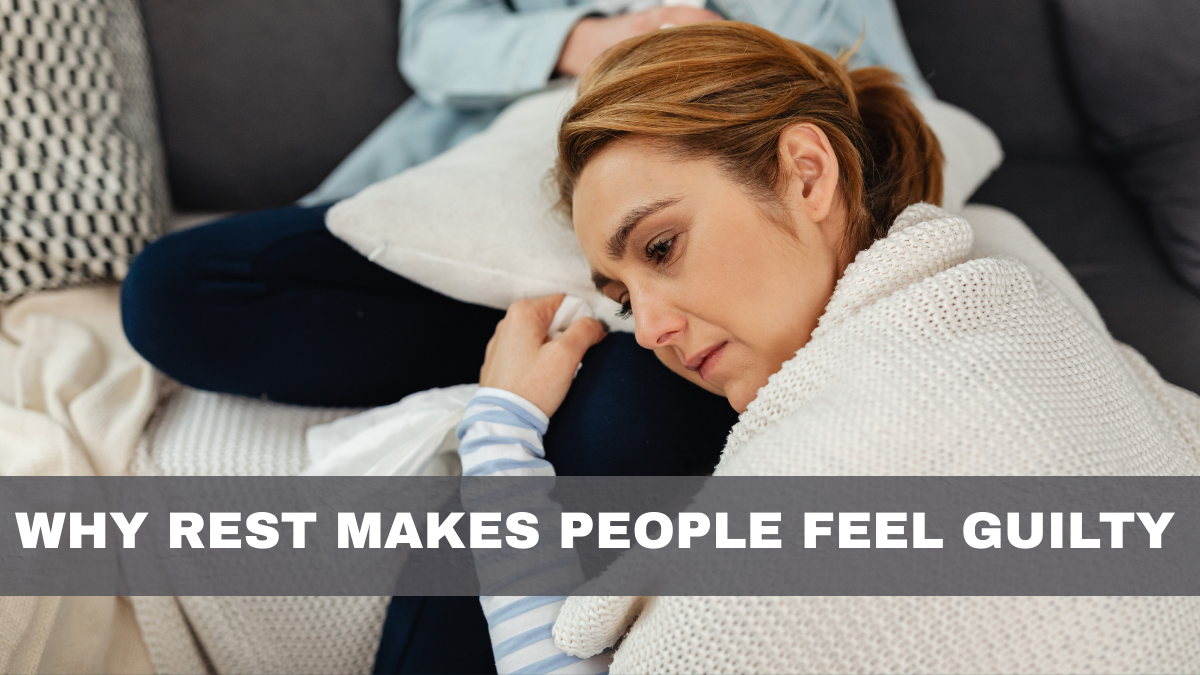
Rest should feel relieving. Instead, for many people, it feels uncomfortable—sometimes even shameful. Sitting still triggers anxiety. Time off feels undeserved. Relaxation is accompanied by a quiet sense that something important is being neglected. This experience is known as productivity guilt, and it’s become a defining feature of modern life.
Productivity guilt isn’t about laziness or lack of ambition. It’s about how value has been tied to output so tightly that rest feels like a moral failure. When rest guilt shows up, it’s not because people don’t need rest—it’s because they’ve been taught not to trust it.

What Productivity Guilt Actually Is
Productivity guilt is the discomfort felt when not actively producing.
It shows up as:
• Anxiety during downtime
• Urges to “justify” rest
• Feeling behind even when resting
• Difficulty relaxing fully
Rest guilt reflects internalized pressure, not real urgency.
How Culture Taught Us to Feel Guilty for Rest
Productivity became a measure of worth.
Cultural messages reinforced:
• Busyness equals importance
• Rest equals wasted potential
• Time must be optimized
Over time, rest stopped feeling neutral and started feeling suspicious.
Why Rest Feels Undeserved
Many people believe rest must be earned.
This belief comes from:
• Performance-based validation
• Scarcity mindset
• Comparison culture
Productivity guilt thrives when rest is conditional.
The Moralization of Productivity
Productivity isn’t just practical—it’s moralized.
People feel:
• Good when productive
• Bad when idle
This moral framing turns rest into a value judgment rather than a biological need.
How Hustle Culture Amplified Rest Guilt
Hustle culture reframed exhaustion as virtue.
It normalized:
• Overwork
• Sacrifice
• Constant availability
Rest guilt increased as recovery was framed as weakness.
Why Rest Triggers Anxiety Instead of Calm
Rest removes distraction.
Without distraction:
• Thoughts surface
• Unfinished tasks feel louder
• Identity feels uncertain
Productivity guilt fills the silence left by inactivity.
The Link Between Self-Worth and Output
When self-worth depends on output, rest threatens identity.
People ask:
• “Who am I if I’m not producing?”
• “Am I falling behind?”
Rest guilt often masks fear of losing relevance.
Why “Productive Rest” Doesn’t Solve the Problem
Trying to optimize rest misses the point.
“Productive rest”:
• Still seeks justification
• Maintains performance pressure
• Prevents true recovery
Rest that needs explanation isn’t rest.
How Productivity Guilt Affects Mental Health
Chronic guilt drains emotional energy.
It contributes to:
• Anxiety
• Emotional exhaustion
• Burnout
• Reduced joy
Rest guilt doesn’t motivate—it depletes.
Why Comparison Makes Rest Harder
Seeing others appear busy intensifies guilt.
Comparison causes:
• Fear of falling behind
• Pressure to stay visible
• Inability to disengage
Productivity guilt grows in social environments that reward visibility.
The Biological Need for Rest
Rest isn’t optional—it’s biological.
The nervous system needs:
• Downtime
• Reduced stimulation
• Recovery cycles
Ignoring this leads to diminishing returns.
Why Rest Is Essential for Real Productivity
Ironically, rest supports output.
Rest improves:
• Focus
• Creativity
• Decision-making
• Emotional regulation
Productivity guilt undermines the very performance it claims to protect.
Relearning How to Rest Without Guilt
Guilt fades with reframing.
Helpful shifts include:
• Treating rest as maintenance
• Removing justification language
• Allowing unstructured time
• Accepting incomplete tasks
Rest doesn’t need permission.
What Healthy Rest Actually Looks Like
Healthy rest:
• Has no goal
• Requires no outcome
• Feels mentally spacious
It restores capacity—not metrics.
Conclusion
Productivity guilt isn’t a personal flaw—it’s a cultural condition. Rest guilt exists because worth has been tied to output so tightly that stillness feels unsafe. But rest isn’t failure. It’s fuel.
Letting go of productivity guilt doesn’t reduce ambition. It protects it. When rest is allowed without justification, energy returns naturally. And when energy returns, effort becomes sustainable again.
FAQs
What is productivity guilt?
It’s the discomfort or shame felt when not actively producing or working.
Why does rest make people anxious?
Because rest removes distraction and challenges output-based self-worth.
Is rest guilt caused by laziness?
No. It’s caused by internalized pressure and cultural conditioning.
Can rest actually improve productivity?
Yes. Rest restores focus, creativity, and emotional capacity.
How can I rest without feeling guilty?
By reframing rest as essential maintenance rather than something to earn.