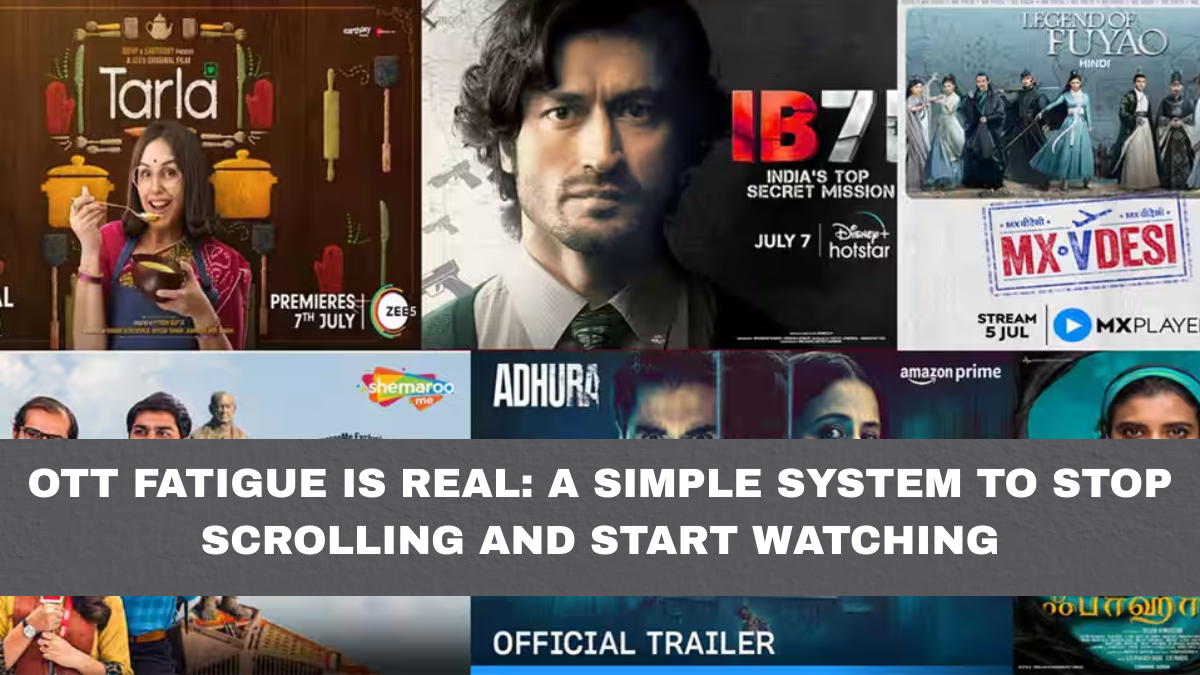
Endless scrolling. Dozens of thumbnails. Fifteen minutes gone—and nothing playing. OTT fatigue choice paralysis isn’t about lack of content; it’s about too much of it. Platforms optimized for engagement keep feeding options, trailers, and recommendations until your brain shuts down. The result feels like boredom, but it’s actually decision fatigue.
If watching has started to feel like work, this guide gives you a clean, repeatable system to reclaim your time.
Why OTT Fatigue Feels Worse Than Ever
Streaming libraries exploded, but human attention didn’t.
What changed:
-
Multiple platforms competing at once
-
Algorithmic recommendations stacking options
-
Social buzz pushing “must-watch” lists
With too many shows, your brain delays choice to avoid regret.

The Psychology Behind Choice Paralysis
More options reduce satisfaction.
Here’s why:
-
Fear of picking the “wrong” show
-
Anticipated regret outweighs curiosity
-
Mental energy drains before playback
This is classic decision fatigue—and streaming platforms amplify it.
Why Algorithms Make It Worse, Not Better
Algorithms optimize for retention, not relief.
They:
-
Keep resurfacing similar titles
-
Push trending content regardless of mood
-
Refresh rows to restart scrolling
Helpful suggestions turn into noise.
The 3-Question Filter That Ends Scrolling
Ask these before opening any app:
-
How much time do I actually have?
-
What mood am I in right now?
-
Do I want light or demanding content?
If a title fails any answer, skip it instantly.
Build a “Shortlist,” Not a Watchlist
Long watchlists recreate the problem.
Instead:
-
Keep 5–7 titles max
-
Refresh monthly
-
Remove anything you’re not excited about
A shortlist reduces OTT fatigue choice paralysis by narrowing commitment.
Match Content to Energy, Not Genre
Genre is less useful than energy.
Examples:
-
Low energy → sitcoms, comfort rewatches
-
Medium energy → thrillers, limited series
-
High energy → complex dramas, foreign titles
Energy matching prevents mid-episode drop-offs.
The One-Episode Rule That Saves Time
Commit to one episode only.
After episode one:
-
Continue if curiosity grows
-
Stop without guilt if it doesn’t
Most shows reveal their core promise immediately.
Stop Letting Trends Hijack Your Evenings
Trending ≠ right for you.
Trends:
-
Inflate expectations
-
Increase fear of missing out
-
Encourage binge pressure
Skip trends unless they fit your filter.
Why Rewatching Is Not a Failure
Rewatching reduces cognitive load.
Benefits:
-
Comfort without decision stress
-
Background-friendly viewing
-
Guaranteed satisfaction
Rewatching is a valid antidote to OTT fatigue choice paralysis.
Create Time Boxes, Not Binges
Binges create burnout.
Better approach:
-
Decide end time before you start
-
Stop even if autoplay continues
-
Save interest for tomorrow
This keeps entertainment restorative, not draining.
How to Use Recommendations Without Drowning
Treat recommendations as suggestions, not instructions.
Rules:
-
Scan once
-
Pick or exit
-
Don’t rescan
Repeated scanning is the trap.
Who Suffers Most From OTT Fatigue
High-risk groups include:
-
Multi-platform subscribers
-
Busy professionals
-
People watching late at night
Fatigue hits hardest when energy is lowest.
Conclusion
OTT fatigue choice paralysis isn’t about weak willpower—it’s a predictable response to overwhelming options. By filtering by time and mood, keeping a tight shortlist, and committing to one episode at a time, you replace scrolling with satisfaction. Streaming should reduce stress, not add to it. In 2026, the smartest viewer isn’t the one who watches everything—it’s the one who chooses effortlessly.
FAQs
What is OTT fatigue?
Mental exhaustion caused by too many streaming options and decisions.
Why do I scroll more than I watch?
Decision fatigue and fear of picking the wrong show delay action.
Does a watchlist help or hurt?
Large watchlists hurt; small shortlists help.
Is rewatching shows bad?
No—rewatching reduces stress and decision load.
How can I stop autoplay binges?
Set a clear end time before you start watching.