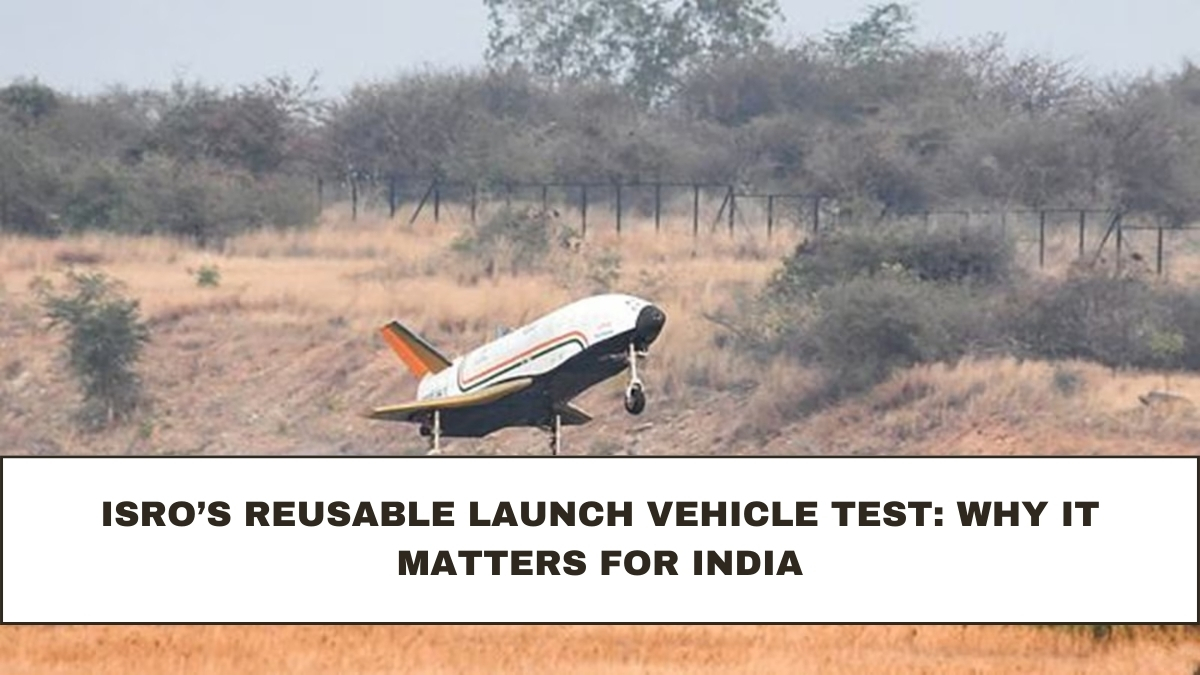
The ISRO reusable launch test India has generated significant buzz across scientific and technological communities. India’s space agency, ISRO, announced a successful demonstration of its reusable launch vehicle (RLV), showcasing the nation’s growing capabilities in space tech and innovation. The test represents a major milestone in India’s pursuit of cost-effective and sustainable space exploration, making headlines in both national and global media.
This achievement demonstrates India’s ability to innovate and compete in the international space arena, offering potential benefits for commercial and scientific missions.

What Is ISRO’s Reusable Launch Vehicle?
A reusable launch vehicle is a spacecraft designed to return safely to Earth after delivering payloads to orbit, allowing it to be reused multiple times. ISRO’s RLV aims to reduce launch costs and increase the efficiency of space missions.
Key features of ISRO’s RLV include:
• Winged body for controlled descent
• Autonomous navigation and landing
• Ability to carry satellites to Low Earth Orbit (LEO)
• Reusability to reduce operational costs
• Advanced heat shield technology for re-entry
This innovative approach highlights India’s leadership in space tech development.
Why the Test Is Significant for India
The successful RLV test is a landmark moment for India, demonstrating progress in high-tech aerospace engineering. It signals the country’s readiness for more ambitious space projects.
Importance of the test includes:
• Paving the way for cost-efficient satellite launches
• Encouraging private sector participation in space missions
• Reducing reliance on expendable rockets
• Strengthening India’s space exploration capabilities
• Boosting national pride in technological achievements
The ISRO reusable launch test India is being celebrated as a step toward self-reliance in space innovation.
How Reusable Technology Impacts Space Missions
Reusable launch vehicles can dramatically change how countries approach space programs. By reducing costs, RLVs make frequent launches feasible for scientific, commercial, and defense purposes.
Benefits include:
• Lower launch expenses for satellites
• Faster turnaround times between missions
• Opportunity for space tourism and private ventures
• Enhanced environmental sustainability
• Greater flexibility in payload deployment
These advantages position India to compete effectively in the global space tech sector.
Global Context and Comparisons
Several countries and private companies have pioneered reusable launch technology, including SpaceX and Blue Origin. ISRO’s success places India among nations capable of advancing this transformative technology.
Global relevance includes:
• Benchmarking against international reusable launch systems
• Strengthening India’s position in space diplomacy
• Attracting foreign investment and collaborations
• Increasing India’s competitiveness in satellite launch services
• Encouraging knowledge-sharing and technological partnerships
This underscores why the ISRO reusable launch test India is receiving worldwide attention.
Future Prospects of ISRO’s RLV Program
The successful demonstration opens doors for more advanced missions. ISRO plans to use reusable technology for future satellite deployments, lunar missions, and interplanetary exploration.
Potential developments include:
• Operational commercial launches using RLVs
• Integration with India’s ambitious human spaceflight program
• Deployment of multiple small satellites at lower cost
• Expansion of space science research
• Enhanced global collaboration in space exploration
The program sets the stage for India to become a key player in space tech innovation.
Role of Innovation and Technology
The RLV program exemplifies ISRO’s emphasis on cutting-edge research, autonomous systems, and advanced materials.
Innovative aspects include:
• Heat-resistant composite materials
• Guidance, navigation, and control systems
• Re-entry aerodynamics
• Autonomous flight testing protocols
• Integration of AI-based flight monitoring
These innovations highlight India’s growing expertise in space tech and high-precision engineering.
Why This Test Is a Milestone for India
India’s reusable launch test is not just a technological achievement—it symbolizes strategic independence and long-term vision in space exploration.
Key milestones achieved:
• First successful demonstration of RLV capabilities
• Validation of autonomous flight and recovery systems
• Proof of feasibility for cost-efficient space missions
• Strengthening of India’s global space profile
• Inspiring next-generation scientists and engineers
This ensures that ISRO reusable launch test India remains a landmark achievement.
Conclusion
The ISRO reusable launch test India marks a pivotal moment in India’s journey toward advanced space technology. By achieving a successful RLV demonstration, ISRO is positioning India as a leader in cost-efficient, innovative space exploration. With future missions leveraging reusable technology, India is set to make lasting contributions to global space research and commercial satellite deployment.
FAQs
What is ISRO’s reusable launch vehicle?
It is a spacecraft designed to deliver payloads to orbit and return safely to Earth for reuse, reducing launch costs.
Why is the ISRO RLV test important?
It demonstrates India’s capability in advanced space technology, cost-efficient missions, and autonomous aerospace systems.
How does RLV technology benefit India?
It lowers launch expenses, increases mission frequency, and supports scientific, commercial, and defense projects.
How does India’s RLV compare globally?
India joins countries like the USA in successfully testing reusable launch systems, enhancing its position in space tech.
What are the future prospects for ISRO’s RLV program?
Future applications include commercial satellite launches, lunar missions, human spaceflight, and interplanetary exploration.