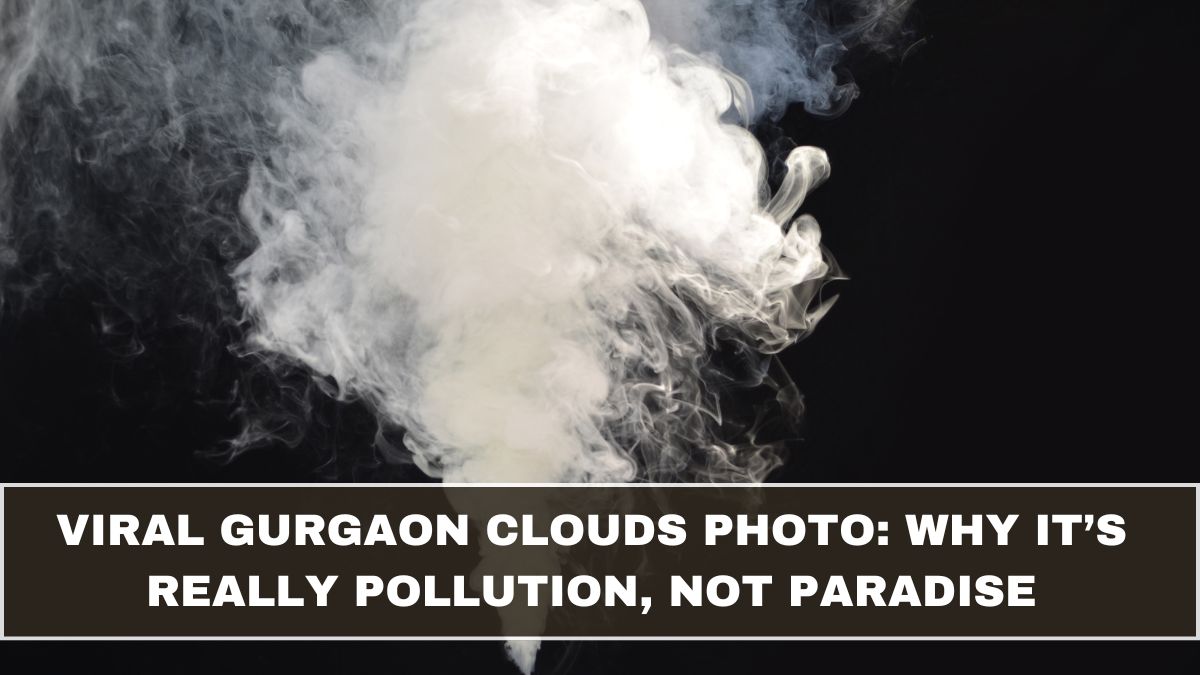
Recently, a viral social media post from Gurgaon showed what looked like residents waking up in the clouds. The photo, captioned humorously as a dreamlike “cloud city” morning, sparked wide attention across platforms. However, the Gurgaon “clouds” viral pollution truth reveals that this atmospheric spectacle was not clouds, but dense smog caused by air pollution—a growing concern in northern India.
Why the Photo Went Viral
Several factors contributed to the post gaining traction:
• Visual Appeal: The thick smog created a surreal, ethereal look similar to floating clouds.
• Urban Curiosity: Gurgaon’s rapidly changing skyline intrigued viewers.
• Misinterpretation: Many users initially mistook pollution for fog or weather phenomena.
• Shareability: The dramatic visual inspired memes, reactions, and reposts.
The mix of beauty and concern ensured it became a trending story across Instagram, X, and WhatsApp.
Understanding the “Clouds”
The surreal effect was actually:
• Dense Smog: Tiny particulate matter (PM2.5 and PM10) suspended in the air.
• Industrial Emissions: Nearby factories and construction sites contribute to pollution.
• Vehicular Exhaust: Gurgaon’s traffic congestion adds significant air pollutants.
• Weather Conditions: Calm winds and low temperatures trap smog near the ground, making it appear cloud-like.
Experts confirmed that what people were seeing was a layer of pollution, not atmospheric clouds.
Health Implications of Smog
Smog is more than an aesthetic concern; it poses serious health risks:
• Respiratory Issues: Increased risk of asthma, bronchitis, and allergies.
• Cardiovascular Effects: Long-term exposure can strain the heart and blood vessels.
• Eye Irritation: Particulate matter can cause redness, itching, and watering.
• Vulnerable Groups: Children, elderly, and people with pre-existing conditions are most affected.
Understanding the true cause behind viral visuals is crucial for public awareness and health safety.
Air Quality in Gurgaon
Air Quality Index (AQI) readings often spike during winter months in Gurgaon, with PM2.5 levels crossing “unhealthy” thresholds. Residents are advised to:
• Monitor daily AQI reports using reliable apps
• Limit outdoor activities during peak pollution hours
• Use masks rated for fine particulate matter (N95 or similar)
• Employ indoor air purifiers at home and offices
By recognizing the pollution behind viral posts, citizens can take proactive health measures.
Why Viral Posts Can Mislead
Social media thrives on visually striking content, but it often lacks context:
• Photos can exaggerate effects through filters or timing
• Misleading captions can spread misconceptions quickly
• Users may share content without verifying sources
The Gurgaon “clouds” viral pollution truth highlights the importance of critical evaluation before reacting or forwarding posts.
Tips to Handle Pollution During Smoggy Mornings
-
Check AQI: Use apps and local reports to know current air quality.
-
Limit Outdoor Exposure: Avoid running, cycling, or walking outdoors during high-smog hours.
-
Wear Protective Gear: Use masks designed for fine particles.
-
Improve Indoor Air: Use purifiers, keep windows closed, and avoid burning fuels indoors.
-
Stay Informed: Follow government advisories, news updates, and scientific sources.
These simple steps can protect residents while allowing them to enjoy scenic winter mornings safely.
Conclusion
The viral “woke up in the clouds” photo from Gurgaon captivated India with its ethereal appearance, but the Gurgaon “clouds” viral pollution truth is clear: it was smog, not paradise. Awareness of air quality, health precautions, and fact-checking viral posts can prevent misunderstandings and protect public health. In 2025, such viral images remind us that visual appeal does not always reflect reality, and responsible sharing is essential in the age of social media.
FAQs
Why did the Gurgaon photo look like clouds?
The effect was caused by dense smog, a mix of particulate matter, industrial emissions, and trapped air due to calm weather.
Is the air in Gurgaon safe to breathe during winter?
Air quality can often reach unhealthy levels; precautions like masks and indoor purifiers are recommended.
What causes high smog levels in Gurgaon?
Vehicle emissions, industrial activity, construction dust, and weather conditions contribute to smog buildup.
How can I verify if a viral photo shows pollution or weather?
Check local news, government AQI readings, and trusted environmental apps to confirm.
Are children more vulnerable to smog?
Yes, children, the elderly, and those with respiratory conditions are most affected by particulate pollution.
Click here to know more.