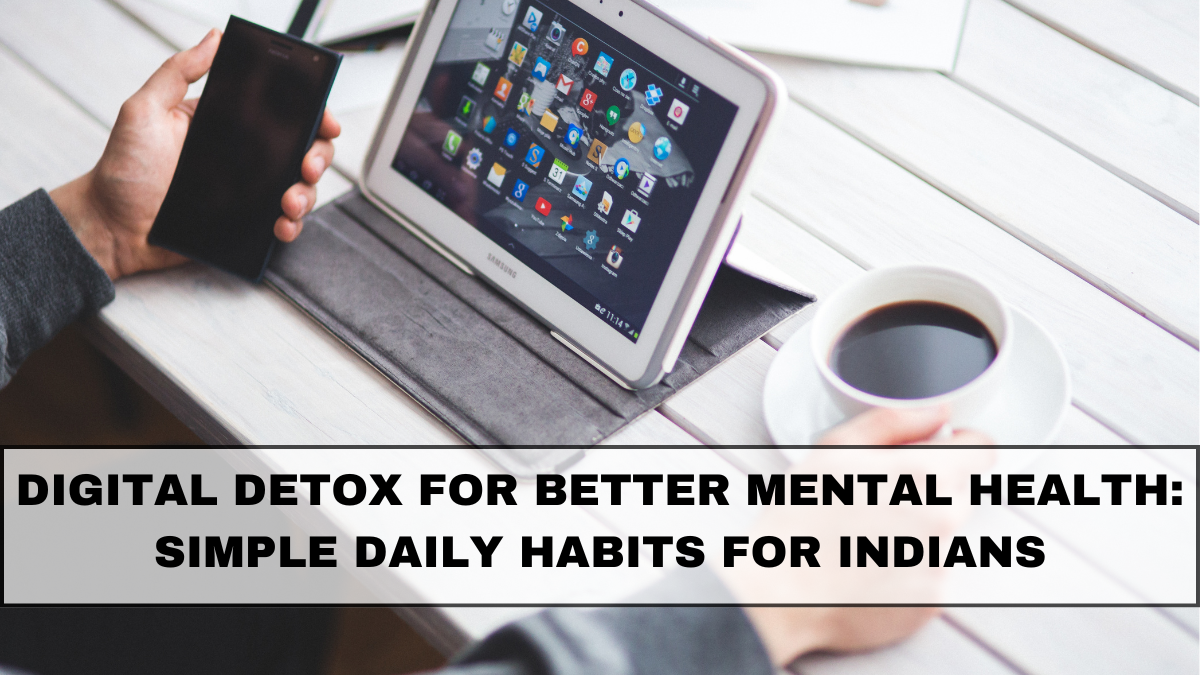
In today’s hyper-connected world, maintaining mental health & digital detox practices has become essential for Indians of all ages. Smartphones, laptops, and social media apps provide convenience but also increase screen time, disrupt sleep, and elevate stress levels. Incorporating simple mindfulness practices and digital breaks can significantly improve overall well-being.
This guide explores practical ways for busy Indians to manage screen time, adopt mindfulness routines, and enhance sleep hygiene while balancing work, study, and personal life.

The Importance of Digital Detox
-
Reduces Stress: Excessive notifications, messages, and online pressure can lead to anxiety.
-
Improves Sleep: Limiting screens before bedtime supports natural sleep cycles.
-
Enhances Focus: Fewer distractions improve productivity and concentration.
-
Promotes Mindfulness: Being present in daily activities encourages better emotional regulation.
-
Encourages Real-Life Connections: Reduces social media dependency and fosters meaningful relationships.
Focusing on mental health & digital detox helps Indians reconnect with themselves and improve daily life quality.
Practical Digital Detox Strategies
1. Scheduled Screen Breaks:
-
Set specific hours for phone, laptop, and social media usage.
-
Take 5–10 minute breaks every hour during work or study to rest eyes and mind.
2. Device-Free Zones:
-
Keep bedrooms, dining areas, and study tables free of gadgets.
-
Encourage family members to engage in conversation, meals, and activities without screens.
3. Limit Social Media Use:
-
Track daily app usage and remove notifications for non-essential apps.
-
Use apps like Digital Wellbeing or Screen Time to monitor habits.
4. Mindful Digital Consumption:
-
Choose purposeful online activities instead of mindless scrolling.
-
Engage in learning, reading, or hobby-related content rather than social comparison.
5. Nighttime Detox:
-
Avoid screens 60 minutes before bedtime.
-
Read books, practice light stretching, or meditate to prepare for restful sleep.
Mindfulness Practices to Support Mental Health
1. Breathing Exercises:
-
Simple techniques like 4-7-8 breathing reduce anxiety and promote relaxation.
2. Meditation & Yoga:
-
Daily 10–20 minutes of meditation or yoga improves focus and emotional balance.
3. Journaling & Gratitude Practices:
-
Note daily achievements, thoughts, or gratitude points to reduce stress and improve self-awareness.
4. Short Walks & Outdoor Time:
-
Spending time in nature or walking outside helps clear the mind and reduce digital dependency.
Sleep Hygiene and Recovery
-
Consistent Sleep Schedule: Go to bed and wake up at the same time daily.
-
Screen-Free Pre-Sleep Routine: Replace gadgets with calming activities like reading or journaling.
-
Dim Lighting: Reduce exposure to bright lights before bedtime to encourage melatonin production.
-
Comfortable Sleep Environment: Maintain a cool, quiet, and clutter-free bedroom.
These habits enhance sleep quality and allow the brain to recover from daily stressors.
Benefits of Daily Digital Detox
-
Better Mental Health: Reduced anxiety, irritability, and burnout.
-
Increased Productivity: Focused work with fewer interruptions.
-
Stronger Relationships: More meaningful interactions with family and friends.
-
Enhanced Creativity: Time away from screens encourages imagination and problem-solving.
-
Healthier Lifestyle: Encourages physical activity and reduces sedentary habits.
Tips for Sustaining a Digital Detox in Indian Context
-
Start with small time blocks and gradually increase gadget-free hours.
-
Involve family and friends to create collective screen-free times.
-
Replace social media with offline hobbies like cooking, reading, or DIY crafts.
-
Set weekly “digital detox days” where screens are limited to essentials.
-
Track progress and celebrate improvements in focus, mood, and sleep.
FAQs
How can busy Indians manage screen time effectively?
Use scheduled screen breaks, device-free zones, and digital wellbeing apps to monitor and limit usage during work, study, and leisure hours.
What are simple mindfulness techniques for mental health?
Practice deep breathing, meditation, yoga, journaling, gratitude exercises, and short outdoor walks to reduce stress and improve focus.
Can digital detox improve sleep quality?
Yes. Reducing screen time before bedtime, avoiding bright lights, and following a calming pre-sleep routine significantly enhances sleep hygiene.
How long should a digital detox be?
Start with 30–60 minutes of device-free time daily and gradually extend it. Weekly or weekend digital detox periods can also be effective.
Are digital detox habits suitable for students and working professionals?
Absolutely. Mindful screen use, scheduled breaks, and offline activities improve concentration, academic performance, and productivity in both students and professionals.
Conclusion
Prioritizing mental health & digital detox is essential for maintaining balance in modern Indian lifestyles. By adopting simple daily habits—like screen breaks, mindfulness routines, and proper sleep hygiene—Indians can reduce stress, improve mental clarity, and enjoy better physical and emotional well-being.
A conscious approach to digital use, combined with mindfulness practices, encourages a healthier, more focused, and connected life. Even small steps, when consistently practiced, can lead to significant improvements in mental health, sleep quality, and overall daily productivity.
Click here to know more.