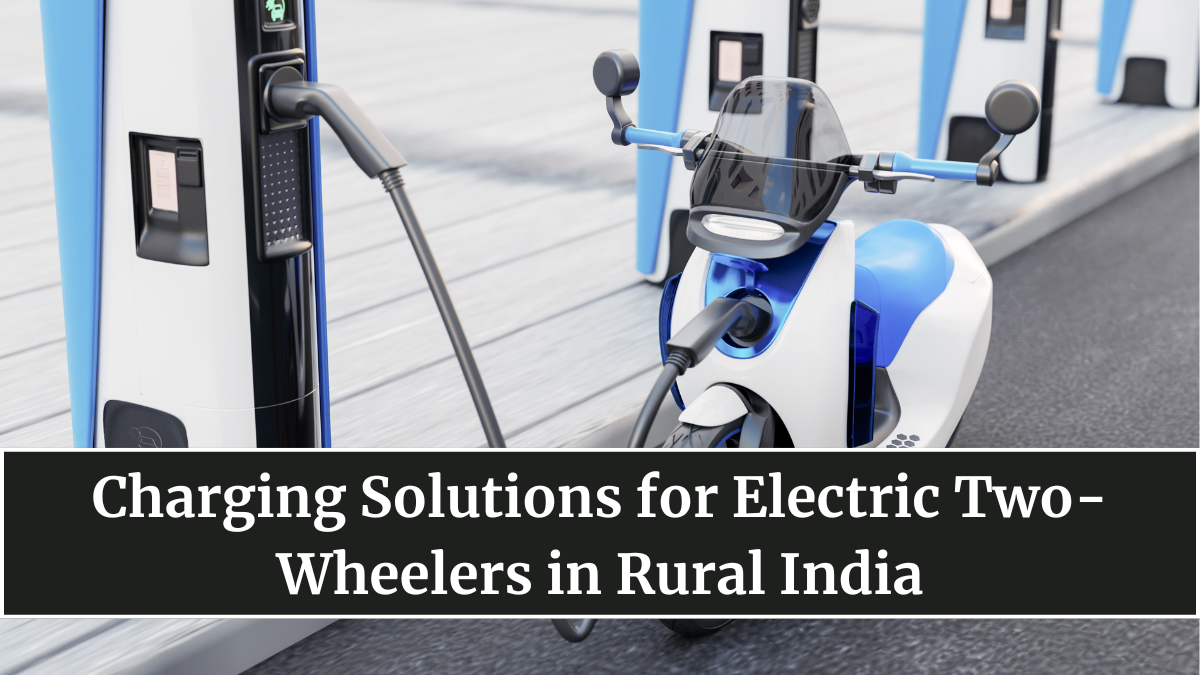
Electric mobility in India has seen massive progress in urban areas — but the true test of EV adoption lies beyond city limits. As Tier-3 towns and villages begin embracing clean transport, the focus has shifted to India’s rural EV charging solutions for two-wheelers, which are essential for ensuring long-term growth. From agricultural towns to small highways, India is innovating with decentralized, low-cost charging systems that make EVs practical even in areas with unreliable power supply.
The Rural Challenge: Power, Distance & Awareness
Rural India represents over 65% of the country’s population but faces significant challenges in adopting electric vehicles:
-
Limited charging infrastructure — Few or no public stations outside urban centers.
-
Irregular electricity supply — Power cuts disrupt charging schedules.
-
Awareness and affordability — Many rural consumers still prefer petrol bikes due to familiarity.
-
Distance between villages — Makes range anxiety more prominent for EV users.
However, the rapid rise of affordable e-scooters and government subsidies under FAME-II and state EV policies has sparked demand even in non-metro regions. The next step is building sustainable, rural-friendly charging networks.
Innovative Charging Models Emerging in Rural India
India’s EV ecosystem is witnessing multiple decentralized approaches designed specifically for rural use cases:
| Charging Model | Description | Examples / Supporters |
|---|---|---|
| Solar-Powered Micro Charging Stations | Small setups using solar panels to charge 10–15 e-bikes daily | Used in states like Rajasthan, UP, and Bihar |
| Battery Swapping Hubs | Stations where users exchange discharged batteries for charged ones | Sun Mobility, Battery Smart, Ola Electric |
| Portable Charger Networks | Compact 3-pin or DC chargers distributed at local shops | Startups like Revamp Moto and Bounce Infinity |
| Community Charging Points | Shared village-level charging poles powered by local grids or solar | Implemented by EESL and local DISCOMs |
| Hybrid Energy Hubs | Combining solar, biogas, and grid power for reliable output | Pilots by Tata Power and IIT Madras |
These models focus on low infrastructure costs, local employment, and scalability, making them ideal for semi-urban and rural expansion.
Government & Institutional Initiatives
The Indian government is aggressively supporting the rural EV push through several policies and collaborations:
-
FAME-II & National EV Mission Plan: Financial support for low-speed and rural-friendly EVs.
-
MNRE’s Solar Integration Program: Subsidies for solar charging kiosks.
-
Rural Infrastructure Development Fund (RIDF): Allocations for decentralized charging points.
-
EESL & CESL Projects: Establishing micro-charging grids in rural UP, MP, and Rajasthan.
-
Partnerships with Gram Panchayats: Using local governance structures to install and maintain charging facilities.
Such programs are gradually bridging the gap between cities and villages, ensuring that India’s EV revolution doesn’t remain an urban privilege.
Role of Startups and Local Entrepreneurs
Startups are emerging as the real game changers in India’s rural EV charging story. They are focusing on low-cost, modular charging units, often powered by renewable energy. Examples include:
-
Hopcharge – Mobile EV charging solutions adaptable for rural areas.
-
Charzer – Compact, wall-mounted chargers installed at rural kirana stores.
-
Bolt.Earth – Offers IoT-based plug-and-play charging for two-wheelers.
-
Revamp Moto – Building utility-based e-bikes with portable battery tech for small vendors.
By empowering local shop owners and micro-entrepreneurs to operate chargers or swapping stations, these startups are creating new income streams while expanding India’s clean mobility map.
Economic & Environmental Impact
Rural charging expansion has benefits that go far beyond convenience:
-
Lower operational costs: Electric scooters cost one-tenth per km compared to petrol.
-
Reduced air pollution: Helps tackle rural emissions from old vehicles and generators.
-
Increased rural employment: Local service centers and battery swaps create small business opportunities.
-
Energy independence: Use of solar charging reduces reliance on fossil fuels and grid dependency.
Moreover, this transition aligns with India’s Net Zero 2070 target and the government’s mission to electrify 80% of two-wheeler sales by 2030.
The Road Ahead: A Connected, Self-Sustained Network
The next few years will be crucial in shaping India’s rural EV future. Experts foresee the rise of mini charging corridors connecting villages and small towns, powered by renewable microgrids. Battery-swapping infrastructure will continue to dominate for affordability and convenience, while government-backed digital apps will map charging points even in remote regions.
With local manufacturing, community involvement, and solar integration, rural India can achieve energy self-reliance while embracing sustainable mobility. The humble two-wheeler, long seen as India’s workhorse, is now at the center of a clean-energy revolution — one charge at a time.
FAQs
How are EVs charged in rural areas of India?
Through solar-powered kiosks, battery-swapping hubs, and small community charging points managed locally.
What is the biggest challenge for rural EV charging?
Unstable electricity supply and lack of infrastructure are the main obstacles to consistent charging access.
Are battery-swapping stations viable in villages?
Yes. They eliminate the need for large charging time, allowing users to simply exchange batteries in minutes.
How does solar energy help rural EV charging?
Solar panels provide an independent, renewable power source, ensuring EV charging continues even during power cuts.
What’s the future of rural EV charging in India?
Decentralized solar microgrids, portable chargers, and government-backed networks will make EVs accessible to every Indian village by the end of the decade.
Click here to know more.